Job Tenure Varies Significantly Across Occupations: A Deep Dive into Stability and Turnover

The landscape of American employment reveals a stark dichotomy in job stability, with some professions exhibiting remarkable longevity while others are characterized by rapid turnover. Data compiled from the Current Population Survey (CPS) between 2018 and 2024 offers a granular view into how long individuals typically remain in their current roles, unveiling patterns that reflect the inherent nature of different industries and job functions. From the steadfast dedication of public safety supervisors to the transient nature of transportation roles, understanding these variations provides crucial insights into workforce dynamics, career progression, and the evolving economy.
Understanding Job Tenure: More Than Just a Number
Job tenure, defined as the length of time an individual has been employed in their current position, is a key indicator of workforce stability and employee engagement. While average tenure across all occupations provides a broad stroke, a deeper analysis reveals significant disparities. For instance, roles requiring extensive training, specialized skills, or those involving significant responsibility often foster longer tenures. Conversely, positions that are often entry-level, part-time, or subject to market fluctuations tend to experience higher rates of employee movement.
The CPS data, collected through a biannual job tenure supplement, surveys respondents on their duration at their present job. This comprehensive dataset, spanning from 2018 to 2024, allows for an examination of trends and the identification of occupations that either retain their workforce or experience a constant influx of new employees. The analysis presented here goes beyond simple averages, incorporating the median years spent at a job, alongside the 25th and 75th percentiles. This statistical approach acknowledges that within any given occupation, individual tenures can vary considerably, providing a more nuanced understanding of the typical employee experience.
Occupations Defined by Longevity and Transition
At the forefront of occupational stability, firefighter and police supervisors demonstrate exceptional tenure. This longevity is not surprising, as supervisory roles often represent the culmination of years of experience, dedicated service, and a deep commitment to the profession. The demanding nature of these roles, coupled with the specialized training and leadership responsibilities, likely contributes to a desire for stability and a reluctance to leave established positions. For individuals who have worked their way up through the ranks, the security and authority that come with supervisory positions are powerful incentives to remain.
In stark contrast, taxi drivers and motor vehicle operators exhibit the shortest tenures. This pattern is often attributed to the nature of these jobs, which can be more transactional, subject to fluctuating demand, and may offer fewer opportunities for career advancement within the same role. The prevalence of part-time employment in these sectors also contributes to higher turnover rates, as individuals may seek more stable or full-time opportunities.
The data highlights that a longer median tenure generally correlates with higher overall retention. However, it is crucial to recognize the inherent variability. For example, while the median tenure for a web developer might be around four years and eleven months, the range is substantial. The 25th percentile indicates that a quarter of web developers have been in their current role for three years and four months or less, while the 75th percentile shows that another quarter have been in their positions for seven years and seven months or longer. This spread underscores the fact that even within a single occupation, individual career paths and job satisfaction can diverge significantly.
Visualizing Workforce Dynamics: Tenure and Spread
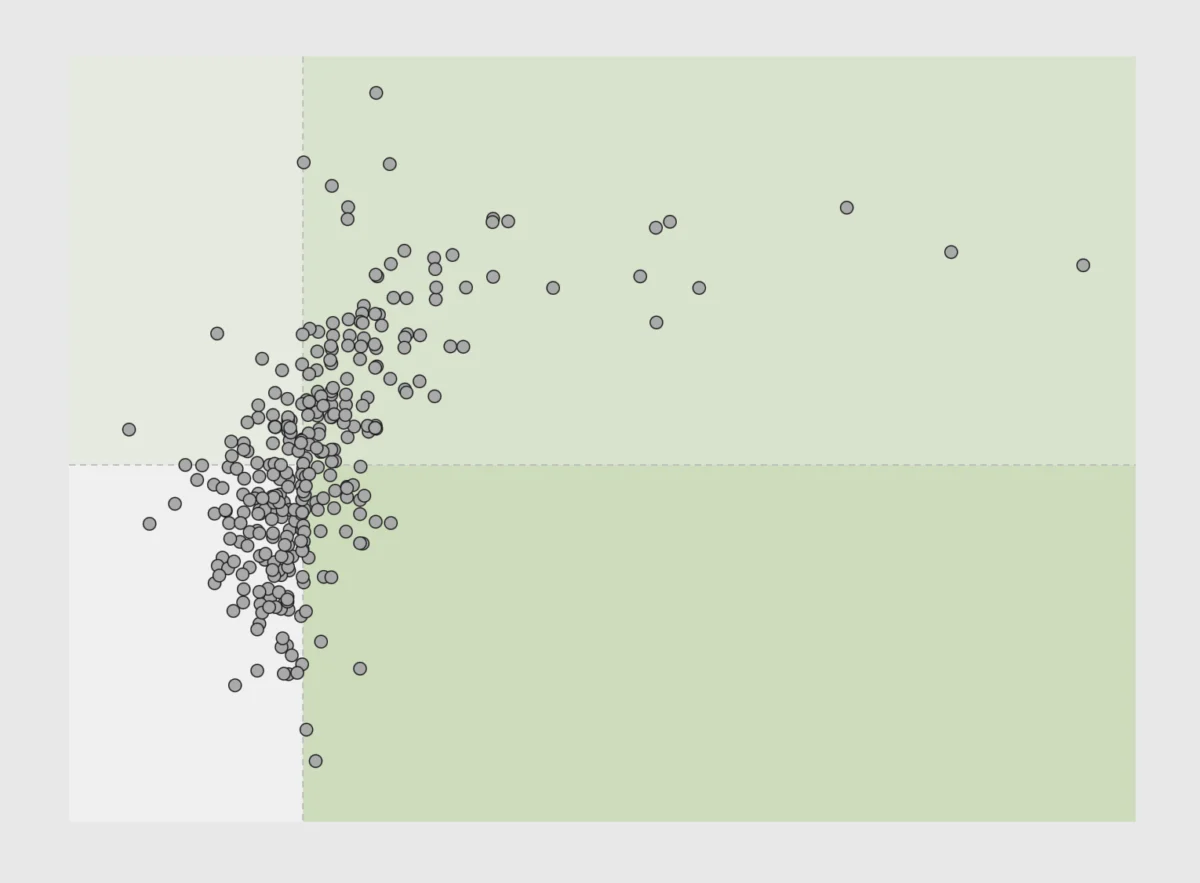
To further illuminate these patterns, the data can be visualized by plotting median tenure against the interquartile range (IQR), which represents the spread between the 25th and 75th percentiles. This graphical representation allows for the categorization of occupations into four broad groups:
- High Turnover Occupations: These roles are characterized by both low median tenure and a narrow spread, indicating that most individuals do not remain in these positions for extended periods.
- Higher Turnover with Long-Term Workers: Occupations in this category have relatively low median tenures but a wider spread, suggesting that while many employees leave quickly, a notable portion stays for significantly longer durations.
- Mixed Short and Long Tenures: These jobs exhibit a moderate median tenure and a substantial spread, signifying a diverse workforce with individuals at various stages of their career within the same role.
- Long Tenures with Less Spread: Occupations falling into this quadrant are marked by high median tenures and a relatively narrow spread, implying a workforce that is generally stable and committed to their roles.
The postal service clerks, for instance, present the widest spread among occupations, anecdotally aligning with the diverse experiences within such roles. Jobs that often involve a regular rotation of tasks or a steady, albeit not exceptionally long, tenure tend to cluster in the middle quadrants. This includes professions like teachers, office administrators, and nurses, whose career paths often involve a consistent commitment without the extreme highs or lows seen in other sectors.
The recent economic climate, marked by widespread layoffs, particularly in the technology sector, prompts an examination of developer-type jobs. While currently situated in the lower-left quadrant (suggesting relatively lower median tenure and spread), the impact of recent market shifts on their long-term stability remains a subject for future analysis. The upcoming 2026 CPS release will be crucial in determining whether these trends persist or if recent economic pressures have introduced greater volatility into these fields.
Data Sources and Methodological Rigor
The findings presented are derived from a rigorous analysis of data collected through the Current Population Survey (CPS) from 2018 through 2024. The CPS, a joint effort by the U.S. Census Bureau and the Bureau of Labor Statistics, is a primary source of labor market information in the United States. The job tenure supplement, administered every two years, provides invaluable insights into the duration of employment.
The microdata for this analysis was obtained via IPUMS, a trusted repository of demographic and social science data. The subsequent data processing and statistical analysis were conducted using R, a powerful programming language and environment for statistical computing and graphics. The visualizations, including charts and plots, were created using D3.js, a JavaScript library for manipulating documents based on data, renowned for its flexibility and ability to create dynamic and interactive data visualizations.
It is important to note that the calculations have been age-adjusted by occupation. This statistical adjustment ensures that comparisons between different occupations are not skewed by age demographics, providing a more accurate reflection of tenure patterns inherent to the roles themselves, rather than differences in the age distribution of their workforces.
Broader Implications for Workforce and Economy
The observed variations in job tenure have profound implications for both individuals and the broader economy. For workers, longer tenures often translate to increased job security, higher earning potential, greater opportunities for skill development and advancement, and stronger employer-provided benefits such as health insurance and retirement plans. Occupations with high turnover, conversely, may present challenges for workers seeking stability, consistent income, and career progression.
From an economic perspective, high turnover can lead to increased recruitment and training costs for employers, reduced productivity due to the learning curve of new employees, and potential disruptions in service delivery. Conversely, occupations with stable workforces can foster a more experienced and productive labor pool, contributing to greater efficiency and innovation within industries.
The patterns observed also highlight the need for targeted workforce development strategies. For sectors with high turnover, interventions might focus on improving working conditions, offering more comprehensive training programs, or creating clearer pathways for career advancement. For sectors with long tenures, the focus might shift to ensuring continued professional development, adapting to technological changes, and maintaining competitive compensation and benefits to retain experienced talent.
The Evolving Nature of Work and Future Outlook
The data from 2018-2024 provides a snapshot of a dynamic labor market. The ongoing digital transformation, shifts in consumer demand, and evolving economic conditions continuously reshape the nature of work and employee expectations. As the world of work continues to evolve, with emerging technologies and changing employment models, future iterations of the CPS will be crucial in tracking how job tenure patterns adapt.
The insights gleaned from this analysis underscore the complexity of the modern workforce. Understanding the factors that contribute to long tenures in some occupations and high turnover in others is not merely an academic exercise. It is essential for informing policy decisions, guiding career choices, and fostering a more stable, productive, and equitable labor market for all. The continued collection and analysis of such data will remain vital in navigating the future of work.