Solo.io Unveils Open-Source Suite to Tackle Enterprise Agentic AI Challenges in Governance, Security, and Reliability

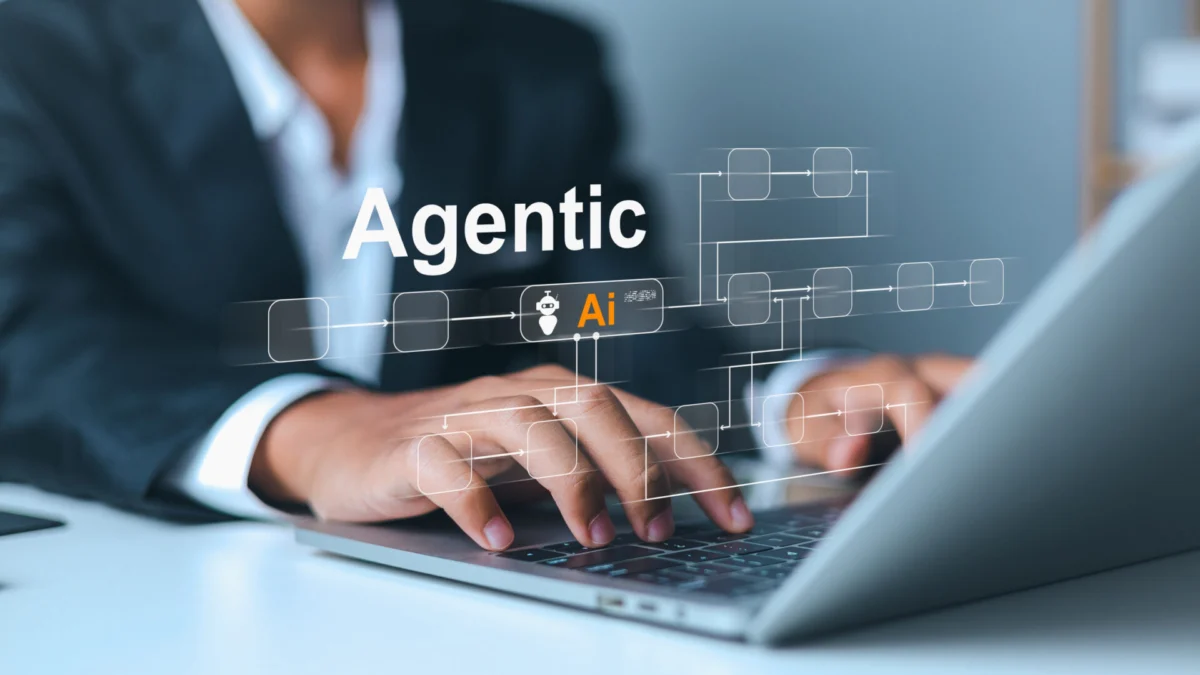
The burgeoning landscape of agentic AI, characterized by autonomous software agents capable of making decisions and taking actions to achieve specific goals, presents a transformative opportunity for enterprises across virtually every sector. From automating complex IT operations and customer service interactions to accelerating research and development, the promise of agentic AI is immense. However, this rapid embrace is not without its significant hurdles. Enterprises globally are grappling with formidable challenges, particularly concerning the effective governance, robust security, and the critical assurance of reliability when deploying these sophisticated AI systems in production environments. Without established frameworks and tooling, the potential for uncontrolled, insecure, or unreliable agent behavior could negate the benefits and introduce new forms of operational risk. Recognizing this growing imperative, Solo.io, a prominent innovator in cloud-native application networking and security, has introduced two pivotal open-source projects, Agent Registry and Agent Evals, specifically engineered to address and mitigate these critical adoption barriers. These initiatives are poised to provide the foundational components necessary for organizations to confidently and securely integrate agentic AI into their core operations.
The Genesis of a Solution: Addressing Enterprise AI Adoption Gaps
The journey towards building these essential tools began with Solo.io’s own internal experiences and a keen observation of the broader industry’s struggle. As enterprises move beyond experimental AI deployments on individual developer workstations, the need for robust, scalable, and auditable infrastructure becomes paramount. Traditional software development lifecycle (SDLC) practices and governance models often fall short when applied to the inherently non-deterministic and dynamic nature of AI agents. The challenges span multiple dimensions: how to maintain a curated inventory of approved agents and their capabilities, how to rigorously test and benchmark their performance, and how to secure their interactions within complex enterprise IT ecosystems, especially when they interface with sensitive data or critical infrastructure.
Solo.io’s strategic response to these challenges crystallized with the introduction of Agent Registry. This project first garnered public attention when it was open-sourced at KubeCon Atlanta, one of the cloud-native computing world’s most influential conferences. Its significance was further underscored when it was subsequently donated to the Cloud Native Computing Foundation (CNCF) as a sandbox project during KubeCon + CloudNativeCon Europe in Amsterdam. This donation to the CNCF, a vendor-neutral home for many of the fastest-growing open-source projects, signals a strong commitment to community-driven development and broader industry adoption, ensuring that the Agent Registry can evolve with collective input and serve a wide array of users.
Agent Registry: The Central Hub for Governed AI Agents
The core purpose of the Agent Registry is to serve as a comprehensive, centralized hub for the curation and governance of approved AI agents, their associated Management, Control, and Policy (MCP) tools, and the specific skills these agents possess. In essence, it acts as a digital library and control center for an organization’s entire fleet of AI agents. This addresses a critical enterprise need: the ability to maintain an organized, secure, and auditable inventory of AI assets, preventing the proliferation of unmanaged or "shadow AI" agents that can pose significant security and compliance risks.
Functionally, the Agent Registry provides several key benefits. It offers robust governance capabilities, allowing administrators to define and enforce policies around agent deployment, usage, and lifecycle management. This includes version control, access management, and audit trails to track who deployed what, when, and where. Furthermore, its intelligent searching capabilities empower developers and operations teams to quickly discover and understand existing agents, their functionalities, and their dependencies, fostering reuse and consistency across projects.
For developers, the Agent Registry significantly streamlines the workflow for building, pushing, and running agents, particularly in containerized environments like Kubernetes. By providing a standardized mechanism for packaging and distributing agents, it reduces friction and accelerates deployment cycles. The agents themselves are designed for high customizability and flexibility, supporting a diverse array of frameworks. These include Solo.io’s own declarative YAML-based Key Agent, as well as broader frameworks such as Agent Core, Azure, and Google ADK. This multi-framework support ensures that enterprises are not locked into a single technology stack and can integrate agents built using various underlying AI platforms. Customization extends to granular control over agent instructions, the specific skills they can execute, the MCP tools they can leverage, and even the underlying model settings. This level of configurability is crucial for tailoring agents to specific tasks and ensuring they operate within defined parameters.
Lin Sun, the director of open source at Solo.io, provided insight into the motivations behind the Agent Registry’s creation. "As we were running agents at Solo, we use Kagent a lot to help us troubleshoot Kubernetes environment deployment issues, networking configuration issues," Sun explained. Her observation highlighted a fundamental challenge: "Because they are not deterministic, some agents are a little bit more reliable with certain models with certain prompts." This inherent variability in agent performance underscores the need for a system that can manage, track, and ultimately ensure the reliability of these agents before they are entrusted with critical tasks. "So we feel there’s a strong need to be able to ship agents with reliability and confidence in mind," Sun concluded, articulating the driving force behind both the Registry and its complementary evaluation project.
Agent Evals: Benchmarking for Trust and Reliability
The realization that AI agents, unlike traditional deterministic software, can exhibit variable and often unpredictable behavior led directly to the development of Agent Evals. This separate, yet intrinsically linked, open-source project was announced with the explicit goal of enabling the reliable shipping of agents into production. The internal experiences at Solo.io, where the non-deterministic nature of agents necessitated a robust solution for ensuring confidence, served as the crucible for Agent Evals’ inception.
Agent Evals provides a comprehensive suite of tooling designed to benchmark agents effectively. It achieves this by strategically leveraging open standards, most notably OpenTelemetry. OpenTelemetry is a vendor-neutral set of APIs, SDKs, and tools used to instrument, generate, collect, and export telemetry data (metrics, logs, and traces) to help you analyze your software’s performance and behavior. By adopting OpenTelemetry, Agent Evals ensures broad compatibility with existing observability ecosystems and avoids vendor lock-in, a crucial factor for enterprise adoption.
As an agent executes its tasks, Agent Evals meticulously collects real-time metrics and tracing data. This telemetry includes crucial performance indicators such as latency, throughput, resource consumption, and the accuracy of the agent’s responses. More profoundly, it delves into inference quality, assessing how well the agent interprets prompts, utilizes its tools, and arrives at its conclusions. This data is then processed to produce a detailed report that offers users an invaluable understanding of their agent’s reliability and performance characteristics.
This rigorous assessment is not merely an academic exercise; it is crucial for making informed decisions about the level of human intervention required for any given agent. Agent Evals helps categorize agents into different operational modes:
- Fully Autonomous: Agents that consistently demonstrate high reliability and accuracy, requiring minimal to no human oversight for routine tasks.
- Human-in-the-Loop (HITL): Agents that perform tasks but require human review or approval at specific critical junctures, particularly for decisions with significant impact or when operating in uncertain conditions.
- Human-Outer-Loop (HOL): Agents that operate mostly autonomously but are subject to periodic human monitoring, auditing, and high-level strategic guidance, with humans intervening only in exceptional circumstances or for performance optimization.
The ability to precisely determine this level of human involvement is paramount for risk management, regulatory compliance, and building trust in AI systems. Agent Evals’ interoperability with other observability tools that support OpenTelemetry standards further enhances its utility, allowing enterprises to integrate agent performance data seamlessly into their existing monitoring dashboards and alerting systems. This ensures that the reliability of AI agents can be continuously observed and managed alongside traditional application components.
Agent Gateway: The Unyielding Guard for AI Communications
Beyond the initial challenges of governance and reliability, moving AI agents from individual developer laptops into full production environments introduces a complex array of security and operational concerns. Solo.io is proactively addressing these by tackling problems such as securing agent communication with Large Language Models (LLMs) and MCP tools, which often involve sensitive data exchanges and critical system interactions. This is where the Agent Gateway emerges as a critical solution.
The Agent Gateway provides a robust, centralized mechanism for policy enforcement, security, and observability for all traffic related to AI agents. It acts as an intelligent intermediary, ensuring that all interactions between agents, LLMs, and other enterprise resources adhere to defined security policies and operational standards. Its capabilities extend beyond conventional network security, delving into what Solo.io terms "context layer enforcement." This innovative feature allows organizations to configure sophisticated guardrails on agent responses and communications. For instance, the gateway can be configured to automatically strip out sensitive data, such as credit card numbers, bank account details, or other Personally Identifiable Information (PII), as traffic traverses through it. This proactive data sanitization is vital for maintaining data privacy, complying with regulations like GDPR and CCPA, and preventing accidental data leakage or exfiltration by agents.
Moreover, the Agent Gateway’s context layer enforcement can be used for content moderation, preventing agents from generating or relaying inappropriate, biased, or harmful content. It can also act as a shield against various AI-specific threats, such as prompt injection attacks, by scrutinizing the intent and content of agent requests and responses.
A significant strategic move by Solo.io is the integration of Agent Gateway into Istio as an experimental data plane option within Istio Ambient mode. Istio is a widely adopted open-source service mesh that helps manage network traffic, security, and observability for microservices. Istio Ambient mode represents a significant evolution in service mesh architecture, aiming to simplify operations by offering a sidecar-less approach, meaning services no longer require individual proxy containers to be deployed alongside them. This reduces resource overhead and operational complexity. By integrating Agent Gateway into Istio Ambient mode, Solo.io enables organizations to mediate agent traffic transparently and efficiently, without requiring any modifications to the agents or MCP tools themselves. This "invisible" enforcement simplifies adoption and ensures that security and policy controls are applied consistently across the entire AI agent ecosystem, providing a unified management plane for both traditional microservices and emerging AI agents. This integration provides a powerful, cloud-native foundation for securing and managing the next generation of intelligent applications.
A Holistic Approach: Confidence in Production AI
Collectively, these three powerful tools—Agent Registry for robust governance, Agent Evals for critical reliability assurance, and Agent Gateway for impenetrable security—are meticulously filling in the complex puzzles needed to run agentic AI in production environments with unwavering confidence. They represent a comprehensive framework designed to move AI agents from theoretical potential to practical, secure, and reliable enterprise solutions.
However, despite the advancements in AI autonomy, a fundamental philosophy underpins Solo.io’s approach: for critical work, human involvement remains an indispensable component. Lin Sun articulated this perspective with a poignant and relatable analogy, likening the AI agent to a growing co-worker. "I’m always thinking about the agent as like a person," Lin told SD Times. "Even with your coworker, you don’t always trust their work. You need a peer review of the work, to iterate and make it better." This perspective emphasizes that even as agents become more sophisticated, they are still in a developmental phase, requiring human oversight and collaboration to refine their capabilities and ensure their actions align with organizational goals and ethical standards.
Sun continued, "So, at this stage of the agent, maybe it’s more like from toddler to kindergarten. It’s growing, right? But even when the agent becomes an adult, like my son just turned 18, you still need to kind of supervise a little bit of providing some insights." This analogy beautifully encapsulates the evolving relationship between humans and AI, advocating for a model where AI agents are viewed as valuable, albeit supervised, contributors rather than fully autonomous entities immediately entrusted with unfettered control. This balanced approach acknowledges the immense potential of AI while pragmatically addressing its current limitations and the enduring necessity of human judgment and ethical guidance.
Broader Industry Impact and Implications
The introduction of Agent Registry, Agent Evals, and Agent Gateway by Solo.io arrives at a critical juncture in the broader AI landscape. As enterprises increasingly invest in AI, the demand for robust governance and security frameworks has escalated, driven not only by internal risk management but also by an intensifying global regulatory environment. Initiatives like the European Union’s AI Act and the National Institute of Standards and Technology (NIST) AI Risk Management Framework highlight the growing consensus on the need for responsible AI development and deployment. Solo.io’s open-source projects align perfectly with these broader industry trends, offering practical, implementable solutions that can help organizations meet emerging compliance requirements and build ethical AI systems.
These tools also play a pivotal role in the democratization of agentic AI. By providing open-source, community-driven solutions, Solo.io lowers the barrier to entry for enterprises seeking to adopt sophisticated AI agents. This fosters innovation and accelerates the widespread integration of AI across various industries, from finance and healthcare to manufacturing and logistics. The ability to reliably deploy, secure, and govern AI agents will unlock new efficiencies, automate complex workflows, and enable entirely new business models that were previously unimaginable.
Furthermore, these projects signify a crucial evolution in software development and operations. The shift towards agent-orchestrated workflows demands new paradigms for DevOps and MLOps. The Agent Registry can be seen as an essential component of an "AgentOps" framework, providing the infrastructure for managing the lifecycle of AI agents. Agent Evals integrates seamlessly into continuous integration/continuous deployment (CI/CD) pipelines, enabling automated performance testing and reliability checks for agents. Agent Gateway ensures that security is embedded at the architectural level, rather than being an afterthought. This integrated approach is vital for the scalability and sustainability of enterprise AI initiatives.
In conclusion, Solo.io’s suite of open-source projects—Agent Registry, Agent Evals, and Agent Gateway—represents a significant leap forward in making agentic AI enterprise-ready. By directly addressing the core challenges of governance, reliability, and security, these tools empower organizations to harness the transformative power of AI with confidence and control. They underscore a future where AI agents work collaboratively with humans, supervised and secured by intelligent infrastructure, ultimately driving responsible innovation and unlocking unprecedented operational efficiencies across the global economy.