A New Gold Standard: Reimagining the Software Development Life Cycle for the Age of AI

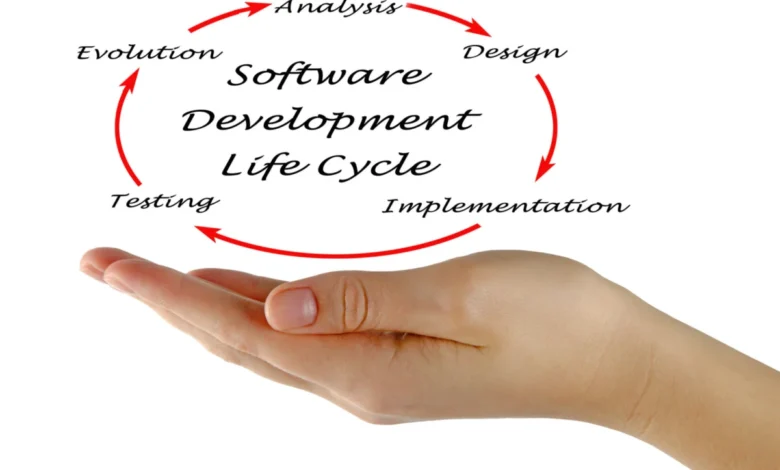
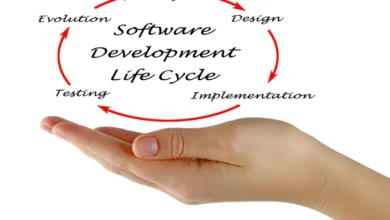
The traditional Software Development Life Cycle (SDLC), with its venerable stages of planning, analysis, design, coding, testing, deployment, and maintenance, has long served as the bedrock of software engineering. Its structured approach was meticulously crafted to prioritize the safety, stability, and stringent risk management of code, guiding projects from initial concept through to final delivery. This methodical framework, born from an era demanding predictability and robust processes, has been instrumental in delivering high-quality software at scale for decades. However, the foundational rigidity, fixed assumptions, and inherent constraints of this traditional model are increasingly proving to be a significant impediment in the rapidly accelerating era of artificial intelligence. This inflexibility lengthens the software delivery pipeline, curtails engineers’ capacity for agile and flexible innovation, and ultimately restricts organizations’ ability to operate at the unprecedented speed that AI technologies now enable.
Rethinking the SDLC is not an endorsement of abandoning established best practices; rather, it represents an imperative evolution. It is about recalibrating these practices to harmonize with the unique strengths of both human ingenuity and artificial intelligence. The objective is for engineers to strategically balance the imperative for secure, stable code with the rapid, iterative development cycles that define the modern enterprise. This new paradigm promises to compress delivery timelines dramatically without compromising the core tenets of software quality, system stability, or customer-centricity.
The Enduring Legacy of the Traditional SDLC
To fully appreciate the scope of this transformation, it is essential to understand the historical context of the SDLC. Early models, such as the Waterfall model, emerged in the 1970s and 80s, primarily for large-scale government and defense projects where requirements were expected to be stable and predictable. This sequential approach emphasized thorough documentation and sign-offs at each stage, aiming to catch errors early and minimize costly rework later in the cycle. Subsequent models, like the V-model, Spiral model, and Rational Unified Process (RUP), sought to introduce greater flexibility, risk management, and iterative elements while retaining a structured, phase-driven approach.
These methodologies were groundbreaking for their time, providing much-needed discipline to software development, which was often chaotic and unpredictable. They fostered a culture of meticulous planning, detailed analysis, and rigorous testing, ensuring that complex systems could be built and maintained with a reasonable degree of reliability. The rise of the internet and the dot-com boom in the late 1990s and early 2000s, however, began to expose the limitations of these rigid frameworks. Market demands for faster delivery, continuous innovation, and adaptability to changing requirements led to the emergence of Agile methodologies and, subsequently, the DevOps movement. These approaches emphasized collaboration, automation, continuous delivery, and rapid feedback loops, significantly accelerating development cycles and improving responsiveness. Yet, even these more modern iterations of the SDLC, while faster, were still fundamentally designed around human-centric processes, albeit with increased automation. The advent of sophisticated AI tools introduces a paradigm shift that demands an even more radical reimagining.
The AI Imperative: Speed, Iteration, and the Challenge to Rigidity
Artificial intelligence, particularly in its generative forms, has introduced capabilities that fundamentally challenge the established rhythm of software development. AI tools excel at synthesis, pattern recognition, rapid iteration, and the execution of high-volume, low-judgment tasks. These capabilities are inherently at odds with the often sequential, human-gated stages of traditional and even many Agile SDLCs. The "cost" of rigidity in the AI era manifests in several critical ways: prolonged time-to-market for new features, reduced capacity for engineers to experiment and innovate flexibly, and an organizational inability to capitalize on the rapid pace of technological change.
Industry analyses consistently highlight the growing pressure on development teams to deliver faster without compromising quality. Reports from organizations like McKinsey and Gartner have underscored that businesses unable to leverage advanced automation and AI in their development pipelines risk falling behind competitors. With AI, a concept that once took weeks to prototype and refine can now be iterated upon daily, even hourly. This shift necessitates an SDLC that is far more fluid and adaptive, capable of absorbing and integrating AI-generated outputs and accelerating human decision-making at every turn. The demand is no longer just for speed, but for intelligent speed—speed informed by AI’s analytical prowess and execution capabilities.
A New Division of Labor: Humans and AI in Synergy
The integration of AI into the SDLC fundamentally reshapes how software is built, creating a profound new division of labor. This evolution centers on augmenting, rather than replacing, often-overworked engineers. AI’s value lies in its ability to handle tasks that are repetitive, time-consuming, or require immense data processing, thereby freeing human engineers to focus on higher-order cognitive functions.
The impact of AI will be most transformative in several key areas:

- Writing Boilerplate and Handling Maintenance Toil: AI agents are adept at generating foundational code structures, such as CRUD operations, API scaffolding, and basic component templates. This capability can drastically reduce the time engineers spend on repetitive coding, often cited as consuming 30-40% of a developer’s time according to various industry surveys. Tools like GitHub Copilot and similar AI assistants can generate significant portions of code, allowing engineers to focus on business logic and complex algorithms. Furthermore, AI can batch repetitive maintenance tasks, such as dependency upgrades and security fixes, across dozens of repositories simultaneously. This automates what was previously a monumental, manual effort, often delayed due to resource constraints, allowing engineers to engage in meaningful building from the project’s inception.
- Automated Documentation and Specification Generation: Drafting technical specifications, user stories, API documentation, and release notes is a labor-intensive but crucial part of the SDLC. AI can analyze existing codebases, design documents, and user requirements to generate initial drafts of these documents, ensuring consistency and accuracy. This significantly reduces the documentation burden on engineers, allowing them to allocate more time to design and implementation.
- Enhanced Testing and Quality Assurance: AI can revolutionize testing by intelligently generating test cases, identifying optimal test paths, and even performing predictive defect identification based on historical data. AI-powered static analysis tools can proactively scan code for vulnerabilities and performance issues, providing real-time feedback that traditional methods often miss or identify much later. This proactive approach leads to higher code quality, fewer bugs in production, and a substantial reduction in the time spent on manual debugging and quality assurance cycles.
- Intelligent Deployment and Operations Optimization: Beyond development, AI extends its utility into deployment and operational phases. AI can optimize deployment strategies, predict potential system failures, perform anomaly detection in live systems, and even automate incident response by suggesting or implementing fixes based on observed patterns. This leads to more reliable systems, reduced downtime, and more efficient resource utilization in cloud environments, aligning with the core principles of DevOps.
- Shipping UI Changes from Design Tools Directly to Production: While the original article alluded to this, expanding on it highlights the potential for seamless integration. AI can act as a bridge between design mockups (e.g., Figma, Sketch) and functional code, generating front-end components and even entire user interfaces with minimal human intervention. This dramatically accelerates the design-to-development handover, making UI/UX iteration significantly faster.
Despite these profound changes in how engineers deliver code, the fundamental why remains constant. Customers, their problems, and the inherent value engineers deliver through innovative solutions remain paramount. The bedrock principles of good engineering—sound architecture, clear ownership, and system reliability—do not diminish; if anything, they become more critical. As AI democratizes development and accelerates code generation, the potential for introducing errors and security risks increases. This heightened risk magnifies the importance of the human factor, underscoring the need for human oversight and judgment to maintain quality and security.
The Human Advantage: Strategic Shift and Critical Oversight
While AI efficiently handles much of the toil and repetitive tasks in software development, the human role undergoes a significant and strategic shift. Humans bring irreplaceable qualities to the development process: judgment, deep contextual understanding, empathy, ethical reasoning, and creativity. These are skills that are indispensable at the system level and for navigating the complexities of real-world business challenges.
In this human + AI model, engineers’ daily activities will increasingly diverge from writing and debugging lines of code. Instead, their focus will gravitate towards:
- Defining Problems and Evaluating Trade-offs: This involves understanding complex business requirements, translating customer needs into technical specifications, and making high-level architectural decisions that balance technical constraints with business objectives. It requires a nuanced understanding of trade-offs between performance, scalability, cost, and maintainability.
- Strategic Architecture and System Design: Engineers will be responsible for designing the overarching system architecture, breaking down monolithic systems into manageable microservices, ensuring interoperability, and establishing robust data flows. This strategic role involves foresight and the ability to envision how different components will interact within a larger ecosystem.
- Ensuring Production Discipline and Reliability: Maintaining the stability and performance of systems in production remains a critical human responsibility. This includes setting up monitoring, incident response protocols, and ensuring that AI-generated deployments meet stringent operational standards.
- Quality and Security Oversight: Critically, engineers remain fully accountable for outcomes. This includes reviewing AI-generated code to assess its quality, identify potential security vulnerabilities, catch obscure edge cases that AI might miss, and ensure overall production reliability. This oversight role requires a deep understanding of secure coding practices, system vulnerabilities, and regulatory compliance.
- Ethical Considerations and Bias Mitigation: As AI becomes more integral, humans must ensure that AI tools are used responsibly and that their outputs do not perpetuate biases present in training data. This involves scrutinizing algorithms, validating outcomes, and establishing ethical guidelines for AI-assisted development.
The most valuable engineers in this evolving landscape will be those who develop mastery in overseeing and guiding AI tools. They will operate in a strategic capacity, capitalizing on their judgment, understanding of nuance, and deep business context. Their expertise will be in curating the AI development environment, setting guardrails, and validating the intelligence generated by machines.
Challenges and Considerations in the AI-Augmented SDLC
While the promise of an AI-augmented SDLC is immense, its implementation is not without significant challenges and critical considerations that organizations must proactively address:
- Code Drift and Standardization: A major risk lies in the potential for AI-generated code to diverge from established quality and compliance standards across different teams or projects. Without a robust standardization layer that embeds approved patterns, libraries, and security requirements into every AI agent session, code quality can become inconsistent, introducing new forms of technical debt. This necessitates the development of internal frameworks, robust code review processes, and intelligent guardrails to ensure AI outputs align with organizational best practices.
- Security Vulnerabilities in AI-Generated Code: While AI can assist in identifying vulnerabilities, it can also inadvertently introduce them. If AI models are trained on insecure code or if their outputs are not rigorously reviewed, they could generate subtle bugs or even significant security flaws. The proliferation of AI code generation tools increases the attack surface, making human review, advanced static application security testing (SAST), dynamic application security testing (DAST), and AI-powered security scanners more critical than ever. The increasing frequency of software supply chain attacks further underscores the importance of securing every component, including AI-generated elements.
- Skill Gaps and Training: The shift in the engineer’s role requires new competencies. Developers need to become proficient in prompt engineering, managing AI toolchains, critically evaluating AI outputs, and focusing on higher-level architectural and strategic thinking. Organizations must invest heavily in upskilling programs to equip their workforce with these new capabilities, transforming developers from pure coders into AI orchestrators and strategic problem-solvers.
- Accountability and Ownership: A critical question arises concerning accountability when AI generates faulty code. The prevailing industry consensus is that the human engineer remains ultimately accountable for the code that goes into production, regardless of its origin. This necessitates robust review processes and clear ownership structures to ensure that accountability is maintained and that engineers are empowered to override or refine AI suggestions.
- Ethical Implications and Bias: AI models are only as unbiased as the data they are trained on. If training data contains biases, the AI-generated code could perpetuate or even amplify those biases, leading to unfair or discriminatory outcomes. Furthermore, intellectual property concerns around AI models trained on public or proprietary codebases are still being navigated, requiring clear policies and legal frameworks.
Creating a New Gold Standard for Software Delivery
Modern software delivery, therefore, cannot be reduced to a simple handoff of manual work to AI. Organizations that approach AI integration in such a simplistic manner—treating AI as a mere bolt-on to automate existing processes without fundamentally rethinking the underlying model—will likely experience only incremental gains, at best. The true opportunity lies in something far more profound: a fundamental rebuilding of the SDLC from the ground up. This involves intricately weaving humans and AI together to forge a new gold standard that maximizes the unique skill sets of each.
This reimagined SDLC will be characterized by:
- Continuous Intelligence: AI will be integrated throughout the entire lifecycle, providing real-time insights, suggestions, and automation at every stage, from requirements gathering to deployment and maintenance.
- Adaptive Workflows: The SDLC itself will become more fluid and adaptive, capable of dynamically adjusting to project needs and leveraging AI’s capabilities for rapid iteration and feedback.
- Enhanced Collaboration: Human-AI collaboration tools will become central, allowing engineers to guide AI, review its outputs, and inject their judgment where necessary.
- Security and Quality by Design: AI will be instrumental in embedding security and quality checks proactively throughout the development process, rather than as retrospective add-ons.
The benefits of successfully implementing this human + AI model will extend far beyond the engineering teams. As AI accelerates execution and handles repetitive tasks, and humans provide the judgment, context, and accountability that technology cannot replicate, the entire business transforms. Products will reach the market with unprecedented speed, systems will exhibit enhanced reliability and resilience, and engineering resources will be strategically focused on solving core customer problems and driving innovation. Industry leaders across tech giants and startups are increasingly advocating for this paradigm shift. Analysts predict significant productivity gains, potentially up to 30-50% in specific development stages, by 2030 for organizations that effectively adopt these models. The organizations that commit to rebuilding their software development processes around this symbiotic human + AI model will not only move faster but will ultimately build better, more innovative, and more reliable software, securing a decisive competitive advantage in the rapidly evolving digital landscape. The future of software engineering is not a battle between humans and machines, but a powerful collaboration where each amplifies the other’s strengths.