The Evolution of Public Venture Capital and the Strategic Implications of the Fundrise Innovation Fund NYSE Listing


The listing of the Fundrise Innovation Fund under the ticker VCX on the New York Stock Exchange (NYSE) on March 19, 2026, marked a significant milestone in the democratization of venture capital, providing retail investors with unprecedented access to late-stage private technology companies. This event transitioned the fund from a private interval structure to a publicly traded vehicle, introducing a complex set of financial dynamics, including a mandatory six-month lockup period for early participants and a volatile market premium that has redefined the "startup experience" for non-employee stakeholders. As the venture capital landscape continues to evolve, the VCX listing serves as a primary case study in market psychology, the mechanics of paper wealth, and the shifting boundaries between private and public equity markets.
The Genesis of VCX and the Democratization of Private Equity
Founded in 2012 by Ben Miller, Fundrise initially gained prominence by providing retail investors access to commercial and residential real estate through its proprietary platform. By 2022, the firm expanded its mandate to include venture capital, launching the Fundrise Innovation Fund. The objective was to bridge the gap between high-net-worth institutional investors and the general public, who are typically excluded from high-growth private rounds in companies like SpaceX, OpenAI, and Anthropic.
The transition to a NYSE listing in early 2026 was a multi-year strategic undertaking. Unlike a traditional Initial Public Offering (IPO), where a single company goes public, the VCX listing represented the public debut of a diversified portfolio of private assets. This "public venture capital" model allows investors to trade shares of a fund that holds equity in companies that have not yet reached their own liquidity events. According to Fundrise leadership, the move was intended to provide liquidity and transparency while maintaining the long-term growth profile of venture-backed startups.
Chronology of the VCX Listing and Market Performance
The timeline of the VCX listing reflects the intense volatility often associated with high-growth technology sectors, particularly those focused on Artificial Intelligence (AI).
- Pre-Listing (2022–2025): The fund accumulated holdings in marquee private tech firms. During this period, the Net Asset Value (NAV) was determined by periodic internal and external valuations.
- March 19, 2026: VCX officially lists on the NYSE with an initial NAV of approximately $18.97 per share.
- Post-Listing Mania (March–April 2026): In the weeks following the debut, retail demand surged. Driven by the fund’s exposure to AI leaders like Anthropic, the share price experienced a parabolic move, briefly exceeding $400. This represented a massive premium over the underlying NAV.
- Market Correction (May–June 2026): As the initial euphoria subsided and the reality of the six-month lockup period for early investors set in, the share price retreated. By mid-2026, the ticker stabilized in the $50 range, still a significant gain from its debut but a fraction of its speculative peak.
- Lockup Expiration (September 19, 2026): The projected date when early investors and strategic partners are permitted to liquidate their positions, a period closely watched by market analysts for potential downward price pressure.
Portfolio Analysis: The AI Hedge and NAV Drivers
The valuation of VCX is intrinsically linked to the performance of its underlying holdings. The fund’s largest position, Anthropic, has been a primary driver of investor sentiment. Recent funding rounds for Anthropic, which valued the AI firm at nearly $965 billion post-money, have led to substantial markups in the VCX NAV.
Supporting data suggests that the fund’s strategy of investing in "generational" technology serves as a hedge against labor market disruptions. By holding stakes in OpenAI and SpaceX, the fund provides exposure to automation and aerospace—sectors expected to capture a larger share of global GDP over the next decade. As of mid-2026, analysts estimate the NAV of VCX could reach between $31 and $40 per share, depending on the success of upcoming IPOs within its portfolio.
The discrepancy between the market price (approx. $50) and the NAV (approx. $31) highlights the "premium" retail investors are willing to pay for liquidity and access to otherwise inaccessible private companies. This premium is a key variable in the total return for investors, though it remains highly sensitive to broader market conditions and interest rate fluctuations.
The Mechanics and Psychology of the Six-Month Lockup
A critical component of the VCX listing is the six-month lockup period, a standard regulatory and contractual mechanism designed to prevent a mass exodus of early shareholders that could destabilize the stock price. For many investors and partners, this period creates a unique psychological environment characterized by "paper wealth" vs. "liquid wealth."
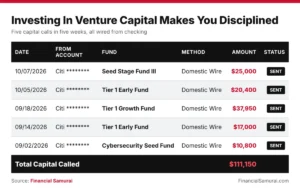
Market observers, including long-term Fundrise partners such as Sam Dogen of Financial Samurai, have noted that the lockup period acts as a "marshmallow test" for financial discipline. During this window, shareholders see their net worth fluctuate based on a price they cannot capture. The inability to act—to sell during a peak or hedge during a dip—creates a sense of "financial suspense" that mirrors the experience of startup employees during a traditional IPO.
This period is often marked by several stages of investor sentiment:
- Euphoria: Observing massive gains immediately following the listing.
- Numbness: Watching paper gains evaporate as the price corrects while being contractually forbidden from selling.
- Recalibration: Adjusting expectations to align with the underlying NAV rather than speculative market peaks.
- Strategic Planning: Developing exit strategies or long-term holding plans for the post-lockup environment.
Institutional and Affiliate Reactions
The listing has drawn reactions from various sectors of the financial community. Ben Miller, CEO of Fundrise, has consistently defended the public venture model as the logical evolution of the firm’s mission to "democratize" finance. In interviews during the listing process, Miller emphasized that while the market price may fluctuate, the long-term thesis remains rooted in the fundamental growth of the underlying technology companies.
Affiliates and strategic partners who have worked with the firm for over a decade have expressed a "startup-like" affinity for the fund’s success. For many, the VCX listing provided the upside of a startup equity grant without the traditional requirements of corporate employment, such as daily meetings, KPIs, and direct reports. This "partnership-equity" model represents a new frontier in the gig economy and professional influencer space, where long-term loyalty to a platform can result in significant capital appreciation.
Broader Impact on the Venture Capital Ecosystem
The success and volatility of VCX have broader implications for how venture capital is structured in the future. Traditionally, venture capital has been an illiquid asset class with 7-to-10-year horizons. The NYSE listing of a venture fund introduces a hybrid model: the underlying assets remain private and long-term, but the vehicle for holding them is liquid and transparent.
This model may lead to several shifts in the industry:
- Increased Retail Participation: As more funds follow the VCX lead, retail investors will likely become a more significant source of capital for late-stage startups.
- Pressure on Traditional VC: Institutional venture firms may face pressure to provide earlier liquidity options for their Limited Partners (LPs) to compete with the liquidity of public venture funds.
- NAV Transparency: The requirement for public funds to report and estimate NAVs more frequently could lead to greater standardization in how private company valuations are calculated.
Future Outlook: VCX 2 and the Continued Expansion
In anticipation of continued demand, Fundrise has already filed for the launch of a successor fund, tentatively titled VCX 2. While the structure and timing of this new vehicle remain under regulatory review, the filing suggests that the firm intends to make public venture capital a permanent fixture of its product suite.
For investors, the primary lesson of the VCX listing remains the distinction between price and value. While the "mania" of a listing can create extraordinary paper wealth, the long-term viability of the investment depends on the compounding growth of the underlying portfolio. As the lockup expiration approaches in late 2026, the market will gain its first true measure of the fund’s stability and the resolve of its earliest supporters.
The Fundrise Innovation Fund listing stands as a pivotal moment in 21st-century finance, signaling a future where the barriers between "Main Street" and "Silicon Valley" continue to dissolve, albeit with the inherent risks and psychological challenges of a volatile, public-facing market.