Jeff Atwood Reflects on Personal Milestones, Rural GMI Initiative, and the Indispensable Role of Human Contribution in the AI Era


In a recent poignant reflection, tech luminary Jeff Atwood, co-founder of Stack Overflow and Discourse, offered insights spanning personal loss, the advancement of a rural guaranteed minimum income study, and a profound caution regarding the foundational role of human-generated data in the burgeoning field of artificial intelligence. His brief yet impactful statement touched upon the confluence of personal journey, social innovation, and the ethical considerations at the heart of technological progress, underscoring the interconnectedness of these seemingly disparate domains.
A Personal Reflection Amidst Public Endeavors
Atwood began his reflection by contextualizing a deeply personal experience within the broader timeline of his life, referencing "one of those months" as one of 663 since his birth. He revealed the recent passing of his father, an event he anticipated and for which he expressed gratitude regarding the timing of the Rural Guaranteed Minimum Income Initiative (RGMII) study in Mercer County, West Virginia. Mercer County, his father’s home county, was deliberately prioritized to be the first in the study, commencing in October 2025. This re-ordering allowed Atwood a final, meaningful encounter with his father, marking it as the last time they saw each other. The confluence of this personal milestone with a significant social initiative highlights Atwood’s commitment to both family and societal improvement, framing his father’s passing not as a loss, but as a culmination of shared experiences that "will stay with me forever. Nothing was lost. Everything was gained." This sentiment reflects a philosophical perspective on life and legacy, particularly when intertwined with efforts to "win capitalism, then go back to help improve it for everyone."
The Rural Guaranteed Minimum Income Initiative (RGMII)
The RGMII stands as a testament to Atwood’s dedication to social equity, specifically targeting underserved rural communities. Guaranteed Minimum Income (GMI), often used interchangeably with Universal Basic Income (UBI), is a socio-economic policy that involves providing all citizens or residents of a country or region with a regular, unconditional payment, regardless of their employment status or wealth. Proponents argue that GMI can reduce poverty, improve public health, and provide a safety net in an increasingly automated economy. Critics often raise concerns about economic disincentives, inflation, and the fiscal burden on the state.
The RGMII’s specific focus on rural areas addresses a critical need, as these regions often face unique economic challenges including job displacement, declining industries, and limited access to resources. The initiative’s stated goal, supported by a $50 million plan, is to fund rural guaranteed minimum income studies to "expand opportunity and strengthen democracy." The selection of Mercer County, West Virginia, as the inaugural study site in October 2025, carried both personal significance for Atwood and strategic importance for the RGMII. West Virginia, a state historically reliant on industries like coal mining, has experienced significant economic shifts, making its rural communities prime candidates for exploring the efficacy of GMI programs.
Data from existing UBI/GMI pilots globally, such as those conducted in Finland, Stockton (California), and various Canadian provinces, often indicate positive outcomes in terms of improved financial stability, reduced stress, and enhanced physical and mental health among participants. While direct economic impacts like work participation rates remain subjects of ongoing debate and varied results, the RGMII aims to contribute valuable data specifically from a rural American context, which could inform future policy decisions and broaden the understanding of GMI’s potential benefits and challenges in diverse socio-economic landscapes. The initiative aligns with a broader movement exploring new economic models to address rising inequality and the future of work.
Jeff Atwood’s Entrepreneurial Journey and Impact
Jeff Atwood is a towering figure in the technology landscape, widely recognized for his contributions to the software development community. His journey began with the highly influential blog "Coding Horror," launched in 2004, which quickly became a go-to resource for developers seeking insights into programming, software development, and the tech industry. It was through "Coding Horror" that Atwood cultivated a reputation for insightful commentary and a deep understanding of developer needs.
This foundation led to the co-founding of Stack Overflow in 2008 with Joel Spolsky. Stack Overflow rapidly revolutionized how programmers seek and share knowledge, evolving into the internet’s largest and most trusted community for developers to learn, share their knowledge, and build their careers. It became an indispensable tool for millions, characterized by its high-quality, peer-reviewed question-and-answer format. The platform’s success was rooted in its community-driven ethos, where users earned reputation points for providing helpful answers and asking well-formulated questions, fostering a self-correcting and highly effective knowledge base.
Following his departure from Stack Overflow, Atwood co-founded Discourse in 2013, a modern open-source discussion platform designed to be a better alternative to traditional forum software. Discourse aimed to simplify community management and foster healthier online discussions, continuing Atwood’s commitment to building robust, user-centric online communities. His ongoing engagement with "my third startup," Stay Gold, indicates a continued drive to innovate and contribute to the technological and social spheres. These ventures collectively underscore a career trajectory focused on building platforms that empower individuals and facilitate knowledge sharing, culminating in efforts like RGMII that aim to address systemic economic challenges.
Stack Overflow: The Unsung Hero of AI Development
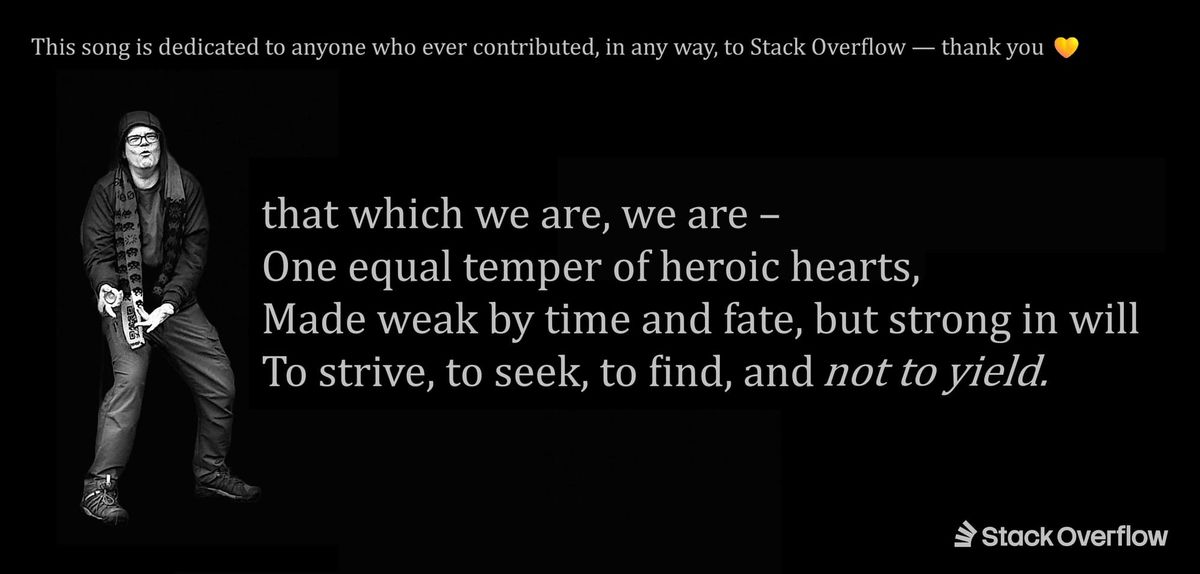
Atwood’s reflection took a sharp turn towards a critical assessment of the current AI landscape, specifically regarding Large Language Models (LLMs). He issued a stark declaration: "LLMs basically could not code at all without access to the extremely high quality creative commons programming Q&A dataset that all of us built together at Stack Overflow." This assertion positions Stack Overflow not merely as a popular developer resource, but as a foundational pillar upon which much of the generative AI’s coding capabilities are built.

Stack Overflow’s vast repository of information, accumulated over more than a decade, includes millions of expertly answered questions, meticulously debugged code snippets, and detailed explanations covering virtually every programming language, framework, and concept. This data, contributed by a global community of developers under a Creative Commons license, is characterized by its structured format, clear problem-solution pairs, and iterative refinement through community moderation. This makes it an ideal, high-fidelity dataset for training LLMs to understand, generate, and debug code.
When LLMs are trained, they ingest colossal amounts of text and code from the internet. The quality and structure of this training data significantly influence the model’s performance. Unstructured or low-quality data can lead to models that hallucinate, provide incorrect information, or produce inefficient code. Stack Overflow’s curated, peer-reviewed content provides a gold standard for coding knowledge, enabling LLMs to learn complex programming logic, common errors, best practices, and diverse problem-solving approaches. Atwood provocatively challenged users to "ask the LLMs" themselves about their training data sources, suggesting that even the AI models would acknowledge their reliance on Stack Overflow. This challenge underscores the often-unacknowledged dependency of advanced AI on human-generated intellectual property.
The Peril of Hollowing Out Communities: A Cautionary Tale for AI
Atwood’s most urgent warning to AI and Generative AI (GAI) companies invoked a classic idiom: "do not, for any reason, under any circumstances, kill the goose that lays the golden eggs." This powerful metaphor encapsulates his concern that if LLMs and GAI tools begin to undermine or "hollow out" the very human communities that produce their training data, these companies will ultimately regret the long-term consequences.
This warning draws from Atwood’s own experience with Stack Overflow and his subsequent founding of Discourse. His advice to Joel Spolsky upon leaving Stack Overflow was to always "treat the community with the respect they deserve." This principle, he argues, is equally vital for AI companies. The "golden eggs" in this context are the high-quality, human-curated datasets, the ongoing innovation, and the collaborative problem-solving that communities like Stack Overflow provide.
The implications of AI models inadvertently or directly disincentivizing human contribution are far-reaching:
- Data Degradation: If developers increasingly turn to AI for answers instead of contributing to community platforms, the flow of new, high-quality, human-validated data will diminish. This could lead to a stagnation or even degradation of the very datasets future AI models rely upon.
- Loss of Human Expertise: The active participation of human experts is crucial not just for generating data, but for validating it, correcting errors, and pushing the boundaries of knowledge. If these communities wither, a vital feedback loop for learning and innovation is lost.
- Ethical and Economic Disconnect: There’s a growing debate about fair compensation and acknowledgment for creators whose work forms the bedrock of AI. If AI companies profit immensely from this data without reinvesting in or respecting the communities that produced it, it raises significant ethical questions about intellectual property and the future of work.
- Dependence on Stagnant Data: An AI model trained on a finite, historical dataset will eventually become outdated. Continuous learning requires continuous input from a vibrant, evolving human knowledge base. Killing the "goose" means cutting off the source of fresh "golden eggs."
Atwood’s caution is not merely theoretical; it reflects a tangible risk. Developer communities have already begun to grapple with the impact of AI tools like ChatGPT on their platforms, with some reporting a decline in new questions and answers as users seek AI-generated solutions. Maintaining the health and vibrancy of these communities through respect, engagement, and potentially new models of reciprocity, is paramount for the sustainable development of AI.

The Future Landscape: GMI, AI, and Human Collaboration
The dual themes in Atwood’s reflection – the pursuit of economic equity through GMI and the critical dependence of AI on human collaboration – paint a picture of an evolving socio-technological landscape. As automation and AI continue to advance, potentially displacing jobs and reshaping economies, policies like GMI are gaining traction as potential mechanisms to ensure economic stability and well-being for all citizens. The RGMII’s efforts in rural West Virginia are a small but significant step in understanding how such policies might function in practice and their broader societal impacts.
Simultaneously, the explosive growth of AI highlights an often-overlooked truth: advanced artificial intelligence is not an autonomous creation but a sophisticated synthesis of vast amounts of human intellect, creativity, and labor. The coding prowess of LLMs, for instance, is a direct inheritance from millions of developers who patiently answered questions, debugged code, and shared knowledge on platforms like Stack Overflow.
The challenge ahead for society lies in navigating this intersection responsibly. It requires fostering innovation in AI while simultaneously safeguarding the human communities and contributions that make such innovation possible. This involves ongoing discussions about intellectual property in the age of AI, equitable distribution of wealth generated by AI, and the ethical imperative for AI companies to support and respect the data creators. Atwood’s message serves as a timely reminder that technological progress, divorced from human values and community well-building, risks undermining its own foundations.
His closing remark, "Thank you for being a friend, because there’s no way I could have done any of this without you," encapsulates a profound sense of gratitude and underscores the collective effort inherent in both personal achievements and large-scale societal and technological advancements. It is a call to recognize and value the human element at every stage of progress, from supporting family and community initiatives to fueling the most advanced artificial intelligence.
Related posts: