Trump’s AI Advisors Clash Over Chinese Competition, Revealing Deep Divisions on Policy

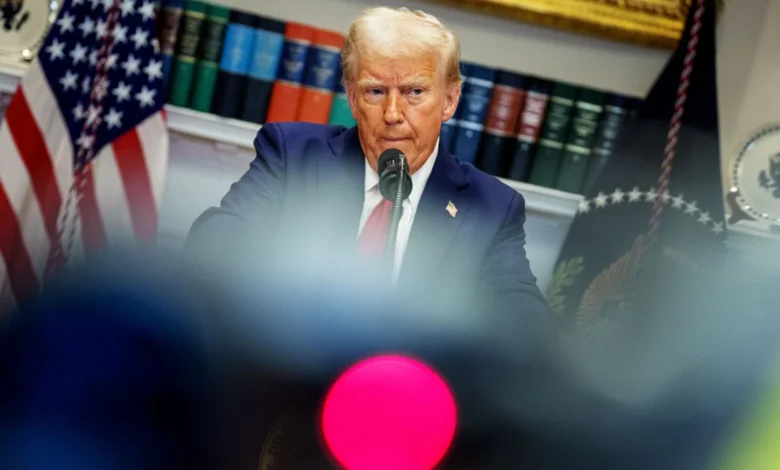
The weekend witnessed a public feud erupt among President Donald Trump’s current and former advisors on Artificial Intelligence, as they publicly criticized the nation’s leading AI companies amidst growing concerns over the rapid advancement of Chinese AI models. The heated exchanges, primarily conducted on social media, highlighted significant disagreements within Trump’s orbit regarding the appropriate response to a burgeoning global AI landscape, particularly the emergence of powerful, open-source alternatives from China.
At the center of the controversy is Kimi, a recently launched open-source AI model by the Chinese company Moonshot. Kimi has reportedly demonstrated capabilities rivaling those of proprietary models from U.S. giants like OpenAI and Anthropic. This development has triggered anxieties about the economic and national security implications for the United States, further exacerbating existing tensions between technology firms and the political establishment.
David Sacks, who served as Trump’s AI and crypto “czar” until March, led the charge against domestic AI leaders. He derided Anthropic’s models as “lobotomized” and “woke” in a social media post on Saturday, June 22, 2026. His criticism was followed by Emil Michael, a senior official within the Pentagon, who on Sunday, June 23, 2026, labeled a newly appointed head of strategic futures at OpenAI as a “supreme village idiot.” These broadsides suggest a deep dissatisfaction with the current trajectory and perceived limitations of leading U.S. AI development.
The Kimi Catalyst: A Challenge to U.S. AI Dominance
The public spat was reportedly ignited by the lack of consensus on how to address the rise of models like Kimi. The availability of a sophisticated, free, and open-source AI model from China presents a significant challenge to the business models of U.S. companies such as OpenAI and Anthropic, which rely on paid access to their advanced technologies.
The economic implications are considerable. Enthusiasm for AI companies has been a significant driver of economic growth in recent years. The emergence of competitive, low-cost alternatives from China could diminish the investment appeal of U.S. AI firms, potentially impacting stock markets and broader economic indicators. Indeed, reports from The Wall Street Journal on June 18, 2026, indicated that Chinese AI models had already begun to “rattle U.S. stocks,” underscoring the market’s sensitivity to this competitive pressure.
Anton Leicht, a fellow at the Carnegie Endowment, articulated this concern on X (formerly Twitter) on June 22, 2026, stating that Chinese AI models represent “a threat for an administration that really doesn’t want more economic bad news.” This sentiment reflects a broader anxiety that the United States might be ceding its leadership in a critical technological domain.
Divisive Strategies: Openness vs. Control
The differing opinions among Trump’s advisors reveal a fundamental debate about the role of government in the AI sector.
The Open-Source Advocacy: David Sacks, despite his recent departure from an advisory role, continues to advocate for a more open AI ecosystem. He criticized what he perceived as top AI companies seeking government intervention to “eliminate their open source competition.” Sacks has argued that the popularity of Chinese AI models stems from their fewer usage restrictions, while acknowledging the presence of state censorship within China itself. His perspective aligns with a belief that market forces and technological innovation should largely dictate the AI landscape, with minimal government interference.
The National Security Imperative: Conversely, a prevailing view within the current Trump administration emphasizes a greater role for government intervention, particularly in light of perceived national security threats posed by advanced AI. This perspective suggests that the government must exert control over the development and deployment of powerful AI models. This has led to the White House initiating a review process aimed at vetting AI models for security vulnerabilities prior to their release.
Dean Ball, a former Trump AI advisor now employed by OpenAI, voiced strong opposition to this review process on June 23, 2026, describing it as a “de facto licensing regime for frontier AI.” Ball proposed a more subtle approach, suggesting that Trump might leverage “soft power” to discourage U.S. companies from adopting Chinese models, perhaps by instilling fear of potential repercussions.
This suggestion drew a sharp rebuke from Emil Michael. In his June 23, 2026, statement, Michael, who has been a key liaison with AI companies alongside Secretary of Defense Pete Hegseth, dismissed Ball’s idea as impractical and potentially indicative of a “Deep State scheme.” Michael instead championed a “democratic process,” implying a preference for overt policy measures rather than covert influence. This exchange underscores a clear divergence on the acceptable methods of policy implementation, with one side favoring transparency and the other hinting at more opaque strategies.
The Broader Context: Chip Export Controls and Distrust
The current debate is further complicated by recent policy decisions and a growing public skepticism towards AI companies. A week prior to these advisors’ public exchanges, New York imposed the nation’s first state-level ban on new data centers, signaling a broader societal unease about the rapid expansion of AI infrastructure.
Public distrust of AI companies, as evidenced by various polls and surveys conducted over the past few years, suggests that many Americans may not sympathize with the plight of OpenAI or Anthropic facing cheaper competition. The prevailing sentiment might be that it is not the government’s responsibility to protect the commercial interests of these private entities.
This sentiment finds a partial echo in Sacks’s criticism of AI firms seeking government protection from competition. However, the administration’s focus has largely shifted towards a national security framework, viewing AI’s potential threats as necessitating governmental oversight.
The Unaddressed Question: How Did Kimi Get So Good?
While the debate rages over policy responses, the article points out that a crucial aspect is being overlooked: the technical origins of Kimi’s advanced capabilities. For a significant period, encompassing the latter part of the Biden administration and the initial phase of Trump’s second term, a key U.S. policy objective was to prevent China from acquiring advanced semiconductor technology.
However, these export controls have seen some relaxation. Notably, President Trump made a controversial decision to permit Nvidia to increase its chip sales to China, reportedly in exchange for a share of the revenue for the U.S. government. Despite these measures, allegations of chip smuggling have surfaced, with the Department of Justice announcing arrests of U.S. citizens and Chinese nationals for exporting artificial intelligence technology in early July 2026.
The exact hardware used by Moonshot to train Kimi remains unclear, particularly given China’s historically constrained access to cutting-edge computing power. This ambiguity fuels speculation about the methods employed by Chinese AI developers.
Distillation and Government Crackdown
One potential explanation for Kimi’s rapid development is the practice of "distillation." This technique involves training an AI model on the outputs generated by existing, more advanced AI models. OpenAI and Anthropic have repeatedly voiced concerns about Chinese AI companies engaging in this practice, urging government intervention to halt it.
Their pleas were met with action in April 2026, when the Trump administration announced a series of measures aimed at curbing the use of U.S. AI models for training Chinese counterparts. This crackdown signaled a recognition by the administration of the potential intellectual property and competitive risks associated with distillation.
The Unresolved Conundrum
Despite these efforts, Kimi is now freely available, demonstrating performance levels nearly on par with models that the U.S. government itself has deemed so powerful that they posed national security risks, leading to their brief shutdown. The recent public disagreements among Trump’s advisors underscore a critical juncture. While the emergence of Kimi and similar models appears to have served as a wake-up call for many within Trump’s political circle, there is a profound lack of consensus on the appropriate course of action. The competing visions of open innovation versus stringent governmental control, coupled with the economic and national security stakes, present a complex policy challenge with no easy solutions. The fragmented discourse suggests that navigating the future of AI, both domestically and in relation to international competition, will remain a contentious and dynamic issue.