Beyond Prediction: How Integrating Traditional Machine Learning with Agentic Reasoning is Redefining Enterprise AI

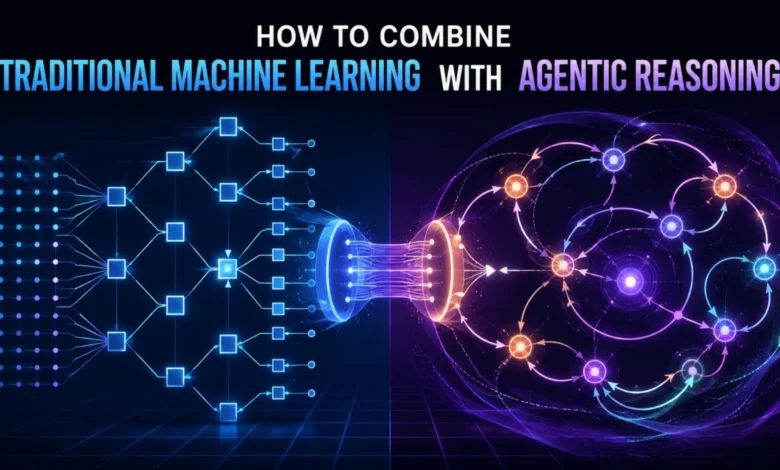
For over a decade, the gold standard of artificial intelligence has been defined by the efficiency of supervised learning. From fraud detection in banking to demand forecasting in global supply chains, machine learning (ML) models have become the backbone of modern data infrastructure. These systems are highly effective at performing discrete, high-speed tasks: mapping complex input features to specific probabilistic outputs. However, as organizations attempt to scale these systems to manage end-to-end business processes, the limitations of static models have become increasingly apparent. The industry is now shifting toward a hybrid architecture that combines the surgical precision of traditional machine learning with the dynamic, multi-step orchestration of agentic reasoning.
The Anatomy of Current AI Limitations
Traditional machine learning operates on a "fixed-function" paradigm. A model is trained on a static snapshot of historical data, meaning its intelligence is trapped within the parameters established during the training phase. When presented with an input—such as a loan application or a sensor reading—the model produces a result based solely on the patterns it recognizes. It lacks the "agency" to perform tasks that require temporal context, iterative discovery, or physical intervention in a workflow.
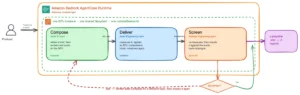
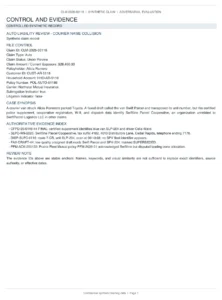
This creates a significant friction point for businesses. Consider the operational lifecycle of a modern insurance firm. A predictive model can determine with 99% accuracy if a claim is likely fraudulent, but it cannot independently verify a claimant’s identity, reconcile a police report with a medical invoice, or decide when a human adjuster needs to be alerted. Consequently, companies have historically relied on "connective tissue"—manual labor, rigid if-then rule-based software, or brittle custom scripts—to bridge the gap between a model’s prediction and a final business outcome.
Chronology of the Shift: From Static Models to Adaptive Agents
The evolution of AI in the enterprise can be viewed in three distinct phases:
- The Era of Automation (2012–2018): Focus was placed on deep learning and supervised models. The primary goal was to improve predictive accuracy in narrow, well-defined domains like image recognition and natural language processing.
- The Era of Generative Expansion (2019–2023): Large Language Models (LLMs) moved AI beyond simple classification. While these models demonstrated emergent reasoning, they were initially viewed as standalone content generators rather than system orchestrators.
- The Era of Agentic Systems (2024–Present): The current shift involves treating LLMs not just as text generators, but as "reasoning engines." These engines can hold state, access external tools, and manage the lifecycle of a task. This represents a transition from "predictive AI" to "operational AI."
The Four Pillars of Agentic Reasoning
Agentic reasoning provides a cognitive layer that sits above traditional predictive models. Unlike static ML, which is designed for inference, an agent is designed for interaction. Its utility is defined by four core capabilities:
- Strategic Planning: An agent does not simply react; it decomposes high-level goals into a series of actionable steps. If tasked with a complex investigation, it can prioritize which databases to query first.
- Tool Orchestration: Agents act as universal interfaces. They can invoke SQL databases, call REST APIs, or execute Python code to fetch the data they need to support their reasoning, effectively breaking the "training data" bottleneck.
- Dynamic Adaptation: If a process encounters a dead end—such as a missing file or an API timeout—the agent can pivot. It evaluates the feedback from the environment and attempts an alternative path, a degree of resilience previously impossible in standard inference loops.
- Action Execution: By integrating with enterprise systems, agents transition from providing advice to performing work. This includes updating CRM records, drafting emails, or triggering automated workflows.
Comparative Analysis: ML vs. Agents
| Feature | Traditional Machine Learning | Agentic Reasoning Systems |
|---|---|---|
| Primary Function | Statistical Pattern Recognition | Decision Orchestration |
| Input/Output | Fixed Schema / Probability | Dynamic / Actionable Plan |
| Adaptability | None (Static post-training) | High (Real-time feedback loops) |
| System Role | Specialized Component | Workflow Manager |
| Complexity | High (in math/fine-tuning) | High (in planning/logic) |
The Hybrid Future: Orchestration over Replacement
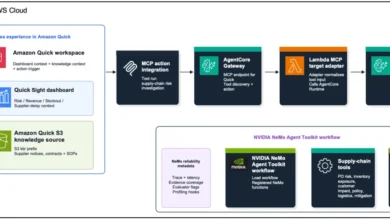
The most significant misconception in the current AI landscape is the belief that agentic systems will render traditional machine learning obsolete. In reality, the two technologies are complementary. Data scientists and systems architects are increasingly adopting a "tiered architecture" where traditional models serve as specialized nodes.
For instance, in a medical diagnostics setting, an agentic system acts as the "attending physician." It manages the patient’s intake, gathers historical data, and coordinates tests. When an X-ray is required, the agent calls upon a specialized, highly tuned convolutional neural network (CNN) trained specifically for radiology. The CNN provides the high-precision prediction, and the agent synthesizes that output with other data points—such as the patient’s age, symptoms, and previous diagnostic history—to provide a comprehensive recommendation.
This hierarchy ensures that the "heavy lifting" of pattern recognition remains with the models best suited for it, while the "logical coordination" is handled by the agent.
Economic and Operational Implications
For the enterprise, the integration of these technologies promises to lower the cost of operational complexity. According to recent industry benchmarks, companies that move beyond simple predictive models to agentic workflows report a 30% to 50% increase in productivity for administrative and analytical roles. The primary driver of this efficiency is the reduction of "human-in-the-loop" fatigue. By automating the retrieval and synthesis of information, agents allow human experts to focus on final verification and high-level strategy rather than data assembly.
However, this transition is not without risk. The move to agentic systems introduces new requirements for observability. Unlike a static model, where an error is usually traceable to the input data, an agent’s failure can occur at any step of its reasoning process. Organizations are now investing heavily in "traceability frameworks" that allow auditors to see the sequence of tool calls and logical decisions an agent made to arrive at a specific conclusion. This auditability is essential for regulated industries like insurance, healthcare, and finance.
Conclusion
The evolution of artificial intelligence is moving away from the isolated, single-step model toward a more holistic, systems-based approach. While traditional machine learning will remain the bedrock of high-precision prediction, agentic reasoning provides the architecture necessary to turn those predictions into tangible business results. By embedding specialized models within broader, agentic workflows, organizations can create AI systems that do not just offer insights, but actively contribute to the realization of complex, real-world objectives. The future of the industry lies not in choosing between these approaches, but in mastering the orchestration of both.