ChartMogul Introduces Advanced Analytics to Help SaaS Businesses Track Free Trials and Freemium Tiers

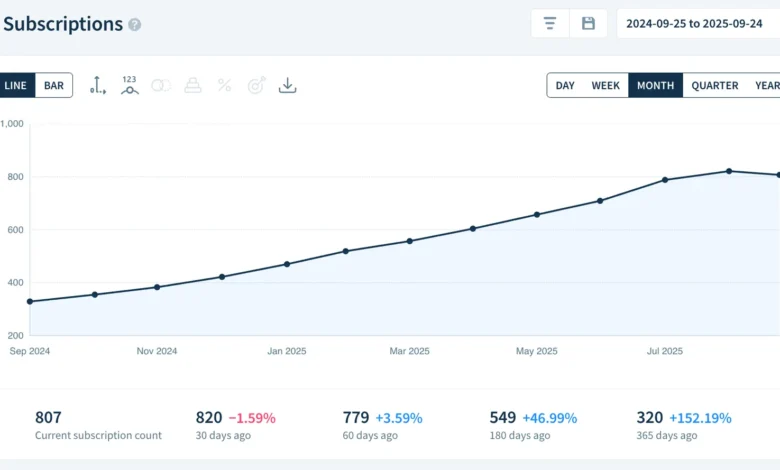
Subscription analytics platform ChartMogul has officially rolled out a comprehensive suite of features designed to track and analyze free trials and freemium tiers with the same precision previously reserved for paid subscriptions. Announced by CEO Nick Franklin, the update addresses a long-standing challenge in the Software-as-a-Service (SaaS) industry: bridging the visibility gap between top-of-funnel user acquisition and bottom-line recurring revenue.
For years, SaaS businesses have leaned heavily on free trials and freemium models to minimize friction in user acquisition. These strategies are foundational to modern software growth, allowing potential customers to experience core value propositions before committing capital. However, analytics infrastructure has traditionally lagged behind, forcing operators to rely on fragmented data sources or internal, custom-built tools to measure the lifecycle of non-paying users. With this latest release, ChartMogul integrates free subscriptions and trial metrics directly into its core reporting engine, offering a unified dashboard for the entire customer journey.
The Evolution of SaaS Monetization and the Visibility Gap
The genesis of the freemium and free trial model dates back to the early 2000s, gaining mainstream dominance alongside the cloud computing boom. As distribution costs plummeted, software companies realized that removing upfront financial barriers was the most effective way to scale user acquisition. Yet, this strategy created a complex analytical dilemma. While acquisition metrics (signups and downloads) were easy to measure, and financial metrics (Monthly Recurring Revenue and Annual Recurring Revenue) were tracked rigorously by platforms like ChartMogul, the bridge between the two remained opaque.
Product managers and revenue leaders frequently struggled to answer fundamental operational questions: Which specific plans generated the highest-converting free trials? At what point in the lifecycle did free users drop off? How did the behavior of trial users compare to those who opted for direct-to-paid purchases?
According to customer feedback gathered by ChartMogul over the years, hundreds of feature requests centered on the desire to slice free trial data by plan and gain granular visibility into free subscriber cohorts. Without this data, businesses were forced to guess the ROI of their top-of-funnel investments. The newly introduced capabilities are designed to eliminate this guesswork, providing exact metrics on conversion windows, user retention, and funnel velocity.
Core Product Updates and Technical Architecture
The rollout introduces several key structural changes to the ChartMogul platform, fundamentally altering how non-paying users are categorized and analyzed.

First, free trials and free subscriptions are now natively supported within the subscriptions table on individual customer profiles. Users are assigned clear lifecycle statuses—such as active, expired, and cancelled—allowing customer success and sales teams to view historical trial activity alongside billing data.
Second, the platform has introduced a suite of new and updated reports. The All Subscribers and All Subscriptions charts allow operators to track paid and free users within a single unified view. To monitor attrition, ChartMogul has launched the All Subscriber Churn Rate report, capturing total churn across all user types, alongside the Paid Subscriber Churn Rate report, which isolates paying customers. Pre-existing charts have been systematically renamed to Paid Subscribers and Paid Subscriptions to prevent ambiguity.
Furthermore, conversion analytics have received a substantial upgrade. The existing Trial-to-Paid Conversions report has been refined, and a new Trial-to-Free-or-Paid Conversions report has been added. These tools enable revenue teams to filter trials by specific product plans, benchmark conversion efficiency, and pinpoint bottlenecks within the onboarding funnel.
Out-of-the-box data modeling currently supports major billing gateways such as Stripe and Recurly. Conversions from trials to free or paid tiers are automatically linked, ensuring clean data lineage without requiring engineering teams to write custom tracking scripts.
Industry Reactions and Early Case Studies
The update has drawn praise from prominent high-growth SaaS companies that rely heavily on trial-driven conversion loops.
Spencer Rowley, Growth Product Manager at Topaz Labs, emphasized the strategic value of the new reporting capabilities. Being able to understand our free trial conversion rate by product is extremely important to us and directly informs key business decisions, Rowley noted. ChartMogul implementing this feature was huge for us—it gives us a much clearer picture of what’s happening with our users, the quality of our free trial experience, and helps us quickly pinpoint any issues. It also lets us compare trial behavior versus direct purchase, which has been super helpful for a variety of reasons.
Similarly, Brenna Loury, Chief Revenue Officer at Doist, underscored the operational impact of gaining visibility into the trial phase. Trials are absolutely critical to our business, so being able to track their performance in ChartMogul is a game-changer, Loury stated. We finally see the complete picture of what’s happening during that make-or-break period, which means we can make smarter decisions about both our product roadmap and business strategy.
Rollout Timeline and Implementation Process
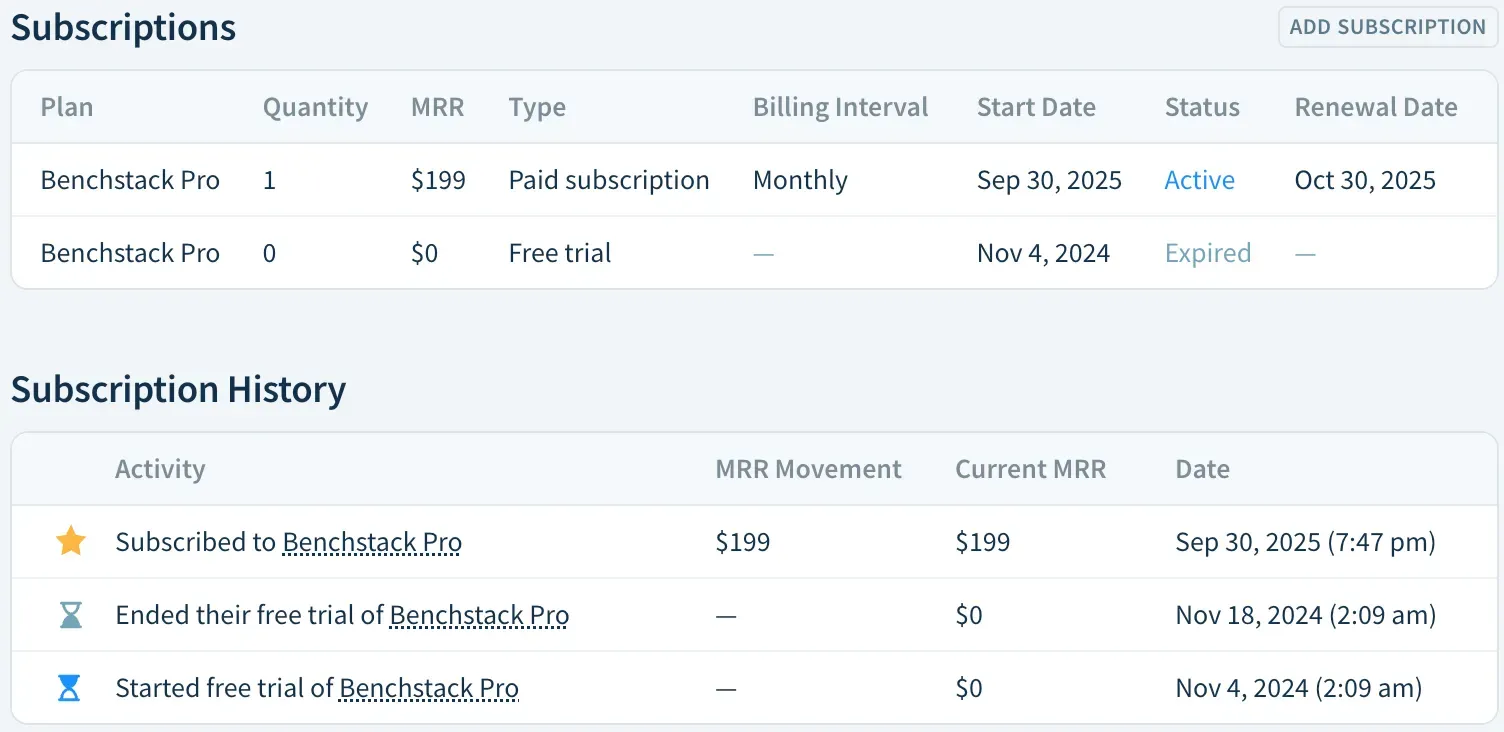
For businesses utilizing supported billing infrastructure like Stripe and Recurly, the transition is designed to be seamless. Companies do not need to alter their existing event tracking or modify codebases. Once the feature is enabled on an account, free trials and subscriptions will automatically populate within the reporting dashboards.
The feature is immediately available to new accounts. For existing ChartMogul customers, the platform rollout is scheduled to deploy progressively, accompanied by related performance enhancements and UI optimizations.
Broader Market Implications for Subscription Businesses
The introduction of native freemium and trial analytics reflects a broader maturation of the SaaS tech stack. As venture capital markets have tightened and valuation multiples have shifted from pure top-line growth to capital efficiency and net revenue retention, SaaS leadership teams face intense pressure to optimize every layer of the funnel.
By folding free-tier analytics into standard financial reporting, platforms like ChartMogul are helping businesses bridge the historical divide between product usage data and financial accounting. Historically, product analytics tools (such as Mixpanel or Amplitude) measured user behavior, while subscription analytics tools (such as ChartMogul or Baremetrics) measured revenue. Integrating trial lifecycle data into a revenue-centric platform points to an ongoing industry convergence: financial metrics and product telemetry are increasingly treated as a single, continuous dataset.
For CFOs, CROs, and product leaders, this convergence enables more accurate customer lifetime value (LTV) projections and customer acquisition cost (CAC) calculations. When a business can accurately attribute future revenue back to the specific free trial variant or freemium feature that initiated the customer journey, marketing budgets can be deployed with surgical precision.
As ChartMogul continues to roll out these capabilities across its global user base, the platform expects to gather further operational feedback from operators navigating complex monetization models. Future iterations will likely expand native integrations beyond Stripe and Recurly, bringing automated trial modeling to custom billing engines and enterprise invoicing systems. For now, the current release provides a significant upgrade for organizations seeking to decode the mechanics of user acquisition in an increasingly competitive software market.