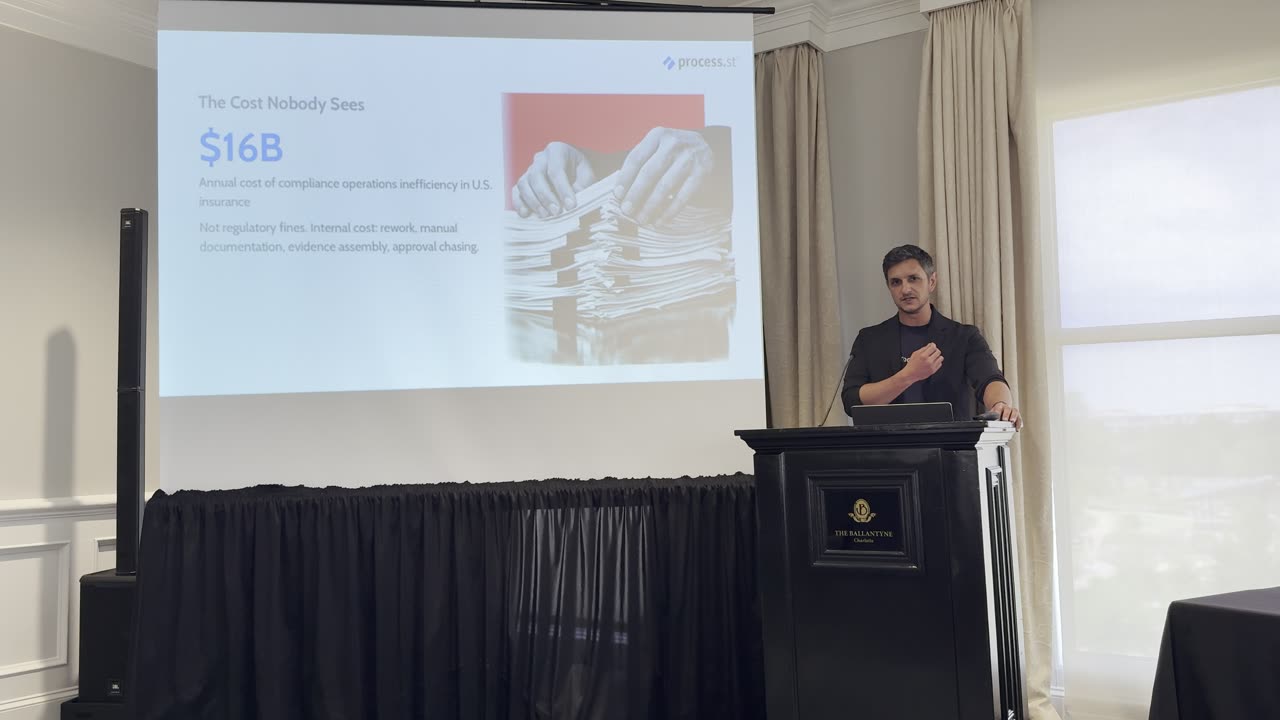
CHARLOTTE, NC – A stark figure, $16 billion, emerged as the focal point of discussion last week at the IRES 2026 conference, a gathering of insurance compliance leaders, carrier representatives, MGAs, and state regulators. This substantial sum represents the estimated annual cost of inefficiency within U.S. insurance compliance operations, a figure that resonated deeply with attendees, highlighting a pervasive challenge far beyond regulatory penalties. The core of the issue, as presented, lies not in fines levied by governing bodies, but in the internal costs associated with rework, laborious manual evidence gathering, protracted approval processes, and the reliance on outdated communication methods for tasks that could be automated.
The IRES (Insurance Regulatory and Compliance Excellence Summit) conference, held annually in Charlotte, North Carolina, serves as a crucial platform for stakeholders across the insurance industry to convene, share insights, and address the evolving landscape of regulatory adherence. This year’s summit, held from April 15-17, 2026, brought together a diverse group of professionals grappling with the increasingly complex demands of compliance in a rapidly changing market. The presenter, Vinay Patankar, CEO of Process Street, a company specializing in workflow automation, aimed to illuminate a significant, yet often overlooked, financial burden plaguing the industry.
A Real-World Diagnosis: The Case of a Top P&C Carrier
To illustrate the magnitude of this internal cost, Patankar detailed a case study involving a prominent top-10 Property & Casualty (P&C) carrier operating nationwide. Prior to implementing significant operational changes, this carrier managed an overwhelming volume of approximately 1,500 to 2,000 rate changes annually. The coordination of these critical changes was managed through a chaotic system of email chains, often involving multiple iterations of documents with confusing versioning, such as "final final v3." Accompanying this manual process was a legacy IT system, reportedly costing thousands of dollars per day to maintain, with some of its components predating the tenure of every current employee within the organization.
The challenges presented by this scenario were not lost on the compliance leaders in attendance. The sheer volume of manual work, the antiquated systems, and the inherent risks of error in such a fragmented process were familiar pain points. However, the diagnosis offered by Patankar extended beyond the symptoms to uncover a more fundamental issue.

The Operating Model as the Root Cause
The prevailing belief within many insurance organizations, as highlighted by Patankar, is that compliance and operations are distinct and often siloed disciplines. Compliance teams are tasked with defining the rules and policies, while operations teams are responsible for executing the daily tasks. The disconnect arises when there is a significant time lag, often up to six months, between policy creation and the ability to definitively prove adherence. This gap, according to the analysis, is precisely where audit exposure accumulates. It is not a matter of deliberate negligence, but rather an inherent flaw in the operating model that compels compliance to be a retrospective reconstruction rather than an integrated component of ongoing work.
To address this systemic issue, Patankar introduced a four-component framework designed to embed compliance directly into operational workflows. This framework comprises:
- Policy Governance: Establishing clear, well-defined compliance policies and procedures.
- Policy Execution through Structured Workflows: Translating these policies into actionable, step-by-step workflows that guide employees through tasks.
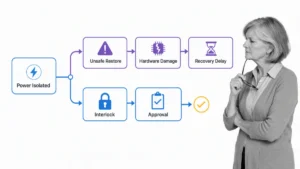
- Automatic Evidence Capture as Work Happens: Integrating mechanisms within these workflows to automatically document each step, decision, and approval.
- Continuous Audit Readiness: Ensuring that the captured evidence is organized and accessible, transforming audits from arduous investigative efforts into straightforward verification processes.
The core principle of this framework is straightforward: compliance should naturally emerge as a byproduct of performing work correctly, rather than being treated as a separate, post-hoc project.
The Transformative Impact: Eliminating "Audit Season"
The statement that resonated most profoundly with the audience was the assertion: "You don’t have an audit season anymore." This declaration underscores a fundamental shift in how compliance can be managed. When evidence is captured at the precise moment of task execution, the laborious and often stressful "audit season" – characterized by piecing together fragmented information from emails, timestamps, and disparate files – can be effectively eliminated. Instead, audits transform into a process of verification, where the system’s recorded actions are confirmed, rather than a historical excavation.
This paradigm shift is precisely what Process Street was engineered to facilitate. The platform embeds compliance enforcement directly within the operational workflow itself, rather than being an afterthought. Features such as built-in document approvals, for instance, ensure that every policy sign-off is automatically recorded as an integral part of the work being done, creating an immutable audit trail.
Tangible Results from Workflow Automation
The impact of this integrated approach was vividly illustrated by the results achieved by the top-10 P&C carrier after implementing the framework across their first five workflows. While specific percentage reductions in manual effort or time savings were not detailed in the presentation, the implication of significant improvements was clear. These initial successes were achieved by a carrier operating at a scale and with a regulatory complexity that could thoroughly stress-test any system, lending considerable credibility to the findings.
Similar transformative results have been observed in other sectors. For instance, NC State University’s tech transfer office successfully automated their federal compliance workflows using Process Street. This initiative not only streamlined their processes but also led to the recovery of $200,000 in previously missed fees. The common thread across these successes, as emphasized by Patankar, was not a specific feature or a particular vendor, but rather a fundamental strategic decision: to cease treating compliance and operations as disparate departments with distinct tools and timelines.
The Lingering Question for Industry Leaders
Patankar concluded his presentation by posing a critical question for compliance leaders within insurance carriers: "How much of that $16 billion is showing up inside your own operation? How many of your audit artifacts exist only because a human chased them down?" This question serves as a direct challenge to re-evaluate internal processes and identify the hidden costs of inefficient compliance management.
The gap between policy intent and demonstrable proof is the breeding ground for risk. By bridging this gap, compliance can transition from being a costly necessity to becoming the very operating system that drives efficiency and mitigates risk. The initial step, as suggested, can be as simple as utilizing an insurance audit checklist to identify areas where a system can automate evidence capture and streamline compliance verification, ultimately transforming a perceived burden into a strategic advantage. The industry’s collective move towards a more integrated and automated approach to compliance promises not only significant cost savings but also a more resilient and trustworthy operational framework.