The 6 Sense-Making Questions: A Framework for Strategic Leadership and Organizational Resilience

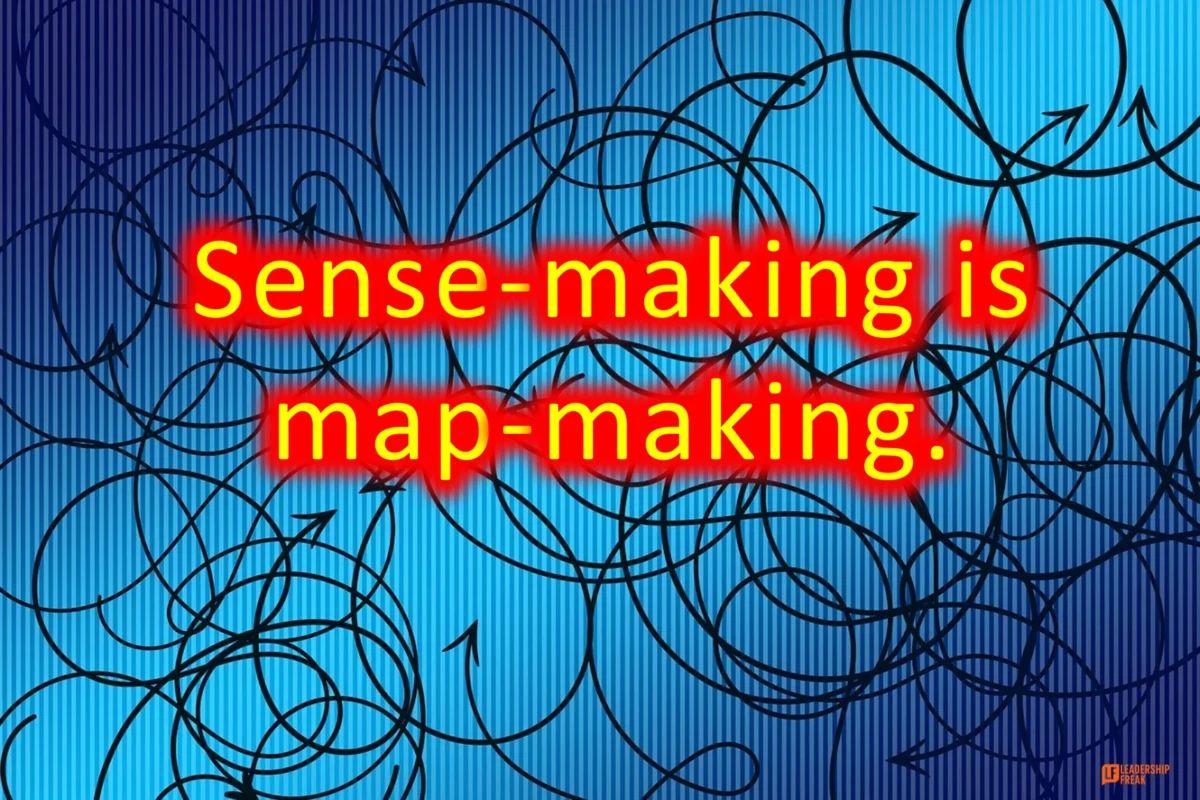
Sense-making serves as the fundamental process of map-making within a professional environment, providing leaders with the necessary tools to navigate complex organizational landscapes. In a volatile, uncertain, complex, and ambiguous (VUCA) world, the ability to interpret events accurately is often more critical than the events themselves. Leadership effectiveness is not merely a product of rapid response; it is determined by the internal cognitive frameworks through which a leader filters information. This process of sense-making runs primarily on high-quality inquiry, utilizing specific questions to transform raw data into actionable intelligence.
To understand the weight of sense-making, one must recognize that individuals do not respond to events in a vacuum. Instead, they respond to the perceived meaning of those events. When a leader misinterprets a situation, their subsequent decisions—no matter how decisive—are likely to be misaligned with reality. This psychological and organizational discipline is what allows executives to maintain composure during crises and clarity during periods of rapid growth.
The Six-Question Framework for Cognitive Clarity
The process of sense-making can be distilled into six primary questions. Each question serves as a cognitive milestone, helping leaders move from observation to strategic execution while avoiding the common pitfalls of bias and emotional reactivity.
1. What is happening? (Labeling the Situation)
The first step in any sense-making exercise is the objective labeling of the current state. This requires a leader to strip away assumptions and look at the raw facts. Labeling is a powerful cognitive tool; it defines the boundaries of the problem. However, the danger at this stage is mislabeling. If a leader labels a systemic operational failure as a "temporary glitch," they will fail to allocate the resources necessary for a permanent fix. Conversely, over-labeling a minor setback as a "catastrophic failure" can trigger unnecessary panic and resource drain.
2. Why is this happening? (Assigning Causality)
Once a situation is labeled, the mind naturally seeks a cause. This is the stage where leaders assign responsibility and identify drivers. Effective sense-making requires a rigorous investigation into root causes, often utilizing methodologies like the "Five Whys." The inherent risk here is the invention of causes that are disconnected from reality. Leaders often fall prey to "narrative fallacy," where they create a logical story to explain an event, even if the event was caused by random chance or external factors outside their control.

3. What does this say about me? (Defining Identity)
Leadership is inherently personal, and events are often filtered through the lens of self-perception. This question addresses the leader’s identity and their perceived competence. In high-stakes environments, there is a constant danger that events become "verdicts" on a leader’s worth. For instance, a failed product launch might be interpreted by a leader as proof of their own inadequacy rather than a result of market timing. When sense-making is healthy, it allows a leader to separate their identity from the outcome, viewing setbacks as data points rather than character flaws.
4. What does this mean about others? (Judging the Collective)
Just as leaders judge themselves, they also use events to judge their teams, partners, and competitors. This stage involves the formation of stories regarding the intentions and capabilities of others. The danger lies in these stories hardening into permanent assumptions. If a team misses a deadline, a leader might conclude they are "lazy" or "unreliable." Once these labels are applied, they become self-fulfilling prophecies, as the leader stops providing the support or trust the team needs to improve.
5. What happens next? (Predicting the Future)
Sense-making is forward-looking. Based on the interpretation of the present, leaders attempt to forecast the trajectory of the situation. This involves mental modeling and scenario planning. The risk is that these "guesses" are often treated as certainties. When predictions become the sole basis for major financial or strategic decisions without being stress-tested, organizations become vulnerable to "black swan" events—unforeseeable occurrences that have a major impact.
6. What should I do now? (Choosing a Response)
The final question in the framework is the transition from thought to action. The chosen response is the direct output of the previous five questions. If the perception of the problem is distorted, the action will be destructive. Strategic sense-making ensures that the response is proportionate to the situation. For example, if a decline in performance is labeled as a "lack of commitment," the leader might choose a disciplinary response. However, if the same performance decline is correctly identified as "burnout," the appropriate response would be a supportive intervention or a restructuring of workloads.
The Three Pillars of Effective Implementation
Understanding the questions is only the beginning. To master sense-making, leaders must adopt specific behavioral habits that prevent cognitive shortcuts.
Slowing the Response
The human brain is wired for "System 1" thinking—fast, instinctive, and emotional. While this was useful for evolutionary survival, it is often detrimental in modern corporate strategy. First explanations are frequently distorted by recent experiences or personal biases. By intentionally pausing, leaders can engage "System 2" thinking, which is slower, more analytical, and more logical. The most effective question a leader can ask during this pause is: "What else could be true?" This simple inquiry forces the brain to look for alternative explanations that may have been overlooked in the initial rush to judgment.

Testing the Story
Sense-making should never be a solitary activity. Because every individual has blind spots, accurate map-making requires multiple perspectives. Leaders should vocalize their interpretations: "Here is what I think is happening." By stating their narrative out loud, they make it available for critique. Inviting alternatives—"What am I missing?" or "How do you see this differently?"—allows for a more comprehensive and accurate map of the situation to emerge. This collaborative approach is a hallmark of high-reliability organizations (HROs), such as air traffic control centers or nuclear power plants, where sense-making is a constant, shared activity.
Testing the Solution
Before a decision is finalized, it must be tested against the assumptions that birthed it. Leaders must ask: "What assumptions are motivating this decision?" If the underlying assumption is flawed, the solution will likely fail. This "pre-mortem" analysis helps identify potential points of failure before resources are committed.
Historical Context and Theoretical Background
The concept of sense-making was pioneered by organizational psychologist Karl Weick in the 1970s. Weick argued that organizations are not fixed structures but are instead continuously "enacted" through the sense-making processes of their members. According to Weick, sense-making is about the "interplay of action and interpretation." It is less about finding a single "truth" and more about creating a plausible story that allows people to keep moving forward in an organized fashion.
Research from the MIT Sloan School of Management further emphasizes that sense-making is the "overlooked key" to leading through chaos. In their studies of leadership during the COVID-19 pandemic and the 2008 financial crisis, researchers found that the most successful leaders were those who spent more time observing and interpreting the environment before acting. These leaders viewed their initial maps as "working drafts" rather than final blueprints, allowing them to pivot as new information became available.
Broader Impact on Organizational Culture
When sense-making becomes a core competency within an organization, the culture shifts from one of blame to one of learning. In a blame-heavy culture, sense-making is defensive; individuals interpret events in ways that protect their own interests. In a learning culture, sense-making is objective and inquisitive.
This shift has profound implications for employee well-being and retention. When leaders use the sense-making framework, they are less likely to make erratic decisions that cause unnecessary stress. They are also more likely to recognize the human element in operational data. As noted in the example of performance labeling, the difference between pushing an employee harder and offering them support lies entirely in the leader’s sense-making process. Correctly identifying burnout prevents talent attrition and builds long-term loyalty.

The Strategy-Reality Gap
A significant challenge for modern leadership is the "strategy-reality gap," where the official corporate strategy no longer aligns with the actual market conditions. Sense-making acts as the bridge across this gap. By constantly asking "What is happening?" and "Why is this happening?", leaders can detect early warning signs of market shifts or internal friction.
To test a strategy against reality, leaders are encouraged to engage in "skip-level" meetings and "front-line" observations. Data on a spreadsheet is a filtered version of reality; seeing the work being done provides the raw input necessary for high-fidelity sense-making. This practice ensures that the "map" used by the executive suite actually matches the "terrain" navigated by the employees.
Conclusion: Sense-Making as a Competitive Advantage
In the current global economy, information is abundant, but meaning is scarce. The ability to synthesize disparate data points into a coherent and accurate narrative is a rare and valuable skill. Leaders who master the six sense-making questions do more than just solve problems; they provide a sense of direction and stability for their entire organization.
By slowing down responses, testing stories with diverse voices, and constantly challenging underlying assumptions, leaders can avoid the "dangerous stories" that lead to strategic failure. Sense-making is not a one-time event but a continuous cycle of observation, interpretation, and action. In the end, the quality of a leader’s questions determines the quality of their decisions, and the quality of their decisions determines the future of their organization. As the professional landscape continues to evolve, those who can make sense of the chaos will be the ones who lead the way forward.