Off By One with Jeff Atwood Debuts on TWiT Network, Offering Unique Perspectives on Tech, Society, and Programming Philosophy

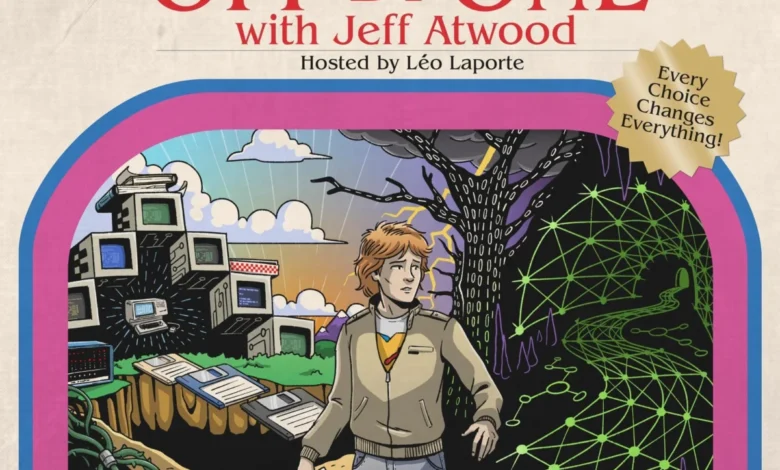
A new monthly program titled "Off By One with Jeff Atwood," co-hosted by renowned tech broadcaster Leo Laporte and the influential co-founder of Stack Overflow and Discourse, Jeff Atwood, has premiered on the TWiT network. The show, which launched its second episode recently, aims to deliver a distinctive blend of tech commentary, societal observations, and programming philosophy, distinguished by its positive tone and often unconventional thematic tangents. The collaboration marks a significant addition to TWiT’s diverse programming, bringing Atwood’s candid insights to a broader audience in an interactive audio-visual format.
The Genesis of a Collaborative Venture
The seeds for "Off By One" were sown approximately three weeks prior to the recording of its first official episode, following a highly engaging guest appearance by Jeff Atwood on TWiT’s "Intelligent Machines #859" on February 25th. During this appearance, Atwood joined hosts Leo Laporte, Paris Martineau, and Jeff Jarvis, delivering a performance characterized by what he describes as "chaotic good." This initial interaction, facilitated by Wesley Faulkner who introduced Atwood to Laporte and recommended his guest spot, proved instrumental in forging the connection that would lead to the new monthly series. The dynamic chemistry and Atwood’s unique perspective resonated strongly, prompting the development of a dedicated show designed to capture that energy consistently. The success of this initial guest slot underscored the potential for a more sustained collaboration, allowing Atwood to transition his prolific written commentary from the "Coding Horror" blog into a live, conversational medium.
Naming the Show: A Nod to Programmer Humor
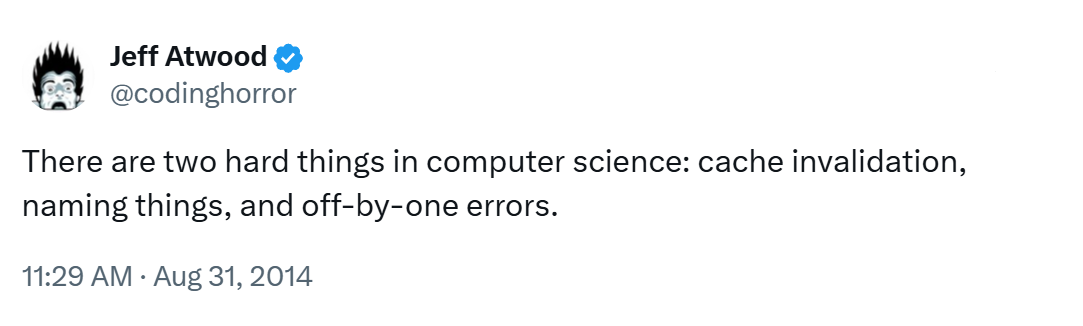
The process of naming the new show, often cited as one of the "two hard things in computer science" alongside cache invalidation, was approached with a lighthearted yet insightful strategy. While a community vote, reminiscent of how Stack Overflow was named, was briefly considered, the hosts quickly settled on "Off By One with Jeff Atwood." This title cleverly references a common programming error known as an "off-by-one error," where a loop iterates one too many or one too few times. This subtle nod to developer culture is further embellished by a widely circulated programmer joke, a humorous rephrasing of the classic quote by computer scientist Martin Fowler, stating: "There are two hard things in computer science: cache invalidation, naming things, and off-by-one errors." The name encapsulates the show’s intended spirit – a deep dive into tech topics that might occasionally "stray" by one topic, but always in an entertaining and meaningful way. The irony and self-referential humor inherent in the title immediately resonate with those familiar with software development, while also offering a quirky hook for general tech enthusiasts.
A Deep Dive into "Off By One" Content and Philosophy
The "Off By One" program is designed as a monthly exploration, with each episode aiming for nearly two hours of what Atwood describes as "pure joy end to end. No negativity, just low-level insanity and of course, mandatory fun." This commitment to a positive and engaging atmosphere distinguishes it from some of the more critical or news-driven tech analysis prevalent in media. The second episode, titled "From Stack Overflow to Stay Gold, America," exemplifies the show’s wide-ranging discussions, moving fluidly between technical insights and broader societal concerns.
Atwood’s Philosophy on Code and Engineering:
A central theme emerging from the show is Atwood’s nuanced perspective on software development. Despite his significant contributions to the tech world, he humbly states, "I am not an elite coder by any stretch of the imagination… I am very persistent." This self-assessment is immediately challenged by Laporte, who acknowledges Atwood’s status as a leading voice in coding. Atwood clarifies his advocacy: "Well, I advocate for code that doesn’t kill you in so many different ways. You know, survivable code. Ideally, no code at all. That’s the best code, is none." This "zen statement," as he calls it, underscores his belief in robust, minimalist, and human-centric engineering practices. He champions "good engineering. Good process. A process that recognizes that we’re human and we should do this together, and we should actually kinda like each other, even." This philosophy reflects a broader movement in software development towards sustainable, maintainable, and collaborative approaches, moving beyond mere technical proficiency to encompass ethical and social dimensions.
Addressing Societal Issues: Wealth Inequality:
Beyond technical discourse, Atwood and Laporte delve into significant societal challenges, notably wealth inequality. Atwood passionately asserts, based on his research and analysis, that "if we simply collected a fair tax from Billionaires, we could literally eliminate all poverty in this country at the 100% FPL level, which is $15,000 per year. All poverty. We would have zero poverty. We have the means to do it. We lack the will." This direct and unequivocal statement highlights a critical issue that has gained increasing prominence in public discourse, particularly within the tech sector, which has seen unprecedented wealth creation concentrated among a few. Atwood’s call for policy changes to address economic disparity aligns with growing concerns about social responsibility and the role of technology leaders in shaping a more equitable future. His reference to "winning capitalism" with his father and then "making it better for everyone" points to a personal commitment to these ideals, suggesting that success should be leveraged for collective good.
The Nuances of AI: "JPEG for Words":
The rapid advancements in Artificial Intelligence, particularly Large Language Models (LLMs), also feature prominently in the discussions. Atwood offers a compelling and easily digestible analogy for LLMs, describing them as "JPEG for words." He elaborates on this concept, stating, "It has no actual understanding. It’s playing a game of global brain statistics and copy paste. And it’s good at like, merging… I call it JPEG for words, which it kind of is. And there’s so much stuff. It’s like reading summaries." He recounts skepticism about LLM capabilities for summarization on Discourse, only to be genuinely impressed by their accuracy in condensing complex discussions. While acknowledging their utility, he cautions that "JPEG for words" implies a lossy compression, similar to how JPEG compression might fail on certain images (e.g., Garfield). This analogy provides a practical framework for understanding both the strengths and inherent limitations of current generative AI technologies, promoting a balanced view that avoids both undue hype and dismissive skepticism.
The TWiT Network and Club TWiT: A Platform for Connection

The "Off By One" show finds its home on the TWiT Network (This Week in Tech), a pioneering force in tech podcasting and broadcasting, founded by Leo Laporte. Laporte, a venerable figure in tech media with a career spanning decades, established TWiT as a platform for in-depth, personality-driven discussions about technology. The network has grown to host numerous popular shows, building a dedicated global audience.
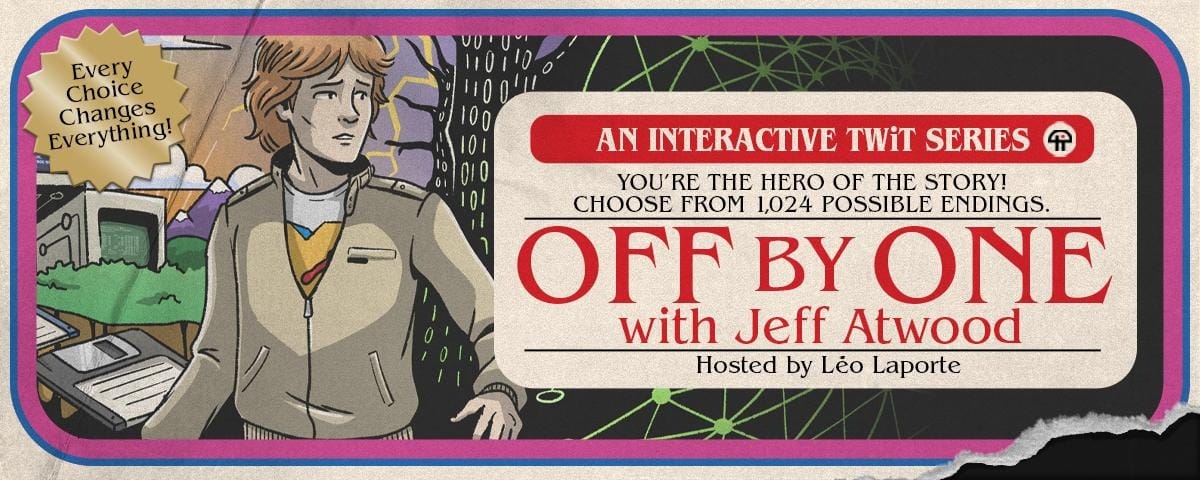
A key component of the TWiT ecosystem is "Club TWiT," a membership program offering exclusive benefits such as ad-free content, access to live show recordings, and participation in community forums. The "Off By One" show leverages this platform, with live streams of upcoming recordings available exclusively to Club TWiT members. To further engage the community and encourage new memberships, Jeff Atwood has extended a generous offer: the first ten individuals who watch the full second episode, enjoy the content, and complete a specified form will receive a complimentary one-year Club TWiT membership, personally covered by Atwood. This initiative not only supports the TWiT network but also directly invites new listeners into the broader TWiT community, aligning with Atwood’s philosophy of sharing and collective experience. The show’s permanent homepage, twit.tv/obo, serves as the central hub for all episodes and information, featuring distinctive artwork by claygrahamart.com that captures the show’s interactive and exploratory spirit.
Fostering Community and the Power of the Paragraph
Atwood’s commitment to community and effective communication extends beyond the show itself. He emphasizes the importance of the TWiT community Discourse forum, where he is more likely to engage with comments and questions from listeners. This preference for structured, written discussion platforms reflects his background with Discourse, an open-source platform he co-founded to improve online communication.
He advocates for what he terms "the power of the paragraph," encouraging participants to "try on a paragraph for size… The practice of writing paragraphs and forming coherent narratives might even improve your overall writing and communication skills. Or your life, even." This philosophy is a cornerstone of his "Coding Horror" blog, where he has consistently championed clear, logical expression. This emphasis on thoughtful, organized communication stands in contrast to the often fragmented and ephemeral nature of modern digital interactions, underscoring the value of sustained engagement and well-articulated ideas. The show itself, by providing a long-form conversational format, embodies this principle, allowing for nuanced exploration of complex subjects.
Furthermore, a playful rumor suggests that active Club TWiT members who regularly post on the TWiT Discourse might receive a "super cool little token of appreciation" in the mail from a user named "Junk" – a clear incentive for deep engagement and participation within the community.
Broader Impact and Implications
The launch of "Off By One with Jeff Atwood" carries significant implications for both the TWiT Network and the broader tech media landscape. By combining the conversational prowess of Leo Laporte with the deep technical and philosophical insights of Jeff Atwood, the show offers a unique blend of entertainment, education, and social commentary.
Atwood’s candid discussions on topics like wealth inequality and the ethical implications of technology position the show as more than just a tech review or news program. It becomes a platform for critical thought and advocacy, encouraging listeners to consider the broader societal impact of technological advancements and economic structures. His ability to distill complex ideas into accessible analogies, such as "JPEG for words" for LLMs, makes these discussions approachable for a wide audience, from seasoned developers to casual tech enthusiasts.
The show also reinforces Atwood’s long-held belief that "My happiness only becomes real when I share it with all of you." This sentiment, previously expressed through his prolific writing, now finds a new dimension in video and audio, allowing audiences to "see and hear how we feel." This personal connection, conveyed through expressions, tone, and body language, adds a layer of authenticity and intimacy that written words alone cannot fully achieve. The collaboration represents a powerful synergy between a veteran broadcaster known for his accessibility and a respected thought leader celebrated for his sharp insights and commitment to ethical technology. "Off By One" is poised to become a noteworthy voice in tech media, contributing to ongoing dialogues about innovation, responsibility, and the human element within the digital realm.
The next episode of "Off By One" is scheduled for recording in four days, with a live stream available to Club TWiT members, ensuring the continuity of these compelling monthly discussions. The show stands as a testament to the enduring power of collaborative media to foster community, share knowledge, and explore the intricate relationship between technology and society.