The Power of Leadership Storytelling in Modern Corporate Management and the Neuroscience of Connection

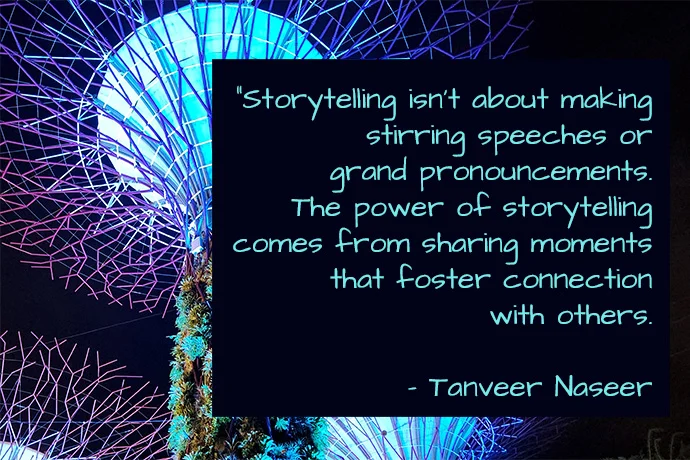
The evolution of corporate communication has undergone a fundamental shift in the 21st century, moving away from a purely transactional exchange of data toward a more nuanced, narrative-driven approach known as leadership storytelling. As organizations grapple with the complexities of global markets, remote workforces, and rapid technological disruption, the ability to convey a compelling narrative has transitioned from a perceived "soft skill" to a critical strategic asset. This transition is not merely a trend in management theory but is deeply rooted in human biology and the neurological mechanisms that govern trust, empathy, and collective action. By leveraging the way the human brain is evolutionarily hardwired to process information, modern leaders are finding that stories are more effective than spreadsheets at driving systemic change and fostering long-term employee engagement.
The Biological Mechanism: Why the Brain Prioritizes Narrative
The efficacy of storytelling in a professional environment is explained by complex neurochemical reactions that occur when a human being processes a narrative. Research in the field of neuroeconomics, most notably by Dr. Paul Zak, has identified oxytocin as a key component in this process. Oxytocin is a neurochemical produced in the brain that is often associated with social bonding, empathy, and the enhancement of trust. When a leader shares a story that follows a traditional dramatic arc—incorporating a challenge, a struggle, and an eventual resolution—the listener’s brain releases oxytocin. This chemical signal signals to the individual that the speaker is trustworthy and that the information being shared is socially relevant.
Furthermore, storytelling triggers a phenomenon known as "neural coupling." During a well-told story, the brain activity of the listener begins to mirror that of the storyteller. Functional MRI (fMRI) scans have shown that when an individual hears a narrative, their brain activates the same regions—such as the sensory cortex and the motor cortex—that would be active if they were actually experiencing the events described. This creates a shared mental space between the leader and the team, allowing for a level of alignment that traditional data-heavy presentations cannot achieve. Unlike a list of bullet points, which only activates the language-processing parts of the brain (Broca’s and Wernicke’s areas), a story engages the entire brain, making the information significantly more memorable and impactful.
Case Study in Transformation: The Ford Motor Company Turnaround
The practical application of leadership storytelling is perhaps best exemplified by the tenure of Alan Mulally as CEO of Ford Motor Company. When Mulally joined Ford in 2006, the American automotive giant was on the brink of bankruptcy, reporting a record loss of $12.7 billion. The corporate culture was described as siloed, fearful, and lacking a cohesive direction. Mulally’s strategy for revival, dubbed "One Ford," did not rely solely on financial restructuring or manufacturing efficiencies; it relied heavily on a narrative of unity and shared purpose.
Mulally utilized storytelling to bridge the gap between disparate global departments that had previously operated as competing entities. He framed the company’s survival not as a series of cost-cutting measures, but as a journey toward a singular goal: a sustainable, profitable company that produced high-quality vehicles for all. By consistently telling the story of "One Ford," Mulally provided employees with a sense of belonging and a clear role within a larger historical narrative.
A pivotal moment in this narrative-driven turnaround occurred during his "Business Plan Review" meetings. Mulally encouraged executives to share the "real story" of their departments, including failures and obstacles. By modeling vulnerability and honesty—key components of effective storytelling—he transformed the internal narrative from one of blame to one of collective problem-solving. By 2009, while competitors General Motors and Chrysler required government bailouts, Ford remained solvent and returned to profitability, a success largely attributed to the cultural alignment achieved through Mulally’s narrative leadership.
The Chronology of Narrative Integration in Leadership
The integration of storytelling into formal leadership frameworks has followed a distinct timeline over the past several decades:
- Pre-1990s: Corporate communication is largely top-down and transactional, focusing on "Command and Control" structures. Information is disseminated through memos and formal reports.
- 1990s – Early 2000s: The rise of "Mission Statements" and "Core Values." While these were attempts at narrative, they often remained static and failed to engage employees emotionally.
- 2006 – 2014: High-profile successes like Mulally’s Ford turnaround and Steve Jobs’ product launches at Apple demonstrate the market value of narrative. Storytelling begins to be taught in MBA programs.
- 2015 – 2020: The "Purpose Revolution." Data from Gallup and other research firms show a direct correlation between "purpose-driven" work and employee retention. Storytelling becomes the primary tool for communicating this purpose.
- 2021 – Present: In the wake of the global pandemic and the shift to hybrid work, storytelling is utilized to maintain organizational culture across digital divides.
Supporting Data: The Quantitative Impact of Narrative
While the emotional impact of a story is qualitative, the results are increasingly measurable. According to data from the Harvard Business Review, messages delivered as stories can be up to 22 times more memorable than facts alone. In the context of employee engagement, a 2023 study found that organizations with leaders who effectively communicate the "company story" see a 27% increase in employee productivity and a 40% reduction in turnover rates.
Additional data suggests that "cognitive multitasking" in the modern workplace has reduced the average human attention span. In an environment where an employee receives an average of 120 emails per day, the "noise-to-signal" ratio is at an all-time high. Narrative serves as a cognitive filter. By framing information within a story, leaders reduce the cognitive load on their employees, making it easier for them to synthesize information and prioritize tasks that align with the organizational narrative.
Strategic Implementation: How Leaders Construct Connection
For storytelling to be effective in a professional setting, it must move beyond entertainment and serve as a tool for "context and clarity." Experts suggest three primary methods for leaders to implement this strategy:
1. The Vulnerability Bridge
Effective leadership storytelling requires the speaker to share personal experiences that include moments of failure or learning. This transparency breaks down the hierarchical barriers between management and staff. When a leader shares a story about a mistake they made early in their career, it creates a "psychologically safe" environment where employees feel empowered to innovate without the paralyzing fear of failure.
2. Framing Challenges as Journeys
Instead of presenting a quarterly challenge as a looming threat, narrative-driven leaders frame it as a chapter in a larger journey. This technique combats "short-termism"—the tendency to focus only on immediate results at the expense of long-term health. By painting a picture of where the company has been and where it is going, leaders provide the "fuel" necessary for employees to navigate periods of uncertainty.
3. Creating an "Open Narrative"
The most successful leaders do not just tell their own stories; they create a framework that allows others to contribute. This involves encouraging employees to see their individual contributions as essential plot points in the company’s overall success. When an employee sees themselves as a character in the story rather than a cog in a machine, their sense of ownership and accountability increases exponentially.
Broader Implications and the Future of Corporate Narrative
The rise of storytelling in leadership has significant implications for the future of work. As Artificial Intelligence (AI) takes over more data-processing and analytical tasks, the "human" elements of leadership—empathy, inspiration, and moral judgment—become more valuable. AI can generate a report, but it cannot authentically share a personal experience that inspires a team to persevere through a crisis.
Furthermore, in an era of "The Great Disconnect," where many employees feel alienated from their employers, storytelling serves as the essential glue that maintains social cohesion. It provides the "why" behind the "what," offering a sense of meaning that transcends a paycheck. As organizations move toward 2030, the ability to curate and communicate a compelling organizational narrative will likely be the primary differentiator between companies that merely survive and those that lead their respective industries.
In conclusion, the power of leadership storytelling lies in its unique ability to cut through the digital noise of the modern world and establish a profound emotional connection. By understanding the neuroscience of the human brain and applying the lessons from historic corporate turnarounds, today’s leaders can use narrative to drive innovation, foster trust, and build resilient organizations capable of thriving in an increasingly unpredictable global landscape. The story of a company is no longer just a marketing tool; it is the very foundation of its operational success.