OpenAI Enters the Advertising Arena: Analyzing the Early Challenges and Strategic Implications for Marketers

OpenAI is rapidly emerging as a significant new advertising channel within the digital landscape, yet early advertiser sentiment remains characterized by a complex mix of cautious optimism and mounting frustration as brands grapple with limited data, unclear performance metrics, and a product ecosystem that is evolving at an unprecedented pace. Approximately two months after the initial rollout of advertising capabilities within the ChatGPT interface, the marketing industry is finding itself at a crossroads, attempting to balance the immense potential of generative AI reach with the practical realities of a platform that still lacks the sophisticated measurement tools and performance benchmarks that have become standard in the ecosystems of Google and Meta.
The introduction of sponsored content within ChatGPT represents a pivotal shift for OpenAI, signaling a transition from a subscription-heavy business model toward a more traditional, multi-stream revenue approach common among tech giants. However, this transition has not been without its growing pains. While major brands are eager to experiment with the high-intent, conversational nature of AI-driven search, the current infrastructure offers a "black box" experience that makes it difficult for media buyers to justify large-scale budget allocations. This report explores the nuances of OpenAI’s advertising push, the technical challenges facing early adopters, and the broader strategic implications for the digital marketing industry.
The Genesis of AI-Integrated Advertising
The timeline of OpenAI’s commercialization has accelerated significantly over the past 24 months. Following the explosive viral growth of ChatGPT in late 2022, the company focused primarily on refining its Large Language Models (LLMs) and expanding its enterprise-grade offerings. However, as the cost of computing power remains astronomical and competition from well-funded rivals like Google (with Gemini) and Anthropic (with Claude) intensifies, the need for a scalable revenue model beyond $20-a-month subscriptions became apparent.
In late 2024, OpenAI began the quiet integration of sponsored results and brand placements within its conversational interface, particularly within its burgeoning "Search" functionality. This move was designed to capitalize on the high-intent nature of user queries. Unlike traditional keyword-based search, where a user might look for "best running shoes," a ChatGPT user might engage in a long-form dialogue about marathon training, providing a much deeper level of contextual data for potential advertisers. Despite this theoretical advantage, the practical application of these ads has remained in a nascent, experimental phase.
Advertiser Sentiment: The Vibe Check
According to industry reports and feedback from major advertising agencies, the prevailing sentiment toward OpenAI’s ad product is one of "cautious experimentation." On one hand, the platform offers access to a demographic that is increasingly moving away from traditional search engines—a demographic that values speed, synthesis, and direct answers. On the other hand, the lack of transparency is a significant deterrent.
Media buyers have noted that the current reporting dashboard for ChatGPT ads is rudimentary compared to the robust analytics suites offered by Amazon Advertising or Google Ads. Performance benchmarks—such as average cost-per-click (CPC) or return on ad spend (ROAS) in specific verticals—are virtually non-existent. This has led some industry veterans to suggest that OpenAI may have "cast too wide a net" in its initial outreach, attempting to woo advertisers across video, commerce, and search simultaneously without first perfecting the core measurement infrastructure of any single one.
Technical Implementation and the User Journey
One of the primary concerns for both OpenAI and its partners is how ads actually manifest within a conversation without degrading the user experience. Early tests suggest that ads may influence the user journey in subtle, indirect ways. For instance, in queries related to retail or specific product categories, a sponsored brand may appear more prominently in a list of recommendations.
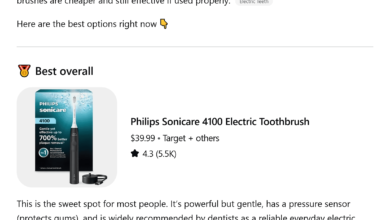
A notable example observed in recent weeks involved a sponsored retailer appearing as the top recommendation for a product query, even when the AI listed multiple alternative options. While OpenAI maintains that paid placements do not "hallucinate" or directly alter the factual integrity of its core answers, the psychological impact of being the first recommended option in a conversational context is immense. This "halo effect" is what many brands are currently paying for, even if they cannot yet track the exact conversion path from the chat bubble to the checkout page.
However, this influence creates an ongoing tension between consumer trust and advertiser goals. If users begin to perceive ChatGPT’s answers as biased toward the highest bidder, the platform risks losing the very utility that made it a household name. Maintaining the "unbiased assistant" persona while satisfying the demands of CMOs for visibility is a delicate balancing act that OpenAI has yet to fully master.

Strategic Retreats and the Competitive Landscape
The path to monetization has seen several pivots. OpenAI recently pulled back on its "Instant Checkout" commerce feature, which was intended to allow users to purchase items directly within the chat interface. Sources suggest the feature was retracted to allow for further refinement, as the technical friction of integrating with thousands of disparate e-commerce backends proved more difficult than anticipated. Similarly, OpenAI’s ambitions in the video advertising space have faced stiff competition from Google’s YouTube and specialized AI video platforms, leading to a temporary refocusing on search-based utility.
This internal reshuffling comes at a time when the "Search Wars" are entering a new phase. Google has integrated AI Overviews into its primary search results, effectively bringing the AI to where the advertisers already are. Perplexity AI, another rising competitor, has also launched an aggressive ad program, positioning itself as a direct "answer engine" with clear attribution for sources—a feature that many advertisers find more transparent than OpenAI’s current model.
Supporting Data and Market Projections
The stakes for OpenAI are high. Market research firms like Gartner and Forrester have projected that by 2026, traditional search engine volume could drop by as much as 25% as users migrate toward AI-powered "answer engines." This represents a multi-billion dollar shift in ad spend.
While OpenAI does not publicly disclose its advertising revenue, industry analysts estimate that the company needs to reach a multi-billion dollar annual run rate in ad sales to sustain its current valuation and R&D spending. Early data from third-party agency aggregators suggests that while click-through rates (CTR) on AI-driven recommendations can be up to 3x higher than traditional display ads due to their high relevance, the "last-mile" conversion remains unproven due to the lack of integrated tracking pixels and attribution modeling.
Official Responses and Industry Reactions
While OpenAI has been relatively tight-lipped about the specifics of its ad roadmap, spokespeople for the company have emphasized a commitment to "user-centric" advertising. The company has stated that it is prioritizing "learning from early partners" and will continue to iterate on its measurement tools.
Industry reactions have been a mix of excitement and pragmatism. "We see the potential for ChatGPT to be a top-of-funnel powerhouse," said one head of digital strategy at a global media agency. "But right now, we are advising our clients to treat it as an innovation budget—something to test and learn from—rather than a performance-driving staple. You can’t manage what you can’t measure, and OpenAI isn’t giving us enough to measure yet."
Analysis of Implications for Marketers
For marketers, the rise of OpenAI as an ad channel necessitates a shift in strategy. The primary takeaway from the current state of the platform is the importance of "Brand Suitability" and "Contextual Relevance." In a conversational environment, the traditional "spray and pray" method of digital advertising will not work. Ads must feel like a natural extension of the helpful dialogue.
Furthermore, the lack of scale and measurement means that large brands with significant R&D budgets are currently the only ones who can afford to play in this space effectively. For small to medium-sized enterprises (SMEs), the advice from experts is to wait. Until OpenAI launches a self-service ad manager with the granularity of a Google Ads or a Meta Business Suite, the barrier to entry remains too high for those who require immediate ROI.
The Bottom Line: A Long Road Ahead
ChatGPT ads are undeniably in their infancy. They represent a promising frontier in digital marketing, offering a level of personalization and intent-matching that traditional search cannot replicate. However, the platform is currently unproven as a reliable, scalable performance channel.
The next 12 to 18 months will be critical for OpenAI. To truly compete with the incumbents, it must solve the "measurement gap," provide more robust data to advertisers, and ensure that the integration of ads does not erode the user trust that is central to its brand. For now, the industry remains in a "watch and wait" mode, experimenting carefully while the platform attempts to catch up to the lofty expectations of the global advertising market. The evolution of this channel will likely shape the future of how information is discovered, consumed, and monetized in the age of artificial intelligence.
Related posts: