Answer Engine Optimization Case Studies and the Future of AI-Driven Search Marketing in 2026

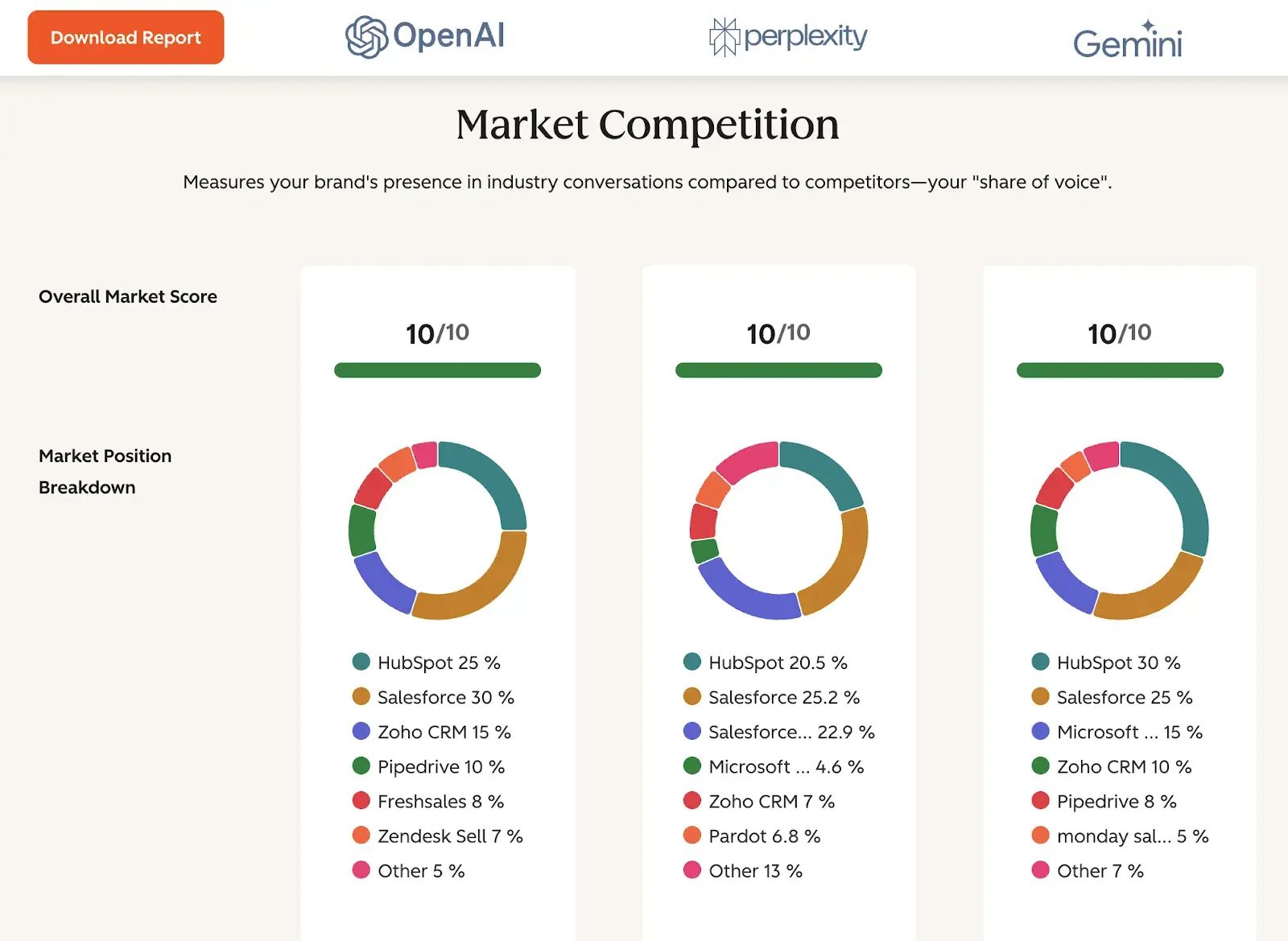
The landscape of digital discovery has undergone a fundamental transformation as generative artificial intelligence platforms—including ChatGPT, Perplexity, Claude, and Gemini—have become the primary interfaces for consumer research and brand evaluation. According to the 2026 HubSpot State of Marketing report, a significant 58% of marketing professionals now report that visitors referred by AI tools convert at substantially higher rates than those arriving via traditional organic search. This shift has elevated Answer Engine Optimization (AEO) from an experimental tactic to a core strategic necessity for global brands. AEO involves the deliberate structuring and distribution of content to ensure AI systems can accurately extract, cite, and recommend a brand within generative responses. As visibility within these AI-generated answers becomes a primary competitive advantage, a series of real-world case studies across the SaaS, legal, and agency sectors demonstrate the tangible return on investment (ROI) associated with these strategies.
The Evolution of Search: From Keywords to Answer Engines
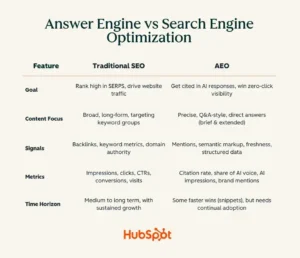
The transition from traditional search engine optimization (SEO) to AEO represents a move from indexing pages to indexing "entities" and "answers." In the traditional search model, Google and Bing acted as librarians, providing a list of books where an answer might be found. In the 2026 paradigm, AI search engines act as consultants, synthesizing information from multiple sources to provide a singular, coherent response.
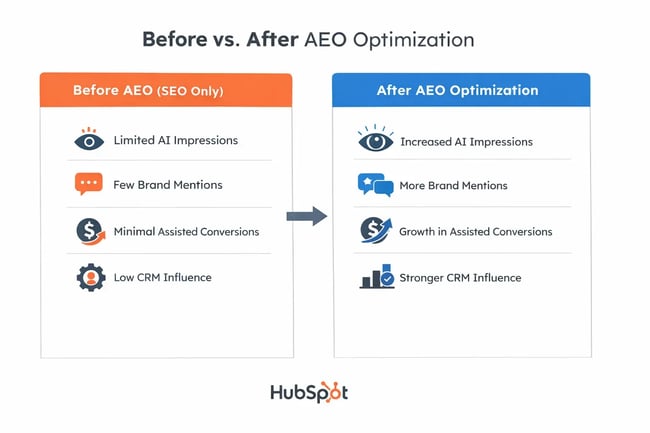
This evolution has created a new set of success metrics. While traditional SEO focused on keyword rankings and click-through rates (CTR), AEO success is measured by citation frequency, brand sentiment within LLM (Large Language Model) responses, and "assisted conversions"—deals influenced by AI discovery even if the final click did not originate from a chat interface. The data suggests that visibility often shifts before traffic does; brands typically see an increase in AI mentions and brand recall weeks before a corresponding rise in direct website sessions.
Chronology of the AEO Shift (2023–2026)
The rise of AEO can be traced through a distinct timeline of technological and behavioral shifts:
- 2023–2024: The Emergence of Generative Search. The launch of ChatGPT and Google’s early Search Generative Experience (SGE) prompted initial experimentation. Marketers began noticing that traditional blog posts were often ignored by AI crawlers in favor of structured data.
- 2024–2025: The Rise of RAG (Retrieval-Augmented Generation). AI platforms began prioritizing real-time data retrieval. Brands that maintained high-authority external footprints (on platforms like Reddit and niche forums) saw a disproportionate increase in citations.
- 2025–2026: The Maturity of AI Discovery. By early 2026, the majority of B2B and high-consideration B2C journeys began with an AI prompt. HubSpot’s data confirmed that AI-referred traffic was not just "more" traffic, but "better" traffic, characterized by higher intent and readiness to purchase.
Case Study Analysis: B2B SaaS and Rapid Scalability
One of the most compelling demonstrations of AEO’s impact comes from the B2B SaaS sector. Discovered, an organic search agency, recently executed a seven-week strategy for a client that resulted in a six-fold increase in AI-referred trials. The client’s mature SEO program had plateaued, and the brand was largely invisible within AI-generated recommendations for its core software category.

The execution involved a two-pronged approach. First, the team addressed technical "legibility" issues, including broken schema markups and poor internal linking, which prevented AI models from verifying the site’s information. Second, the agency shifted from a low-volume, top-of-funnel content strategy to a high-volume, high-intent strategy. In a single month, they published 66 articles specifically structured for AI extraction—utilizing "answer-first" frameworks where the primary solution is provided in the first paragraph.
The results were immediate. Within 72 hours of publication, AI citations began to appear. Within seven weeks, monthly trials jumped from 575 to over 3,500. This case highlights that for SaaS companies, the speed of AI indexing allows for much faster growth cycles than traditional SEO, which often takes months to show similar results.
Narrative Control and the "Reddit Effect": The Apollo.io Example
A significant challenge in AEO is that AI models do not rely solely on a company’s owned website; they aggregate information from the broader web. Brianna Chapman, who leads community strategy at Apollo.io, identified that LLMs were frequently mischaracterizing the brand based on outdated information found in third-party forums. Specifically, ChatGPT and Gemini were positioning Apollo as a "B2B data provider" rather than a comprehensive "sales engagement platform."
To rectify this, Chapman initiated a "narrative control" strategy focused on Reddit. By building and moderating the r/UseApolloIO subreddit and seeding authoritative, comparison-based content in relevant sales communities, the brand provided fresh, accurate data for AI models to crawl. Within a week of posting a detailed comparison thread, the new information displaced outdated sources in AI responses. This effort resulted in a 63% brand citation rate for AI awareness prompts and a 36% rate for category-specific prompts, proving that managing external communities is as vital as on-site optimization.
Financial Impact in High-Stakes Industries: The Legal Sector
In the legal industry, where lead quality is paramount, Intercore Technologies demonstrated the massive revenue potential of AEO. A Chicago-based personal injury firm, despite ranking #1 on traditional Google search for key terms, noticed a decline in lead volume as potential clients shifted their research to AI tools.
Intercore’s strategy focused on making the firm’s specific expertise "legible" to AI. They implemented four pillars:

- Technical Precision: Using advanced schema to define the firm’s location, specialties, and success rates.
- Authority Signals: Ensuring the firm was mentioned in high-authority legal directories and news outlets that AI models use as "trust anchors."
- Entity Mapping: Connecting the firm’s name to specific high-value legal concepts (e.g., "Chicago truck accident liability").
Over a six-month period, the firm’s visibility across ChatGPT, Perplexity, and Claude rose to 68%. This directly translated to $2.34 million in total revenue attributed specifically to AI discovery. This case study underscores that for high-ticket service industries, being the "suggested" option in an AI chat is now more valuable than being the top link in a search result.
Strategic Playbook: The Requirements for AEO Success in 2026
Based on the analysis of these successful campaigns, several technical and strategic requirements have emerged as the standard for AEO:
1. Answer-First Content Architecture
Traditional content often uses a "narrative arc" that saves the conclusion for the end. AEO requires the opposite. Successful pages now open with a direct answer, summary, or FAQ section. This allows AI crawlers to immediately identify the "nugget" of information they need to satisfy a user’s prompt.
2. Mandatory Schema Markup
Schema markup serves as the machine-readable translation of a website. For AI models, schema types like FAQPage, HowTo, Product, and Organization are no longer optional. They provide the structural evidence AI systems need to cite a source with confidence. Case studies consistently show that sites with robust schema are cited 40% more frequently than those without.
3. Page Speed and Fetchability
AI crawlers prioritize efficiency. If a page takes longer than two seconds to load, it risks being bypassed during the "retrieval" phase of a generative answer. Optimization for mobile-first indexing and minimal render-blocking resources is now a prerequisite for AI visibility.
4. Internal Linking for Contextual Relevance
AI systems use internal links to understand the hierarchy and relationship between different topics on a site. By linking "answer" pages to "transaction" pages, brands can guide the AI to not only provide information but also to suggest the brand’s product as the logical next step for the user.
Broad Impact and Market Implications
The rise of AEO is fundamentally changing the relationship between brands and consumers. As users move away from the "ten blue links" of the past, brand trust is being built through AI-mediated recommendations. This has led to several broader market shifts:
- Higher Lead Quality: Because AI searchers have already engaged in a "conversation" with an LLM before reaching a website, they arrive with a deeper understanding of the product. This explains the 58% higher conversion rate reported by marketers.
- Reduced Sales Cycles: Sales teams report that prospects discovered via AI require less introductory education. They often arrive at the "demo" or "quote" stage already aligned with the brand’s value proposition.
- The "Winner-Takes-Most" Dynamic: Unlike traditional search, which might show 10-20 viable results, AI answers typically cite only 3-5 sources. This creates a competitive environment where the gap between the "most cited" and "least cited" brands is wider than ever.
Conclusion
Answer Engine Optimization is no longer a futuristic concept; it is the primary growth lever for digital marketing in 2026. The evidence from SaaS, legal, and agency case studies proves that AEO delivers measurable ROI through increased trials, higher brand authority, and millions of dollars in attributed revenue. As AI continues to become the dominant interface for human knowledge and commerce, the ability to be "the answer" will define the market leaders of the next decade. For brands looking to maintain relevance, the transition from a keyword-centric strategy to an answer-centric one is not just an option—it is a requirement for survival in the generative age.
Related posts: