Category European Union
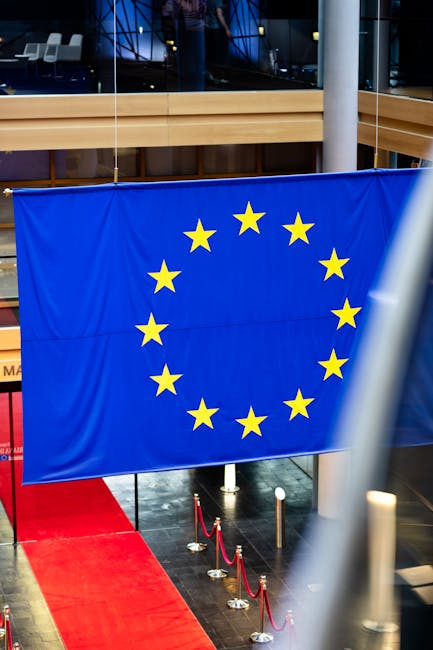
European Union: A Comprehensive Examination of Its Structure, Functions, and Global Impact
The European Union (EU) is a unique political and economic union of 27 member states located primarily in Europe. It functions as a supranational entity, meaning its member states delegate sovereignty in certain areas to common institutions. This delegation allows for a unified approach to various policy areas, from trade and agriculture to environmental protection and foreign policy. The EU’s origins can be traced back to the aftermath of World War II, with the initial aim of fostering economic cooperation to prevent future conflicts. The Treaty of Rome in 1957 established the European Economic Community (EEC), the precursor to the modern EU, initially comprising Belgium, France, Italy, Luxembourg, the Netherlands, and West Germany. Over the decades, the membership has expanded significantly, incorporating countries from across the continent, leading to the current 27-member bloc. This expansion has been a complex process, involving rigorous accession negotiations to ensure candidate countries meet the political, economic, and legal standards required for membership, known as the Copenhagen criteria. The EU’s legislative framework is a cornerstone of its operation, characterized by a multi-layered system of laws that are directly applicable or require transposition into national legislation.
The institutional framework of the European Union is designed to ensure a balance of power and facilitate its multifaceted operations. At its core are seven key institutions: the European Parliament, the European Council, the Council of the European Union, the European Commission, the Court of Justice of the European Union (CJEU), the European Central Bank (ECB), and the European Court of Auditors. The European Parliament is the directly elected legislative body, representing the citizens of the EU. Its members are elected every five years, and it plays a crucial role in scrutinizing legislation, approving the EU budget, and overseeing other EU institutions. The European Council brings together the heads of state or government of the member states, along with its President and the President of the European Commission. It sets the EU’s overall political direction and priorities but does not exercise legislative functions. The Council of the European Union, often referred to as the "Council of Ministers," is where ministers from individual member states meet to discuss, amend, and adopt laws, and to coordinate policy. The presidency of the Council rotates among member states every six months. The European Commission is the EU’s executive arm, responsible for proposing legislation, enforcing EU law, and managing the EU’s day-to-day business and budget. It is composed of one commissioner from each member state, but they are independent of their national governments. The Court of Justice of the European Union (CJEU) ensures that EU law is interpreted and applied uniformly across all member states. It hears cases brought by individuals, businesses, and governments, and its rulings are binding. The European Central Bank (ECB) is responsible for managing the euro and conducting monetary policy for the Eurozone countries. Its primary objective is to maintain price stability. Finally, the European Court of Auditors checks that EU finances are collected and spent correctly and efficiently. Understanding the interplay between these institutions is vital to comprehending how EU policies are formulated and implemented.
The economic integration achieved by the European Union is one of its most significant accomplishments. The establishment of the single market eliminated most internal barriers to the free movement of goods, services, capital, and people. This "four freedoms" principle allows businesses to operate more easily across borders, increasing competition, efficiency, and consumer choice. The removal of customs duties, technical standards, and other protectionist measures has led to increased trade volumes and economic growth within the EU. Furthermore, the European Monetary Union (EMU), symbolized by the introduction of the euro as a common currency, has further deepened economic ties for countries that have adopted it. The euro currently serves as the official currency in 20 of the 27 member states, creating price stability, reducing transaction costs, and facilitating cross-border investment and trade. The European Central Bank plays a pivotal role in managing monetary policy for the Eurozone, aiming to keep inflation low and stable. Beyond the single market and the euro, the EU also engages in extensive common policies, including a Common Agricultural Policy (CAP), which significantly influences agricultural production and rural development across the Union, and a Common Commercial Policy, which dictates the EU’s trade relations with the rest of the world, encompassing trade agreements and external tariffs. The economic dimension of the EU is continuously evolving, with ongoing efforts to strengthen economic governance, promote innovation, and address economic disparities between member states.
The legislative process within the European Union is a complex, multi-stage procedure designed to ensure that laws reflect the interests of both member states and EU citizens. The primary legislative power rests with the European Commission, which has the exclusive right to propose new EU laws. Once a proposal is made, it is sent to the European Parliament and the Council of the European Union for consideration. These two institutions, acting as co-legislators, scrutinize the proposal, propose amendments, and can either reject it or adopt it. The specific legislative procedure can vary depending on the policy area, with the "ordinary legislative procedure" (formerly co-decision) being the most common. Under this procedure, the Parliament and the Council must agree on the text of the legislation. If they cannot reach an agreement after several readings, conciliation committees are formed to find a compromise. The Court of Justice of the European Union (CJEU) plays a vital role in interpreting and enforcing EU law, ensuring its uniform application throughout member states. Its rulings can set precedents and shape the direction of EU policy. The impact of EU legislation is profound, affecting virtually every aspect of life for its citizens, from the safety of food products to environmental standards and consumer rights. The principle of subsidiarity is also important, meaning that the EU only acts in areas where it can achieve its objectives more effectively than individual member states.
The European Union’s commitment to fundamental rights and democratic principles is a defining characteristic of its political identity. The Charter of Fundamental Rights of the European Union consolidates a wide range of civil, political, economic, and social rights into a single legally binding document. These rights include equality, dignity, freedoms, solidarity, citizens’ rights, and justice. The European Convention on Human Rights, although a Council of Europe instrument and not strictly an EU law, is also an important reference point, and accession to it is a requirement for EU membership. The Rule of Law is a fundamental value underpinning the EU, and member states are expected to uphold democratic principles, human rights, and the rule of law. The European Commission monitors the adherence of member states to these values, and in cases of serious breaches, mechanisms exist to address violations, including infringement procedures and, in extreme circumstances, Article 7 TEU proceedings that can lead to sanctions. The European Parliament plays a significant role in promoting democracy through its oversight functions and its engagement with citizens. The EU also actively promotes democracy and human rights internationally through its foreign policy and development aid. The ongoing debate around the Rule of Law within certain member states highlights the continuous challenge of ensuring these fundamental principles are upheld consistently across the Union.
The foreign policy and security dimension of the European Union, while evolving, seeks to project a unified European voice on the global stage. The Common Foreign and Security Policy (CFSP) allows member states to coordinate their actions and positions on international issues. The High Representative of the Union for Foreign Affairs and Security Policy leads this effort, supported by the European External Action Service (EEAS). The EU engages in a wide range of foreign policy activities, including diplomatic engagement, sanctions, development cooperation, and humanitarian aid. In the realm of security and defense, the Common Security and Defence Policy (CSDP) enables the EU to undertake civilian and military missions and operations in crisis management and peacekeeping roles. While the EU does not possess a unified army, member states can pool resources and capabilities for specific CSDP operations. The EU also plays a significant role in international trade negotiations, acting as a single bloc to secure favorable trade agreements for its member states. Its efforts to promote multilateralism and international cooperation are central to its global strategy, particularly in addressing challenges such as climate change, terrorism, and global health pandemics. The EU’s ability to act decisively on the international stage is often dependent on the consensus reached by its member states, making coordinated action a perpetual endeavor.
The economic impact of the European Union extends far beyond its borders, shaping global trade, investment, and regulatory landscapes. As one of the world’s largest economic blocs, the EU wields considerable influence in international trade negotiations. Its Common Commercial Policy allows it to negotiate trade agreements with third countries and blocs as a unified entity, leveraging its collective market size to achieve more favorable terms. The EU’s regulatory framework, particularly in areas like data protection (e.g., GDPR), environmental standards, and product safety, often sets de facto global standards, influencing how businesses worldwide operate to access the lucrative EU market. This "Brussels effect" means that companies often adopt EU standards globally to ensure seamless market access. The EU is also a major destination for foreign direct investment (FDI) and a significant source of outward FDI, fostering economic ties and contributing to global economic interconnectedness. Its commitment to sustainable development and environmental protection, embedded in its policies, also has ripple effects globally, promoting cleaner technologies and practices. The EU’s role in international financial institutions and its efforts to promote global economic stability further underscore its significant economic footprint.
The challenges and future prospects of the European Union are multifaceted and dynamic. Internally, member states grapple with issues such as economic disparities, migration management, and the varying levels of integration desired by different nations. The ongoing debate around ever-closer union versus national sovereignty remains a persistent theme. External pressures, including geopolitical shifts, the rise of populism, and global economic uncertainties, also present significant challenges. The EU’s response to events like the COVID-19 pandemic and the war in Ukraine has highlighted both its strengths in coordinated action and its limitations in achieving swift, unified decision-making. Future prospects involve the EU’s continued efforts to strengthen its economic resilience, advance its green and digital transitions, and solidify its role as a global actor. The potential for further enlargement, while a long-term prospect for some candidate countries, remains a topic of discussion. The EU’s adaptability, its commitment to its founding values, and its ability to foster consensus among its diverse member states will be crucial in navigating these challenges and shaping its future trajectory. The ongoing evolution of the EU’s institutional framework and policy agenda underscores its commitment to continuous adaptation in response to a changing world.
