Tag Financial Markets
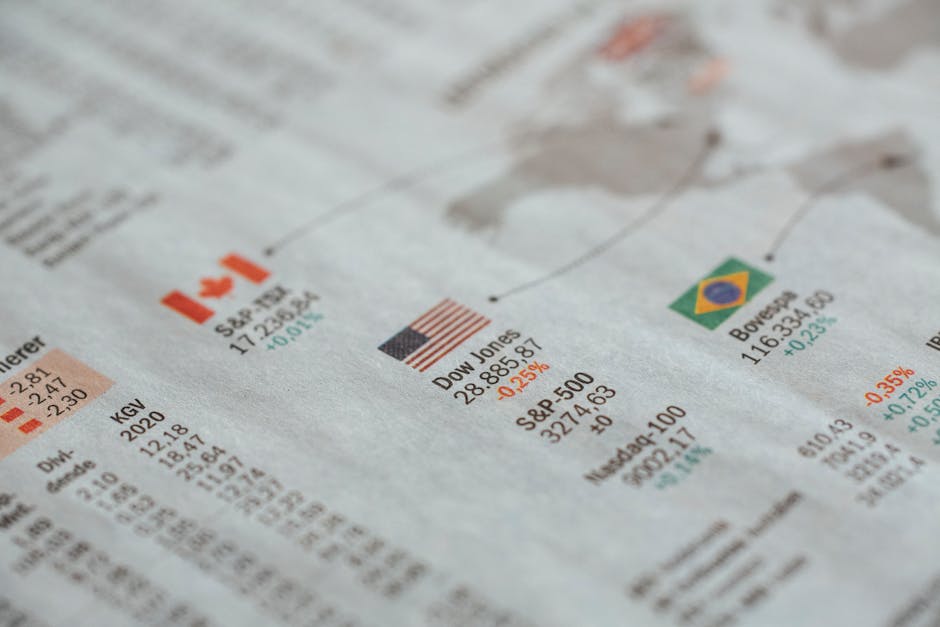
Tag Financial Markets: A Comprehensive Overview for Investors and Professionals
Financial markets represent the intricate ecosystem where buyers and sellers engage in the trading of financial instruments. These instruments, encompassing assets like stocks, bonds, currencies, commodities, and derivatives, facilitate the flow of capital between savers and borrowers, enabling investment, economic growth, and price discovery. Understanding the dynamics of financial markets is paramount for investors seeking to grow their wealth, businesses requiring capital, and policymakers aiming to maintain economic stability. This article delves into the multifaceted world of financial markets, exploring their structure, functions, key participants, and the various types of instruments traded, providing a comprehensive resource for both novice and experienced professionals.
The fundamental purpose of financial markets is to allocate capital efficiently. They act as intermediaries, connecting entities with surplus funds (investors) to those in need of funds (borrowers or issuers of securities). This channeling of capital is crucial for economic development, as it fuels business expansion, innovation, and infrastructure projects. Without well-functioning financial markets, businesses would struggle to raise capital for growth, and individuals would have fewer avenues to save and invest their money for future needs. Furthermore, financial markets play a vital role in price discovery. Through the continuous interaction of supply and demand, the prices of financial instruments are determined, reflecting the collective assessment of their underlying value and future prospects. This price discovery mechanism guides investment decisions and influences economic behavior. Moreover, financial markets provide mechanisms for risk management. Derivatives, for instance, allow participants to hedge against potential losses arising from price volatility in underlying assets, offering a degree of certainty in an uncertain economic landscape.
The structure of financial markets can be broadly categorized into primary and secondary markets. In the primary market, new securities are issued for the first time, directly from the issuer to investors. This is where companies raise capital by selling stocks (equities) or bonds (debt) through initial public offerings (IPOs) or subsequent offerings. Investment banks typically underwrite these offerings, facilitating the issuance and distribution of new securities. The secondary market, on the other hand, is where previously issued securities are traded among investors. This is the most visible part of financial markets, encompassing stock exchanges, bond markets, and other trading venues. The secondary market provides liquidity, allowing investors to buy and sell securities, which is essential for price discovery and for making primary market issuances attractive to investors. Without a liquid secondary market, investors would be reluctant to purchase new securities, as they would have no easy way to exit their positions.
A diverse range of participants operate within financial markets, each with distinct roles and objectives. Individual investors, often referred to as retail investors, are everyday people who invest their savings for various goals, such as retirement, education, or wealth accumulation. Their investment decisions can range from simple savings accounts to complex trading strategies. Institutional investors are entities that manage large pools of capital on behalf of others. This category includes pension funds, mutual funds, hedge funds, insurance companies, and endowments. Institutional investors often have sophisticated research capabilities and exert significant influence on market prices due to the sheer volume of their trades. Corporations are active participants, both as issuers of securities to raise capital and as investors in other companies or financial instruments. They also utilize financial markets for hedging risks and managing their cash reserves. Governments play a dual role. They are significant issuers of debt through sovereign bonds to finance public spending and manage national debt. They also act as regulators, establishing frameworks and overseeing the operations of financial markets to ensure fairness, transparency, and stability. Financial intermediaries, such as investment banks, commercial banks, brokers, and dealers, facilitate the smooth functioning of these markets by providing services like underwriting, trading, research, and advisory.
Financial markets are characterized by a vast array of instruments, each with its own risk-return profile and investment characteristics. Equities, or stocks, represent ownership in a corporation. By owning stock, investors become shareholders and have a claim on the company’s assets and earnings. Stock prices fluctuate based on company performance, industry trends, and overall economic conditions. Bonds are debt instruments, representing a loan made by an investor to a borrower, typically a corporation or government. In return for the loan, the borrower agrees to pay periodic interest payments (coupons) and to repay the principal amount on a specified maturity date. Bonds are generally considered less risky than stocks, but their value can still be affected by interest rate changes and the creditworthiness of the issuer.
Foreign exchange (forex) markets are the largest and most liquid financial markets globally. Here, currencies are traded against one another, with exchange rates constantly fluctuating based on supply and demand, driven by factors such as trade balances, interest rates, political events, and economic performance. Businesses engaged in international trade and investors seeking to diversify their portfolios often participate in forex markets. Commodities are raw materials or primary agricultural products that are traded in bulk. Examples include oil, gold, silver, wheat, and corn. Commodity prices are influenced by global supply and demand dynamics, weather patterns, geopolitical events, and speculation.
Derivatives are financial contracts whose value is derived from an underlying asset, index, or rate. They are often used for hedging or speculation. Key types of derivatives include:
- Futures contracts: Agreements to buy or sell an asset at a predetermined price on a specific future date.
- Options contracts: Give the buyer the right, but not the obligation, to buy (call option) or sell (put option) an underlying asset at a specified price within a certain timeframe.
- Swaps: Agreements between two parties to exchange cash flows based on different financial instruments, such as interest rates or currencies.
- Contracts for Difference (CFDs): Agreements to pay or receive the difference in the value of an asset from the time the contract is opened until it is closed.
The trading of these instruments takes place on various types of exchanges and over-the-counter (OTC). Exchanges, such as the New York Stock Exchange (NYSE) or the Nasdaq, provide a centralized marketplace with standardized rules and regulations, ensuring transparency and fair trading practices. They facilitate the buying and selling of listed securities through a competitive auction process. Over-the-counter (OTC) markets, on the other hand, are decentralized markets where participants trade directly with each other, often through electronic networks or phone calls. OTC markets are prevalent for instruments like bonds and some derivatives, offering greater flexibility but potentially less transparency and higher counterparty risk.
The performance of financial markets is influenced by a complex interplay of macroeconomic factors. Interest rates, set by central banks, have a profound impact. Higher interest rates can make borrowing more expensive, potentially slowing economic growth and decreasing the attractiveness of fixed-income investments, while lower rates can stimulate borrowing and investment. Inflation, the rate at which prices for goods and services are rising, erodes the purchasing power of money and can lead to increased interest rates as central banks attempt to control it. Economic growth, measured by metrics like Gross Domestic Product (GDP), is a key driver of corporate earnings and investor sentiment. Strong economic growth generally translates to positive market performance. Government policies, including fiscal (taxation and spending) and monetary (interest rate and money supply) policies, significantly shape the economic environment and thus market outcomes. Political stability and global geopolitical events also introduce uncertainty and can trigger significant market volatility.
Technological advancements have dramatically reshaped financial markets. High-frequency trading (HFT), algorithmic trading, and the development of sophisticated trading platforms have increased market efficiency and speed, but also introduced new risks and complexities, such as flash crashes. The rise of digital assets, particularly cryptocurrencies, has introduced entirely new asset classes and trading paradigms, challenging traditional market structures and regulatory frameworks. Decentralized finance (DeFi) applications, built on blockchain technology, aim to disintermediate traditional financial institutions, offering new avenues for lending, borrowing, and trading.
Regulation plays a critical role in maintaining the integrity and stability of financial markets. Regulatory bodies, such as the Securities and Exchange Commission (SEC) in the United States or the European Securities and Markets Authority (ESMA) in Europe, establish and enforce rules governing market participants, trading practices, and disclosure requirements. These regulations aim to protect investors, prevent market manipulation, ensure fair competition, and maintain systemic stability. The effectiveness of regulation is a continuous area of debate, as markets evolve and new risks emerge.
Investing in financial markets involves inherent risks. Market risk refers to the possibility of losses due to factors that affect the overall performance of financial markets. Credit risk is the risk that a borrower will default on their debt obligations. Liquidity risk is the risk that an investor may not be able to sell an asset quickly at a fair price. Interest rate risk affects fixed-income securities, where rising interest rates can lead to declining bond prices. Currency risk arises from fluctuations in exchange rates when investing in foreign assets. Investors must carefully consider their risk tolerance, investment horizon, and financial goals when making investment decisions. Diversification across different asset classes, geographies, and industries is a fundamental strategy for mitigating risk.
The future of financial markets will likely be shaped by ongoing technological innovation, evolving regulatory landscapes, and shifting global economic dynamics. The increasing adoption of artificial intelligence and machine learning in trading and risk management, the continued growth of digital assets and DeFi, and the ongoing quest for sustainable finance (ESG investing) are all trends that will continue to define the financial markets of tomorrow. Understanding these evolving trends and the fundamental principles of financial markets is crucial for navigating the complex and dynamic world of finance.
