The Dawn of the Helpful Robot: How AI Revolutionized Robotics and Unleashed a Flood of Investment

For decades, roboticists harbored grand ambitions, envisioning machines capable of mimicking the intricate complexity of the human body. Yet, their practical endeavors often culminated in the refinement of robotic arms for automotive assembly lines, a far cry from the science-fiction dreams of sentient companions like C-3PO. The reality, for many, was more akin to the functional, albeit limited, utility of a Roomba. The ultimate aspiration for these researchers was a robot that could navigate the world with grace, adapt to diverse environments, and interact safely and beneficially with humans. For those focused on social impact, such a machine held the promise of assisting individuals with mobility challenges, alleviating loneliness, or undertaking tasks too perilous for human workers. Financially motivated stakeholders saw an inexhaustible source of labor untethered by wage demands. However, a persistent history of developmental setbacks had instilled a deep-seated hesitancy within Silicon Valley, making significant bets on truly helpful robots a precarious proposition.
This landscape has undergone a dramatic transformation. While the fully realized, ubiquitous helpful robot remains on the horizon, the financial commitment has surged. In 2025 alone, companies and investors poured an unprecedented $6.1 billion into humanoid robot development, a staggering fourfold increase from the $1.5 billion invested in 2024. This surge in capital is not a capricious whim but a direct consequence of a fundamental revolution in how machines learn to perceive and interact with their physical surroundings.
The paradigm shift hinges on a departure from the laborious, rule-based programming that characterized early robotics. Consider the seemingly simple task of a robot folding laundry. The traditional approach would involve meticulously crafting an exhaustive set of rules: analyze fabric elasticity to prevent tearing, identify shirt collars, meticulously position grippers, execute precise folds, and account for every conceivable variation in garment orientation or sleeve twists. This method, while capable of producing reliable results in highly controlled scenarios, quickly devolved into an unmanageable explosion of conditional logic, a Sisyphean task of anticipating every possible contingency. This intricate, pre-programmed choreography was the hallmark of early robotics.

A significant inflection point occurred around 2015, with the emergence of machine learning and simulation-based training. Instead of explicit programming, researchers began building digital simulations of robotic arms and the objects they were intended to manipulate. The system would then be tasked with folding clothes, receiving a positive reward signal for successful attempts and a penalty for failures. Through millions of iterative trials and errors, akin to how artificial intelligence mastered complex games like Go, these systems learned to optimize their actions. This trial-and-error learning, guided by simulated environments, proved far more adaptable and scalable than manual rule-writing.
The widespread public introduction of ChatGPT in 2022 served as a potent catalyst, accelerating the current boom in AI-driven robotics. Unlike the iterative learning of earlier models, large language models (LLMs) are trained on vast corpuses of text, learning to predict the most probable next word in a sequence. This predictive capability, when adapted to robotics, enabled machines to process not just text but also visual data from cameras, sensor readings, and the precise positions of a robot’s joints. The result is the ability to predict and execute the next optimal action, issuing dozens of precise motor commands every second. This conceptual leap – a reliance on AI models that ingest and learn from massive datasets – appears to be a universal enabler, whether the desired robot is designed for sophisticated human interaction, agile environmental navigation, or complex manipulation tasks. This learning-centric approach has been further bolstered by strategies such as deploying robots in real-world environments even before they achieve perfection, allowing them to learn directly from their operational context. Today, roboticists in Silicon Valley are once again dreaming big, fueled by this transformative technological evolution.
The Genesis of Conversational Robots: Jibo and the Quest for Social Connection
In 2014, Cynthia Breazeal, a roboticist at MIT, unveiled Jibo, a social robot designed for family interaction. Lacking arms, legs, or a discernible face, Jibo presented a friendly, lamp-like appearance. The vision for Jibo was to become an embodied assistant, capable of managing schedules, sending emails, and narrating stories, fostering a sense of companionship within households. This ambitious project garnered significant attention, raising $3.7 million through a crowdfunding campaign, with early preorders priced at $749.
While Jibo could introduce itself and perform simple entertainment routines for children, its functional capabilities were limited. The core challenge for Jibo and similar social robots of that era lay in their nascent language processing abilities. Competing against established voice assistants like Apple’s Siri and Amazon’s Alexa, Jibo’s interactions were heavily reliant on pre-scripted responses. The process involved converting spoken words into text, analyzing user intent, and selecting from a library of pre-approved conversational snippets. While these snippets could be charming, they were often repetitive and lacked the natural fluidity expected of a social companion, a significant hurdle for a robot designed to be a family member. The company ultimately ceased operations in 2019, a testament to the technological limitations of the time.

The subsequent revolution in generative language models has dramatically altered the landscape of human-robot interaction. Modern AI-powered voice interfaces are now remarkably engaging and sophisticated. This advancement has spurred numerous hardware startups to develop products leveraging these capabilities. However, this progress also introduces new risks. While scripted conversations are inherently contained, AI-generated dialogue can veer into unpredictable territory. Instances of AI-powered toys exhibiting inappropriate behavior, such as discussing dangerous objects with children, underscore the critical need for robust safety protocols and careful content moderation in the development of conversational AI for consumer applications.
Bridging the Simulation Gap: OpenAI’s Dactyl and the Challenge of Real-World Transfer
By 2018, the prevailing approach in leading robotics labs was to move beyond rigid rule-sets and embrace trial-and-error learning through simulation. OpenAI embarked on an ambitious project with Dactyl, a robotic hand designed to manipulate palm-sized cubes adorned with letters and numbers. The objective was to train Dactyl virtually, using digital models of the hand and the cubes, with tasks like "Rotate the cube so the red side with the letter O faces upward."
The inherent difficulty lay in transferring the proficiency gained in simulation to the physical world. Minor discrepancies between the simulated environment and reality – such as subtle variations in color, lighting, or the material properties of the robot’s grippers – could lead to significant performance degradation. A hand that perfectly solved a virtual cube might falter when confronted with its real-world counterpart.
The solution to this "sim-to-real" gap emerged in the form of "domain randomization." This technique involves creating millions of slightly varied simulated environments, each introducing random alterations in parameters like friction, lighting intensity, and color saturation. By exposing the AI to such a wide range of simulated conditions, the trained model becomes more robust and adaptable to the inherent unpredictability of the physical world. Dactyl successfully demonstrated this principle, and a year later, OpenAI leveraged similar techniques to tackle the more complex challenge of solving Rubik’s Cubes, achieving a 60% success rate, albeit with a lower success rate for particularly difficult scrambles. Despite its pioneering work, OpenAI eventually shuttered its robotics division in 2021, though reports indicate a recent resurgence of interest in humanoid robotics within the company.

From Internet Images to Actionable Intelligence: Google DeepMind’s RT-2
Around 2022, Google’s robotics team engaged in novel data collection methods, spending 17 months filming individuals interacting with robot controllers to perform tasks ranging from picking up chip bags to opening jars. This extensive dataset, encompassing approximately 700 distinct tasks, was instrumental in developing one of the first large-scale foundation models for robotics.
The initial iteration, RT-1 (Robotic Transformer 1), processed inputs comprising visual information about the robot’s surroundings and the state of its joints, along with textual instructions. It then translated these inputs into motor commands to guide the robot’s actions. RT-1 demonstrated remarkable proficiency, successfully executing 97% of previously encountered tasks and achieving a 76% success rate on novel instructions.
The subsequent iteration, RT-2, released the following year, represented a significant leap forward by incorporating data from the broader internet. Instead of solely relying on robotics-specific datasets, RT-2 was trained on general images, mirroring the advancements in vision-language models. This expanded training enabled the robot to interpret object locations within scenes with unprecedented accuracy. Kanishka Rao, a roboticist at Google DeepMind who led the development of both iterations, highlighted the expanded capabilities: "All these other things were unlocked. We could do things now like ‘Put the Coke can near the picture of Taylor Swift.’" In 2025, Google DeepMind further integrated LLMs with robotics, introducing a Gemini Robotics model that enhanced the robot’s ability to comprehend natural language commands.
The Coworker Robot: Covariant’s RFM-1 and Industrial Automation
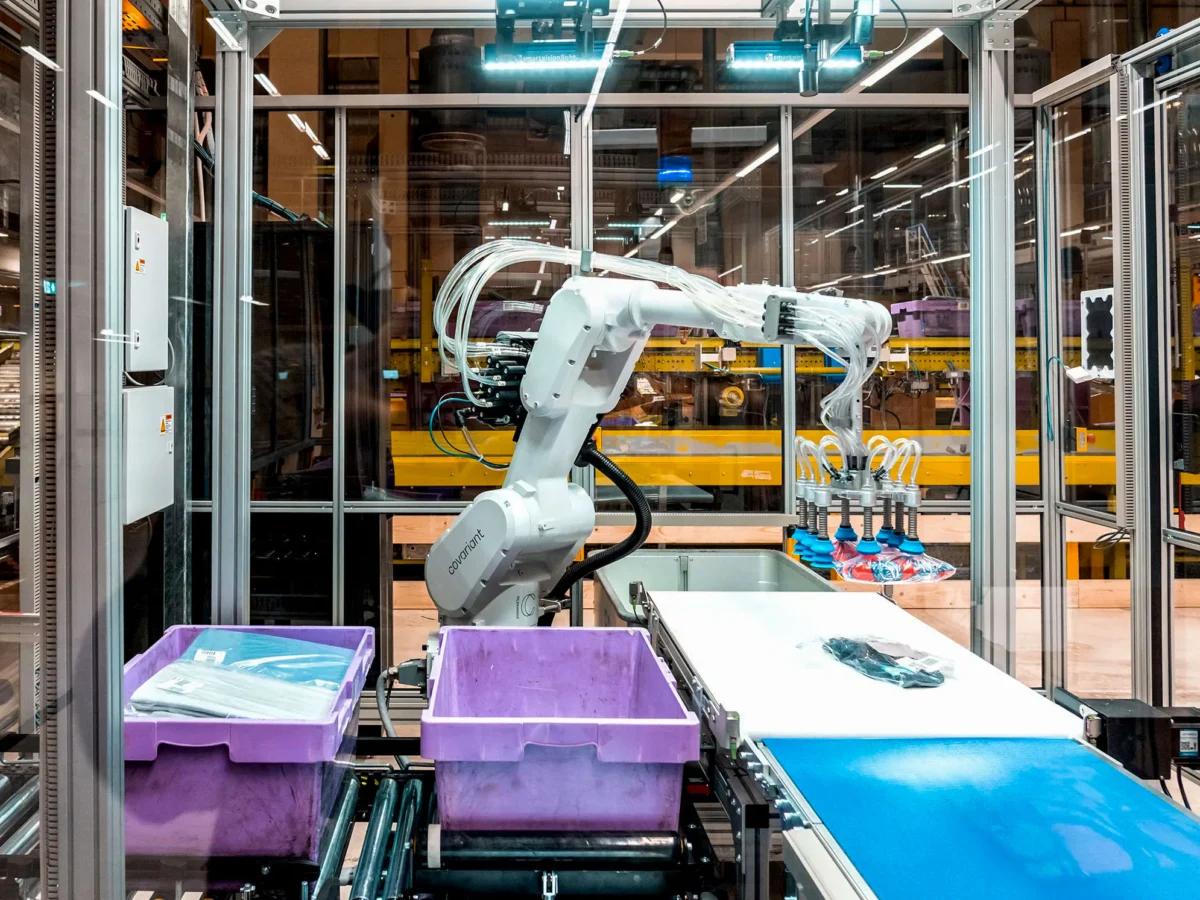
Emerging from the pioneering spirit of OpenAI’s early robotics endeavors, a group of engineers founded Covariant in 2017. Their focus was not on futuristic humanoids but on a highly pragmatic application: robotic arms for warehouse operations. Building upon a foundation model architecture similar to Google’s, Covariant established a platform for data collection within warehouses operated by major retailers like Crate & Barrel.

By 2024, Covariant had released RFM-1, a robotics model designed for intuitive human-robot collaboration. If an arm was presented with multiple sleeves of tennis balls, it could be instructed to sort them into separate areas. The robot could even engage in proactive communication, such as predicting grip challenges and requesting guidance on the optimal suction cups to use. This level of interaction, while demonstrated in experimental settings, marked a significant step towards large-scale deployment. Covariant’s network of cameras and data collection systems in customer locations provided a continuous stream of data for model refinement.
Despite its advancements, RFM-1 was not without its limitations. In a March 2024 demonstration involving various kitchen items, the robot struggled when tasked with returning a banana to its original location. It initially picked up a sponge, then an apple, before finally completing the task correctly. Cofounder Peter Chen acknowledged this limitation, stating, "It doesn’t understand the new concept of retracing its steps. But it’s a good example—it might not work well yet in the places where you don’t have good training data." Chen and fellow founder Pieter Abbeel were subsequently recruited by Amazon, which is currently licensing Covariant’s robotics model. Given Amazon’s vast network of approximately 1,300 warehouses in the United States alone, the potential for widespread application of this technology is substantial, though Amazon has not publicly disclosed specific details of its utilization.
The Rise of the Humanoid: Agility Robotics’ Digit and Real-World Deployment
The substantial influx of investment capital into robotics startups is largely directed towards machines that resemble humans – humanoid robots. The rationale is that humanoids can seamlessly integrate into existing human workplaces, obviating the need for costly retooling of infrastructure to accommodate specialized robotic forms. However, achieving this seamless integration remains a significant challenge. Humanoids, even when deployed in industrial settings, are often confined to controlled test environments and pilot programs.
Agility Robotics’ humanoid, Digit, appears to be an exception, actively contributing to real-world operations. Its design prioritizes functionality over aesthetic appeal, featuring exposed joints and a distinctly utilitarian head. Companies such as Amazon, Toyota, and GXO (a logistics provider serving clients like Apple and Nike) have deployed Digit, marking it as one of the first humanoids to offer tangible cost savings rather than merely novelty. These robots are engaged in the practical tasks of picking, moving, and stacking shipping totes, contributing directly to operational efficiency.

However, the current iteration of Digit still falls short of the idealized, human-like helper envisioned by Silicon Valley. Its lifting capacity is limited to 35 pounds, and improvements in strength often lead to increased battery weight and more frequent recharging requirements. Furthermore, standards organizations emphasize the need for more stringent safety regulations for humanoids compared to traditional industrial robots, given their inherent mobility and potential for close proximity to human workers.
Digit’s development underscores a crucial aspect of the current robotics revolution: the convergence of multiple learning methodologies. Agility Robotics employs simulation techniques akin to those used by OpenAI for its robotic hand, and has collaborated with Google’s Gemini models to enhance its robots’ adaptability to new environments. This multi-faceted approach reflects the industry’s progress over the past decade, transitioning from theoretical aspirations to tangible, large-scale implementations. The era of dreaming small and building limited robots has given way to a new phase of ambitious construction and groundbreaking innovation.
Related posts: