Anthropic Launches Claude Design to Revolutionize Creative Workflows Through Conversational AI

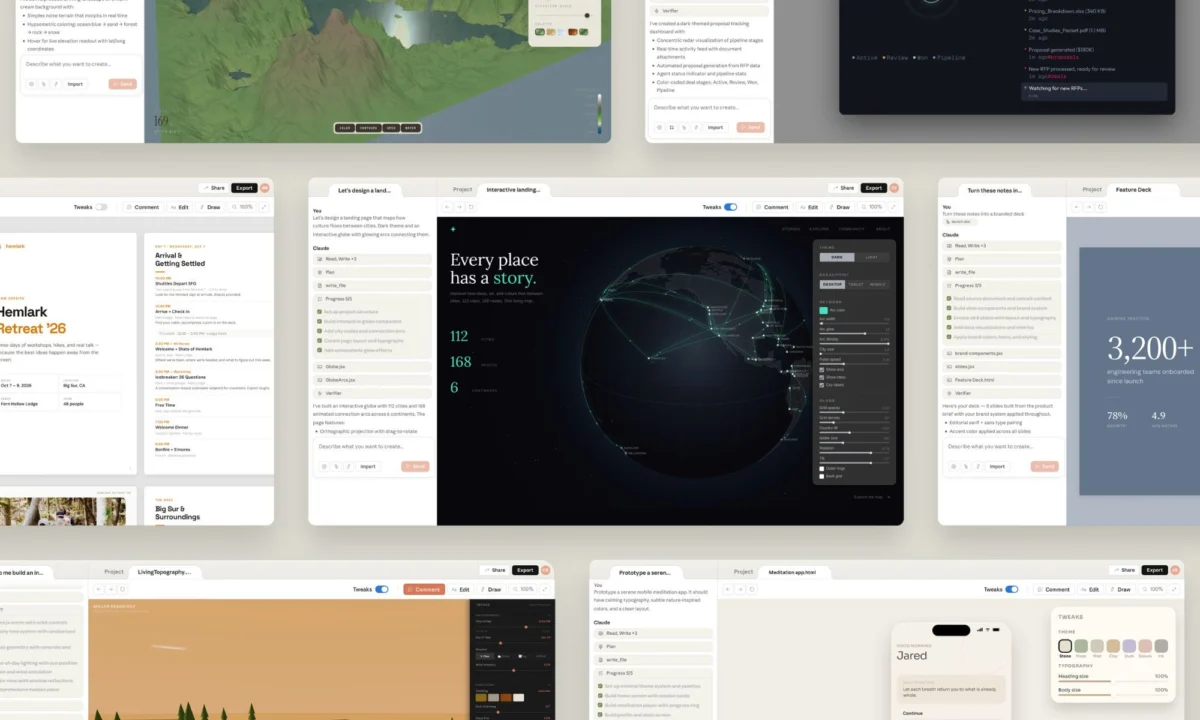
Anthropic, the San Francisco-based artificial intelligence safety and research company, has officially announced the launch of Claude Design, a sophisticated new platform designed to transform the way individuals and enterprises approach visual content creation. Developed under the company’s experimental arm, Anthropic Labs, the tool represents a significant leap forward in multimodal AI, allowing users to generate high-fidelity prototypes, professional presentations, and diverse marketing assets through simple, natural language conversations. Currently entering a research preview phase, the tool is being made available to paid Claude Pro and Team subscribers, marking a strategic move by Anthropic to expand its ecosystem beyond text-based interaction and into the multi-billion-dollar creative software market.
At the heart of Claude Design lies the company’s most advanced vision and reasoning model to date, Claude Opus 4.7. This model is engineered to understand the nuances of spatial layout, typography, and color theory, bridging the historical gap between abstract technical requirements and aesthetic execution. By leveraging the advanced multimodal capabilities of the Opus 4.7 architecture, Claude Design is positioned not merely as a generator of static images, but as an interactive design partner capable of iterative refinement and collaborative problem-solving.
A Paradigm Shift in Creative Workflows
The introduction of Claude Design marks a departure from traditional graphic design and UI/UX software, which typically requires a steep learning curve and mastery of complex toolsets. Instead of navigating layers, pen tools, and property inspectors, users can simply describe their vision. A prompt such as "Create a minimalist landing page for a sustainable coffee brand using earth tones and a high-end editorial layout" allows the AI to synthesize an initial draft in seconds.
The platform’s true innovation, however, lies in its iterative capacity. Once an initial design is generated, users can engage in a feedback loop that mimics the interaction between a creative director and a designer. Refinements can be executed through direct conversational commands—such as "Make the call-to-action button more prominent"—or through granular controls including inline comments and direct element editing. This "conversation-first" approach is intended to democratize design, allowing marketing managers, product leads, and entrepreneurs to produce professional-grade visuals without needing specialized training.
The scope of the tool is broad, supporting several critical business use cases:

- Interactive Prototyping: Rapidly building clickable wireframes for web and mobile applications.
- Pitch Decks and Presentations: Transforming raw data and bullet points into visually compelling slides.
- Marketing Assets: Generating social media graphics, email headers, and digital advertisements that adhere to specific brand aesthetics.
- Brand Exploration: Allowing teams to visualize multiple creative directions simultaneously to accelerate the conceptual phase of a project.
Integration of Design Systems and Brand Intelligence
One of the most technically ambitious features of Claude Design is its ability to internalize and apply existing design systems. Consistency is the hallmark of professional branding, and Anthropic has addressed this by building an automated onboarding process. During the initial setup, Claude Design can analyze a company’s existing design files, style guides, and even front-end codebases.
By processing these inputs, the AI extracts key brand elements—such as hex codes, font pairings, spacing rules, and component libraries—to ensure that every output is "on-brand" by default. This capability eliminates the repetitive task of manually enforcing style guidelines, which often bogs down creative teams. Furthermore, the platform allows for the maintenance of multiple design systems, making it an ideal solution for agencies managing various clients or large conglomerates with diverse brand portfolios.
Collaboration and Ecosystem Integration
Recognizing that design is rarely a solitary endeavor, Anthropic has prioritized collaborative features within Claude Design. The platform supports real-time co-editing, allowing multiple stakeholders to view and modify a project simultaneously. This live environment is designed to replace the fragmented feedback loops of traditional workflows, where static files are often passed back and forth via email or messaging apps.
To ensure that Claude Design fits seamlessly into existing professional environments, Anthropic has implemented robust export and integration options. Projects can be exported to industry-standard formats, including PDF and PPTX for presentations, and clean HTML/CSS for web prototypes. Additionally, a strategic integration with Canva has been established, allowing users to transition their AI-generated concepts into Canva’s suite of publishing tools for final production and printing.
The Evolution of Anthropic and the AI Landscape
The launch of Claude Design is a pivotal moment in the chronology of Anthropic’s development. Founded in 2021 by former OpenAI executives, Anthropic has historically focused on "Constitutional AI"—a framework designed to make AI systems more helpful, honest, and harmless. While earlier iterations of the Claude model (Claude 1 through Claude 3) were primarily celebrated for their superior performance in coding and long-form text analysis, the shift toward a design-centric tool signals an expansion of the company’s mission.
In late 2024 and early 2025, Anthropic began emphasizing "Computer Use" capabilities, allowing its models to interact with desktop environments. Claude Design is the commercial realization of these research breakthroughs. By combining the reasoning of a Large Language Model (LLM) with the visual perception of a vision model, Anthropic is positioning itself to compete directly with established giants like Adobe and Figma, as well as newer AI-native entrants like Canva’s Magic Studio and OpenAI’s DALL-E integrations.

Industry Implications and Market Reaction
Industry analysts suggest that the move into design tools is a logical progression for LLM providers seeking to capture more of the professional workflow. According to market data, the global graphic design software market is expected to grow significantly over the next decade, driven largely by the integration of automation and AI. By offering a tool that handles the "heavy lifting" of layout and asset generation, Anthropic is targeting the "productivity gap" where creative professionals spend up to 40% of their time on non-creative, repetitive tasks.
Early feedback from beta testers and enterprise partners indicates a significant reduction in turnaround times. "We are seeing teams move from a blank page to a functional, high-fidelity prototype in a single afternoon session," noted one industry consultant. For experienced designers, the tool acts as an "augmented intelligence" that handles grunt work, while for non-designers, it provides a bridge to professional-quality output that was previously inaccessible.
However, the rise of such tools also prompts discussions regarding the future of the creative profession. While Anthropic emphasizes that Claude Design is intended to assist rather than replace human creativity, the automation of entry-level design tasks may shift the industry’s focus toward high-level strategy and creative direction.
Future Outlook and Availability
As Claude Design moves through its research preview, Anthropic has committed to a rapid update cycle. In the coming weeks, the company plans to introduce deeper integrations with third-party project management software and more advanced code-generation features for web developers. The goal is to create an end-to-end pipeline where a conversational prompt can eventually result in a fully deployed digital product.
For now, the tool remains an exclusive benefit for Claude’s paid tier, serving as both a value-add for current subscribers and a testing ground for the next generation of creative AI. As the model continues to learn from user interactions and refined feedback, the boundary between "describing" a product and "building" it continues to blur.
In the broader context of the AI industry, Claude Design represents the transition from AI as a "chatbot" to AI as an "agentic workspace." It is a testament to the rapid maturation of multimodal models and a glimpse into a future where the primary interface for all digital creation is natural language. While still in its early stages, the platform sets a high bar for the integration of brand intelligence and collaborative functionality in the burgeoning field of generative design.
Related posts: