Navigating the Labyrinth of Online Marketing: A Strategic Framework for Driving Conversions


In today’s hyper-competitive digital landscape, marketers are faced with an overwhelming array of choices. Hundreds of online marketing channels, each boasting thousands of potential tactics, can quickly lead to strategic paralysis. For many, the attempt to simultaneously manage a dozen or more of these channels and tactics results in a dilution of focus, hindering the clarity and conviction necessary to achieve tangible results. The fundamental principle of marketing, however, remains remarkably simple: attract potential customers and then persuade them to make a purchase. In the online realm, this translates to a core equation: New Signups = Traffic x Conversion Rate.
This foundational formula underscores that the volume of new signups is directly determined by two critical variables: the number of visitors to a website and the percentage of those visitors who complete a desired action, such as signing up. This duality of traffic and conversion rate should serve as the primary lens through which every marketing channel, tactic, and conversion opportunity is evaluated. To address the complexity of optimizing these metrics, a robust framework has been developed to guide marketers in identifying areas for improvement and implementing effective strategies for growth. This framework, detailed over a series of analytical posts, aims to simplify the process of thinking about conversion, mapping out a strategic approach, and executing it to drive substantial increases in new signups and overall business growth.
The Conversion Map: A Strategic Quadrant Analysis
At the heart of this strategic approach lies the "Conversion Map," a framework designed to dissect marketing efforts and pinpoint areas ripe for optimization. This methodology involves breaking down all marketing channels, landing pages, and content into a two-dimensional matrix, with "Traffic" on one axis and "Conversion Rate" on the other. This categorization results in four distinct quadrants, each representing a unique strategic challenge and opportunity.
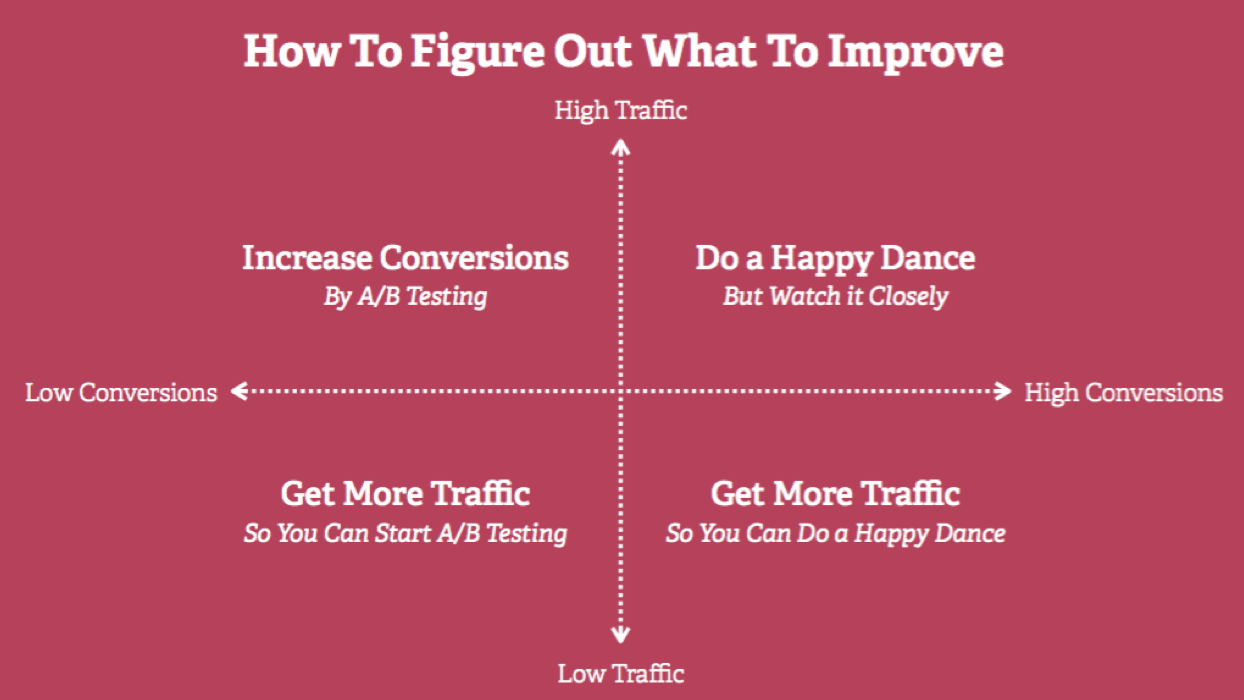
The underlying principle of this framework is the age-old marketing adage: "Figure out what’s working and then do more of it." Rather than relying on a scattergun approach of trying numerous disparate tactics, marketers are encouraged to delve into their existing performance data. The goal is to identify what is already generating high traffic, high conversion rates, or both. Once these high-performing elements are identified, the Conversion Map provides a structured method for determining the most effective next steps to capitalize on these successes and address areas needing improvement.
Transforming the Framework into an Actionable Process
The most significant opportunities for immediate improvement often lie within the "High Traffic, Low Conversion" quadrant. This is where a substantial volume of potential customers is already being drawn in, but the rate at which they are converting into signups is suboptimal. By focusing on these areas, marketers can achieve a rapid increase in signup volume with relatively efficient effort.
The strategic prioritization of these quadrants is crucial for maximizing impact. The recommended order of execution is as follows:
- High Traffic, Low Conversion: These are the prime targets for immediate optimization efforts.
- Low Traffic, High Conversion: These areas represent established value that can be amplified.
- Low Traffic, Low Conversion: These require foundational efforts to build momentum.
- High Traffic, High Conversion: These are the established successes that need sustained maintenance.
By following this prioritized approach, marketers can systematically enhance their overall conversion funnel and drive sustainable growth.

Quadrant #1: High Traffic, Low Conversion – The Goldmine of Opportunity
The top-left quadrant, characterized by high traffic and low conversion rates, represents a significant untapped potential. While a large audience is being drawn to these channels, landing pages, or content pieces, their engagement and subsequent conversion are not meeting expectations. The advantage here is the substantial sample size provided by high traffic, which enables more robust A/B testing and faster learning cycles.
The primary objective within this quadrant is to conduct rigorous experimentation to understand what specific conversion opportunities best resonate with the audience arriving through these channels. This involves developing hypotheses about why conversions are low and systematically testing variations in headlines, calls to action, page layout, form fields, and even the underlying offer. For instance, a high-traffic blog post about general industry trends might have a low conversion rate for a product signup. A/B testing different calls to action within the post—such as offering a more specific guide related to a particular pain point addressed in the post—could significantly boost conversion rates.
Data analysis tools are essential here. By tracking user behavior through heatmaps, scroll maps, and session recordings, marketers can gain insights into where users are dropping off or becoming disengaged. This qualitative data, combined with quantitative A/B testing results, provides a comprehensive picture for informed decision-making. The ultimate aim is to transform these high-traffic, low-conversion assets into more productive engines of signup generation.
Quadrant #2: Low Traffic, High Conversion – Cultivating Niche Success
Content that attracts a smaller, yet highly engaged, audience and converts them effectively often resides further down the marketing funnel. This type of content typically offers detailed, tactical advice that is closely aligned with the product or service being offered. While it demonstrates a deep understanding of a specific customer segment, it may lack the broader appeal necessary to attract a larger audience.

The primary objective for this quadrant is to systematically increase traffic to these high-converting assets. This can be achieved through various strategies, including:
- Content Promotion: Actively promoting these high-conversion pieces through social media, email newsletters, and paid advertising campaigns.
- SEO Optimization: Enhancing the search engine visibility of these pages through keyword research and on-page optimization.
- Content Repurposing: Transforming these high-performing articles into different formats, such as webinars, infographics, or short videos, to reach a wider audience.
- Internal Linking: Strategically linking to these high-conversion pages from other relevant content on the website.
It is important to note that as traffic to these pages increases, conversion rates may naturally decline. This is because a larger audience will include individuals with varying levels of intent. The initial visitors may have actively sought out highly specific information, whereas a broader audience might be more exploratory. The transition from increasing traffic to optimizing for conversion is a common progression. When this occurs, the focus shifts back to A/B testing and refining the user experience to maintain a strong conversion rate even with increased visitor volume. Surveys and feedback mechanisms, such as those offered by platforms like Qualaroo, can be invaluable in understanding the needs and motivations of this growing audience.
Quadrant #3: Low Traffic, Low Conversion – Building the Foundation
When both traffic and conversion rates are low, the immediate and overarching goal is to increase traffic through any viable means. This is a common starting point for many early-stage companies, particularly in the Software-as-a-Service (SaaS) sector, where content marketing is often a strategic choice for building initial brand awareness and driving foundational traffic.
The initial focus should be on generating any form of audience engagement. This might involve:

- Guest Blogging: Contributing articles to relevant industry publications to reach new audiences.
- Social Media Engagement: Actively participating in online communities and discussions to build visibility.
- Public Relations: Securing mentions and features in relevant media outlets.
- Partnerships: Collaborating with complementary businesses to cross-promote.
- Basic SEO: Implementing fundamental on-page and off-page SEO practices to improve search engine discoverability.
The objective is to move these underperforming assets into the "High Traffic, Low Conversion" quadrant, where more targeted optimization can then take place. This initial phase is about establishing a presence and demonstrating value to a nascent audience. Without traffic, there is no data to analyze for conversion optimization, making traffic generation the absolute priority.
Quadrant #4: High Traffic, High Conversion – The Pinnacle of Success
Achieving high traffic coupled with high conversion rates represents the ultimate marketing objective. This quadrant signifies that a particular channel, landing page, or content piece is effectively attracting a large audience and compelling them to take the desired action. This is the "cash cow" of a marketing strategy, providing a reliable stream of signups and revenue that can be reinvested into other growth initiatives.
While this is a position of success, it is crucial not to become complacent. Ongoing monitoring is essential to ensure these high-performing assets continue to deliver results. This involves:
- Performance Tracking: Regularly reviewing key metrics to detect any subtle declines in traffic or conversion.
- User Feedback Analysis: Continuously gathering and analyzing user feedback to identify potential areas for minor improvements or to understand evolving user needs.
- Competitive Monitoring: Staying aware of competitor strategies and market shifts that could impact the performance of these assets.
These high-traffic, high-conversion areas should be maintained and protected. While over-optimization can sometimes be detrimental, small, data-informed adjustments can help sustain their effectiveness. This "happy dance" moment is a testament to successful strategy, but it requires vigilance to ensure its longevity.

Embracing the Long Game: Content Marketing as a Strategic Investment
The principles outlined by this framework are particularly resonant with content marketing strategies, which are inherently long-term investments. At companies like KISSmetrics, for example, a strategic focus on content marketing led to a cost per acquisition for trial sign-ups of around $3, a stark contrast to the hundreds of dollars per acquisition potentially incurred through platforms like Google AdWords. This demonstrates that even when overall traffic might fluctuate, a consistent emphasis on conversion optimization can drive sustained business growth.
Content marketing, when executed effectively, functions as a cumulative process. In the initial stages, marketers aim to carve out a niche by building "islands" of valuable content and cultivating an early audience. Over time, as more high-quality, audience-loved content is produced, these individual islands begin to coalesce, forming larger "continents" on the internet that naturally attract and engage visitors.
This sustainable growth is not achieved through sporadic, one-off tactics or desperate "Hail Mary" plays. Instead, it is the result of a deliberate, step-by-step process. By consistently applying a strategic framework like the Conversion Map, marketers can move beyond the immediate pressures of the digital landscape and build a robust, conversion-driven marketing engine that delivers enduring results. The key lies in understanding the fundamental drivers of growth—traffic and conversion—and systematically optimizing each element of the marketing funnel.