Sony WH-1000XM5 Headphones Plummet to All-Time Low Price of $198 in Early Black Friday Sale Ahead of Holiday Shopping Season

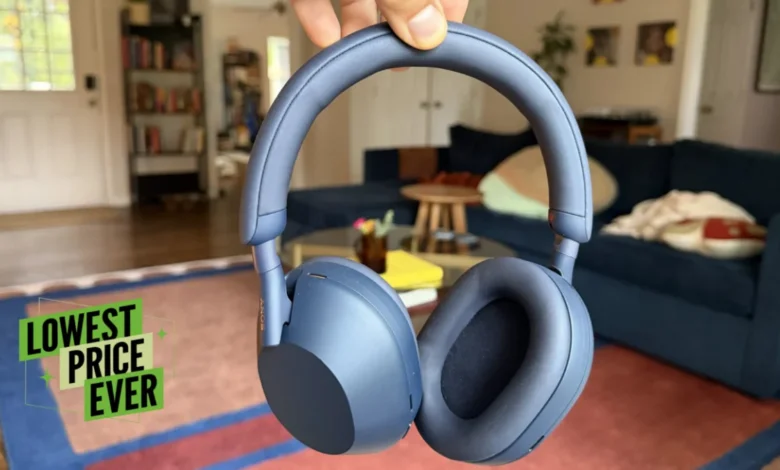
Sony’s flagship audio engineering has long set the benchmark for the personal listening market, but premium sound traditionally commands a steep financial barrier to entry. As retail outlets roll out promotional campaigns well ahead of the traditional holiday shopping rush, major consumer electronics discounts are beginning to materialize across the tech sector. Among the most notable price adjustments is a significant markdown on the Sony WH-1000XM5 over-ear headphones, which have dropped to an all-time low of $198, representing a 50% reduction from their original retail price of $399.99.
This aggressive discount arrives courtesy of Amazon’s early Black Friday sales events. While subsequent iterations in Sony’s legendary 1000X product line have entered the market to capture the absolute peak of audio performance, the WH-1000XM5 model continues to hold immense consumer and critical appeal. For budget-conscious audiophiles and everyday commuters alike, this price correction bridges the gap between high-end acoustic capability and mainstream affordability.
Evolution of the 1000X Series and Market Positioning
The lineage of Sony’s 1000X family of noise-canceling headphones traces back to 2016, a period when active noise cancellation (ANC) was rapidly transitioning from a niche feature for frequent flyers into an essential commodity for urban professionals and remote workers. Over the past decade, successive generations of the series have iteratively refined acoustic drivers, microphone arrays, algorithmic noise suppression, and physical ergonomics.
When the WH-1000XM5 launched, they represented a radical departure from the foldable, heavily padded design language of their predecessors, the WH-1000XM4. Sony opted for a sleeker, minimalist aesthetic featuring a streamlined headband and non-folding earcups designed to distribute pressure more evenly across the cranium. Industry reviewers, including technical evaluators at PCMag, lauded the headphones for delivering "outstanding" audio fidelity matched with an industry-leading ANC system capable of neutralizing low-frequency cabin rumbles, office chatter, and city traffic.
However, the rapid pace of consumer technology advancement inevitably brings displacement. The recent release of the Sony WH-1000XM6 headphones pushed the XM5 into a secondary tier within Sony’s active catalog. While the newer model captures the crown for top-tier over-ear performance, the technical gap in everyday listening environments between the two generations remains narrow, making the discounted XM5 an exceptionally attractive proposition for value-seeking buyers.
Technical Specifications and Feature Set
Despite being positioned as a previous-generation device, the Sony WH-1000XM5 remains remarkably robust in its hardware capabilities and software integration. The device supports high-resolution audio streaming through industry-standard codecs, including SBC, AAC, and Sony’s proprietary LDAC codec, which facilitates the transmission of significantly more data over Bluetooth than standard connections.
Connectivity features include multipoint pairing, a functionality that allows users to connect the headphones to two separate host devices simultaneously—such as a smartphone and a laptop—and seamlessly transition audio playback depending on incoming calls or media consumption.

Battery performance is rated by the manufacturer at approximately 30 hours of continuous playback with active noise cancellation enabled. Real-world longevity varies depending on usage factors such as volume levels and codec selection, but rapid-charging capabilities typically yield hours of playback from a brief multi-minute charge via USB-C. Additionally, the inclusion of a traditional 3.5mm stereo analog input jack ensures that users can operate the headphones in a wired mode, completely bypassing battery consumption if necessary.
On-device controls rely primarily on touch-sensitive capacitive panels located on the right earcup, allowing users to swipe for track navigation and tap to manage calls or playback. While capacitive gesture controls have occasionally drawn mixed reactions from traditionalists who prefer physical tactile buttons, they have become the prevailing industry standard for premium over-ear audio equipment. Complementary software support is delivered via the Sony Headphones Connect application, which provides comprehensive custom equalizer adjustments, ambient sound control profiling, and firmware management tools.
Economic Context and the Shifting Retail Landscape
The timing of this historic price drop reflects broader shifts in modern retail strategies, particularly the expansion of the traditional Black Friday shopping window into a multi-week or even multi-month commercial event. Retailers increasingly leverage deep discounts on premium tech goods during late October and early November to smooth out supply chain bottlenecks, capture early-bird consumer spending, and compete aggressively against rival e-commerce platforms.
For high-end audio manufacturers, offering steep promotional discounts on prior-generation flagship hardware serves multiple strategic purposes. It clears warehouse inventory to make room for newer stock, introduces brand-conscious consumers into the manufacturer’s software and hardware ecosystem at a lower financial risk, and undercuts mid-tier competitors who traditionally dominate the sub-$200 price bracket.
Price-tracking analytics confirm that a $198 valuation represents the absolute lowest recorded price point for the WH-1000XM5 since their initial market introduction. Previous promotional cycles have periodically pushed the headphones down to the $250 to $300 range, but breaking the sub-$200 threshold moves the device into a highly disruptive price-to-performance category.
Industry Implications and Consumer Guidance
The availability of premium-tier active noise-canceling headphones at a mid-range price point highlights a broader democratization of high-fidelity audio technology. Features that were once exclusive to devices costing upwards of $400—such as adaptive noise cancellation, high-bitrate Bluetooth codecs, and sophisticated multi-microphone array beamforming for voice calls—are rapidly becoming baseline expectations for consumers investing in personal audio.
For prospective buyers navigating the current market, the decision between purchasing a deeply discounted previous-generation flagship like the WH-1000XM5 and investing in the latest generational hardware depends heavily on individual use cases and budget constraints. While enthusiasts seeking the absolute pinnacle of acoustic engineering and the latest proprietary processing chips will naturally gravitate toward current-release models, mainstream consumers stand to gain substantial financial value by opting for mature, battle-tested hardware that continues to outperform contemporary mid-tier alternatives.
As the retail sector accelerates toward the peak of the holiday shopping season, analysts anticipate that similar aggressive promotional pricing will continue to affect premium consumer electronics categories. However, consumers tracking perishable deals must remain mindful of stock availability and fluctuating retail pricing policies, as high-demand items subjected to historic price cuts frequently experience rapid sell-outs across major distribution networks.