The AI Activation Paradox: Rapid User Engagement Masks a Deepening Retention Challenge

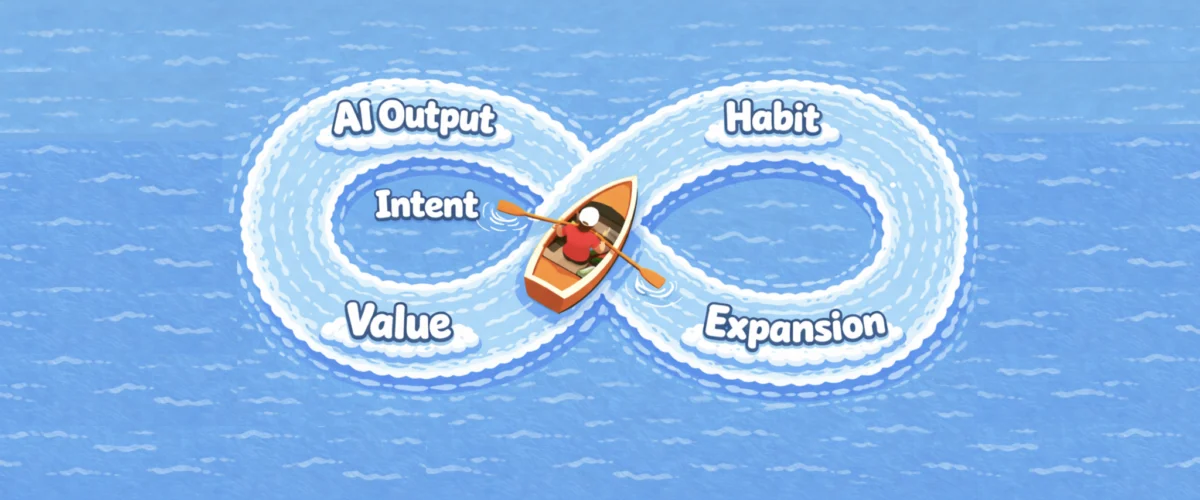
The software-as-a-service (SaaS) industry is witnessing a seismic shift, driven by the transformative power of artificial intelligence. AI is revolutionizing the initial user experience, enabling customers to derive value from new products at an unprecedented speed. This acceleration, however, is creating a complex paradox: while AI-native products are achieving remarkable early growth, many are simultaneously experiencing higher rates of customer churn, a trend that is beginning to surface in recent market research and poses a significant challenge for SaaS teams.
The traditional SaaS onboarding process, often characterized by days of setup and a gradual understanding of a product’s capabilities, is being compressed into minutes, or even seconds, thanks to AI. This rapid "aha!" moment, where users realize a product’s efficacy, is now frequently occurring within the very first interaction. This phenomenon mirrors the impact of mobile technology on distribution, drastically shortening the time between a user’s intent and their successful outcome, rendering older strategies increasingly obsolete.
However, research from analytics firm ChartMogul has begun to illuminate a critical counterpoint to this optimistic narrative. Their findings indicate that while AI-native products are achieving impressive early traction—some reaching $1 million in Annual Recurring Revenue (ARR) within six months, a rate up to three times faster than traditional SaaS counterparts—they are also, in many instances, exhibiting weaker net revenue retention. This stark contrast between rapid initial adoption and a potential lack of long-term commitment demands a deeper examination.
The core of this challenge lies not in AI being inherently detrimental to retention, but in AI fundamentally altering the definition and experience of user activation. Many product teams are still employing legacy metrics and frameworks to measure this crucial stage, failing to account for the profound changes AI has introduced.
The Evolving Landscape of User Activation
For the majority of SaaS history, the activation problem was a tangible hurdle: users needed to navigate a sometimes-arduous setup process before experiencing the product’s core value. High drop-off rates during this phase were common, prompting a focus on streamlining onboarding flows, reducing mandatory fields, and accelerating the "time-to-first-value."
AI has, in large part, resolved this traditional activation barrier. Modern AI-powered products allow users to sign up, articulate their needs, and receive a tangible, useful output almost instantaneously. The dreaded "empty state"—the daunting blank canvas that once greeted new users—is rapidly disappearing. Products now frequently generate initial outputs, pre-populate environments with relevant data, and guide users through natural, conversational interfaces rather than rigid, step-by-step tutorials. This is undeniably a significant advancement, delivering real progress in user engagement.
However, this efficiency has introduced a more nuanced challenge, one that is less apparent on standard dashboards. When AI delivers value immediately, it often bypasses the very friction that, in the past, fostered user understanding and built a mental model of the product. This inherent "work" performed by the user during setup, while sometimes cumbersome, served a critical purpose: it created the cognitive foundation necessary for sustained engagement and repeat usage.
In essence, AI is performing the user’s initial labor. Users are impressed by the immediate results, and may even share their positive experiences. Yet, without having actively engaged with the product to achieve that outcome, they may not have truly integrated it into their daily workflows. Consequently, when faced with a similar problem in the future, there may be no compelling reason to return to that specific AI-powered solution. This passive experience of value, while initially gratifying, can fail to cultivate the deep-seated habits that drive long-term retention.
The Hidden Cost of AI-Driven Efficiency
The implications of this shift are becoming increasingly evident. Most activation dashboards are still calibrated to measure the success of the old activation problem—getting users to a point of initial value. The new problem—ensuring that initial value translates into lasting engagement—often manifests only much later, appearing in churn data weeks or months down the line.
This disconnect highlights a critical gap in how many SaaS companies are currently evaluating their product’s success. The rapid acquisition of users who are impressed but not deeply engaged represents a flawed growth model, one that prioritizes initial momentum over sustainable revenue.
Emerging Patterns in Successful AI-Native Products
Despite the retention challenges, a subset of AI-native products is demonstrating how to navigate this new landscape effectively. These companies are implementing specific strategies that foster deeper user engagement beyond the initial AI-generated output. Four key patterns are emerging among products that are successfully marrying AI-driven activation with sustained growth:
Pattern 1: AI-Generated First Outputs as a Collaborative Starting Point
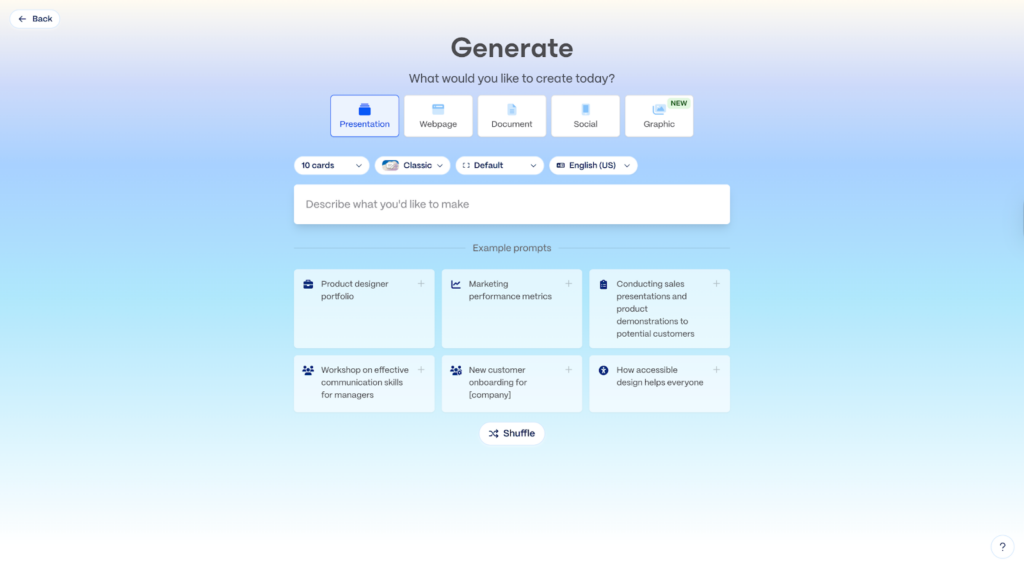
Instead of presenting users with an empty interface, leading AI-native products immediately generate a functional artifact. This could be a draft presentation, a pre-populated CRM pipeline, or an initial document outline. The key is that the user is not starting from scratch but from something they can immediately interact with, edit, and personalize.
A prime example is Gamma, an AI-powered presentation tool. Upon signup, users describe their desired presentation topic, and within seconds, receive a fully designed, styled presentation. This immediate, tailored output creates a powerful sense of perceived value. It’s not just speed; it’s the specificity of the AI’s response that fosters recognition: "This understood what I needed." This moment of validation is a crucial driver for continued engagement and return visits.
Pattern 2: AI-Assisted Setup to Remove Configuration Barriers
In traditional SaaS, accessing value often required extensive configuration—connecting disparate tools, importing data, or building complex workflows. This setup phase has historically been a major bottleneck for user adoption. AI is now removing this gatekeeping mechanism.
Companies like HubSpot utilize AI to generate CRM pipelines from minimal user input. Intercom employs AI to construct help centers and chatbots by analyzing existing content. By creating a functional starting environment, these products allow users to bypass tedious configuration and directly enter the value-generating phase. The principle here is that setup is not eliminated but rather transformed from a user-intensive task into an AI model inference.
Pattern 3: Conversational Onboarding for Deeper Intent Capture
Traditional onboarding often follows a rigid, pre-determined flow: Step 1, Step 2, Step 3. Conversational AI offers a more adaptive approach. By engaging users in dialogue, asking simple questions, and responding in real-time, these systems guide users toward value through a more natural, interactive feedback loop.
This conversational approach moves beyond simply capturing typed data. It aims to understand true user intent—what they are trying to accomplish, for whom, and within what context. Notion’s AI assistant exemplifies this by offering contextual help as users work, rather than forcing them through a pre-scripted tutorial. The more accurately the AI understands the user’s context, the more valuable each subsequent interaction becomes.
Pattern 4: Context-Aware AI Embedded Within the Workflow
The most durable pattern for retention is not about the initial session but about how the AI integrates into the user’s ongoing workflow. The most successful AI-native tools become more valuable over time as they accumulate context—user preferences, project history, and individual working styles.
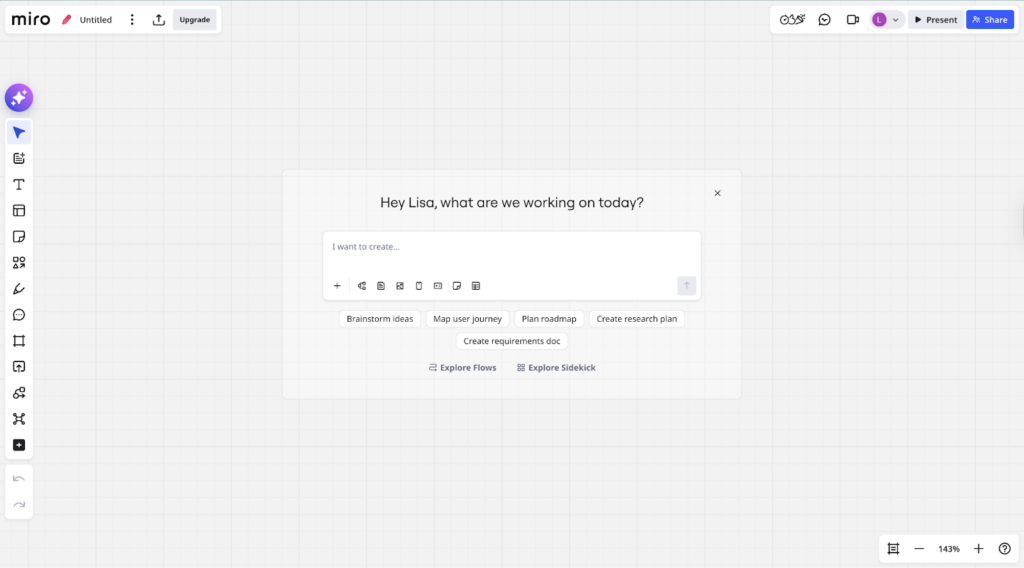
Miro’s AI features, for instance, are deeply integrated into the existing canvas. Instead of introducing a new, separate flow, the AI works directly with the content already present, summarizing, clustering, and generating new elements based on that context. This makes the AI an intrinsic part of the product’s functionality, not just an add-on feature. This deep integration is what fosters genuine retention. Each use enhances the product’s utility and increases the switching cost, as users invest not just in a tool but in accumulated, personalized context.
Bridging the Gap: From First Value to Lasting Habit
While the four patterns described above elegantly solve the "entry problem" and compress the time to first value, they do not automatically guarantee long-term retention. The crucial difference lies in what happens after the initial impressive output.
Consider the distinction between a user who generates a presentation with Gamma, is impressed, and closes the tab, versus a user who generates that presentation, edits it, shares it with their team, and returns the following week to create another. Both might be considered "activated" by traditional metrics. However, only the latter is on the path to becoming a retained user.
The first user experienced something akin to a compelling demo. The second user integrated the product into their work process. This critical gap is where many AI-native products are inadvertently losing potential long-term customers. This loss often goes unnoticed until deeper retention metrics, such as 60-day retention curves, are analyzed, rather than solely focusing on week-one activation rates. As one strategist aptly puts it, "The fastest path to first value isn’t the same as the shortest path to a durable habit."
The differentiator between these two user journeys often hinges on three key factors:
- User Action on AI Output: Retention is significantly boosted when users actively engage with AI-generated content—editing, sharing, exporting, or applying it. This transforms passive reception into active utilization, solidifying the perceived value of the output.
- Explicit Return Triggers: Products must be designed with specific, concrete events that prompt users to return. Vague notions of "usefulness" are insufficient. Successful products incorporate explicit triggers, such as a notification about a completed task, a colleague’s interaction, or a saved project waiting for further work. These engineered triggers are essential for habit formation.
- Accumulated Context: Traditional SaaS products built switching costs through accumulated data like files, contacts, and historical activity. AI-native products must deliberately build equivalent mechanisms. The product should progressively learn more about the user—their preferences, work patterns, and team dynamics—with each session. This accumulation of personalized context makes the decision to switch to a competitor genuinely costly.
Rethinking Metrics for the AI Era
The traditional SaaS approach of tracking activation as a simple binary (user reached milestone or not) is no longer sufficient. When the primary challenge shifts from initial engagement to the quality of that engagement, more insightful metrics are required.
Three crucial additions to most SaaS teams’ analytics suites can provide a clearer picture of retention quality:
- Downstream Activation Rate: This metric measures the percentage of users who take a subsequent action on their initial AI-generated output, such as editing or sharing it. This signifies a deeper level of engagement than simply receiving the output.
- 72-Hour Return Rate: This tracks the percentage of activated users who reopen the product within 72 hours of their first session. A strong return rate within this critical early window suggests the product is already beginning to integrate into the user’s workflow.
- Activated Cohort Retention: This involves comparing the retention curves of cohorts who performed a downstream action on their first AI output against those who did not. The divergence between these curves directly illustrates the impact of deeper engagement on long-term retention.
These metrics, taken together, offer a more holistic understanding of user behavior, moving beyond simply whether users have "reached value" to whether that value is enduring.
Charting a New Course for Growth
Implementing these changes does not necessarily require a complete product overhaul. Instead, it demands a sharpened focus on specific aspects of the user journey:

- Redefine the Activation Event: If your current activation milestone is simply "onboarding completed" or "first output generated," you are measuring a precursor to value, not its proof. Incorporate a downstream action requirement, such as editing, sharing, applying, or returning to the output. While this may initially lower your activation rate, the resulting cohort will be a more accurate predictor of genuine retention.
- Explicitly Design Return Triggers: Before embarking on your next development sprint, ask: "What is the specific, concrete event that will bring a user back to our product tomorrow?" If the answer is a generic "because it’s useful," a return trigger has not been designed. These triggers are tangible: a timely notification, a collaborative ping, a saved project awaiting further action, or the arrival of new data. Identify and build the trigger that best fits your product’s context.
- Map Context Accumulation: Trace the user journey and identify at what point the product begins to hold meaningful, personalized information about the user. If this accumulation point is late in the journey or nonexistent, the product is not building the essential switching costs for durable retention.
- Segment Cohorts for Clarity: Within your analytics platform, create distinct cohorts: one for users who took a downstream action on their first AI output, and another for those who did not. Analyze their 30, 60, and 90-day retention. The disparity between these retention curves represents your most significant activation opportunity, and it is often larger than anticipated.
The New Standard for Activation
AI has irrevocably transformed the potential of the initial user session. Strong first outputs, automated setup processes, and adaptive onboarding experiences are no longer aspirational but are rapidly becoming the baseline expectation for users. Products that fail to adopt these advancements are already falling behind.
However, a remarkable first session is now merely table stakes. The companies poised for sustained growth in the coming years will not be those with the most sophisticated AI onboarding alone. They will be the ones that successfully translate that initial AI-driven value into deeply ingrained workflow habits, meticulously building their metrics, product strategies, and growth investments around this complete user journey.
The data emerging from research like ChartMogul’s underscores a critical truth: rapid early growth that does not translate into strong Net Revenue Retention (NRR) is not a sustainable growth story but an acquisition strategy plagued by a retention deficit. Closing this gap begins with a fundamental redefinition of what activation truly means in the age of AI.
"The fastest product to deliver value gets a foot in the door. The product that becomes part of the user’s workflow is the one that stays."
Lisa Heiss is a PLG and activation strategist and the founder of UXELERATE, working with B2B SaaS founders from Seed through Series B on activation, conversion, and retention architecture.