The Daily Target: A Strategic Framework for Ending the Cycle of Perpetual Workplace Overwhelm


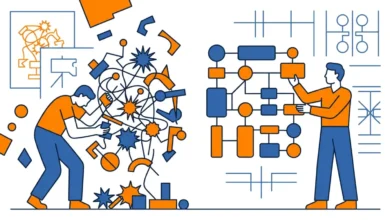
The modern professional landscape is characterized by an unprecedented volume of incoming tasks, digital notifications, and competing priorities. For many, the traditional to-do list, once considered the gold standard of organization, has evolved into a source of psychological strain rather than a tool for efficiency. Research into cognitive load and workplace psychology suggests that the sensation of "perpetual catch-up" is not merely a personal failure of time management, but a systemic byproduct of task fragmentation. By shifting from a volume-based approach to a single-item "Daily Target" methodology, professionals can mitigate the exhaustion associated with continuous task-switching and enhance their measurable output.
The Psychology of Task Fragmentation
Workplace studies have consistently demonstrated that multitasking is a misnomer; the brain is actually engaged in "task switching," a process that incurs a significant "switching cost." According to data from the University of California, Irvine, it takes an average of 23 minutes and 15 seconds to return to a deep state of focus after a single interruption. When a worker maintains a to-do list containing dozens of disparate items, they are effectively inviting constant mental context-switching, which degrades the quality of work and increases the likelihood of error.
The phenomenon of the "end-of-day deficit"—the feeling of being behind despite having worked for eight or more hours—is often attributed to the "Zeigarnik effect," a psychological tendency to remember uncompleted tasks more vividly than completed ones. When a professional reviews a long, sprawling list at the end of the day, the brain disproportionately focuses on the remaining items, fostering a sense of failure regardless of the objective volume of work accomplished.
Chronology of the Shift: From Volume to Impact
Historically, productivity systems in the late 20th century prioritized the "Getting Things Done" (GTD) model, which emphasizes capturing every task in an external system to clear mental space. While effective for organization, critics argue that this approach fails to prioritize the impact of those tasks. In recent years, a new cohort of efficiency experts has begun advocating for a pivot toward the "Daily Target" model.
The transition for most practitioners typically follows a distinct three-phase timeline:
- The Recognition Phase: An individual acknowledges that the volume of tasks is inversely proportional to their sense of progress. This phase is marked by high stress and low job satisfaction.
- The Audit Phase: The individual adopts a pre-work ritual—often a brief, five-minute session before the official start of the workday—to isolate the single task that would constitute a "win."
- The Implementation Phase: The professional consciously demotes secondary tasks to a secondary tier, ensuring that the primary target receives the highest level of cognitive energy during peak performance hours.
Supporting Data and Efficiency Metrics
The shift toward a "Daily Target" is supported by the Pareto Principle, or the 80/20 rule, which posits that 80% of outcomes result from 20% of inputs. In a corporate environment, this suggests that the vast majority of tasks on a standard to-do list are of low strategic value.
Data from productivity monitoring software indicates that professionals who identify a "Daily Target" before opening their email or communication channels show a 30% increase in deep-work completion rates compared to those who start their day by reacting to the most recent notification. By defining success as the completion of one high-impact objective, workers gain a sense of agency that is often lost in a reactive workflow. This is not about reducing the total number of tasks, but about recalibrating the internal definition of a "productive day."

Theoretical Framework and Expert Consensus
Industry analysts note that the "Daily Target" methodology aligns with contemporary theories on "Deep Work," a concept popularized by Cal Newport. The core argument is that the ability to focus without distraction on a cognitively demanding task is a rare and valuable skill in an economy driven by information.
"The goal is not to finish the list," explains one efficiency consultant. "The goal is to ensure that the work which moves the needle is not sacrificed to the altar of administrative busywork."
By separating the "Holding Area" (the long list of administrative tasks) from the "Target" (the mission-critical project), professionals can protect their focus. The long list serves as a repository for future actions, while the Daily Target serves as the metric for current-day success. This separation allows for the emotional satisfaction of "completing" the day, which is vital for preventing professional burnout.
Implementing the Daily Target: A Standardized Protocol
For those seeking to implement this methodology, the process is intentionally low-tech to minimize friction:
- The Pre-Work Audit: Before engaging with the digital environment, the individual must ask: "How do I know I had a productive day?"
- The Definition of Success: The answer must be a specific, verifiable outcome (e.g., "Complete the final draft of the client proposal") rather than an abstract goal (e.g., "Work on the proposal").
- The Preservation of Focus: The Daily Target is treated as a non-negotiable commitment. Secondary tasks are only addressed once the target is met or once a pre-determined time limit for the target has expired.
- The Review: At the close of the day, the professional grades their performance solely against the target, effectively removing the psychological burden of the unfinished items remaining on the secondary list.
Broader Implications for Corporate Culture
The implications of adopting a target-based workflow extend beyond individual performance; they can fundamentally alter organizational culture. When managers and teams focus on "targets" rather than "busyness," the metrics of success become more transparent and goal-oriented. This reduces the pressure for "performative productivity"—the tendency to stay late or answer emails instantly to signal engagement—and encourages a culture of results-based evaluation.
Critics of this approach often point to the complexity of collaborative roles, where individuals are frequently interrupted by team needs. However, proponents argue that even in collaborative environments, isolating a single target—even if that target is to clear a specific set of team-related communication bottlenecks—still provides the necessary structure to reclaim the workday.
Conclusion: Reclaiming the Narrative of the Workday
The struggle against a growing to-do list is a symptom of a broader crisis in modern professional management: the loss of the finish line. When every day is an open-ended marathon of tasks, the professional is left without a clear sense of achievement.
By reclaiming the definition of a "productive day" through the Daily Target, individuals can shift their focus from the noise of activity to the signal of impact. The practice requires discipline, particularly in the refusal to let secondary tasks dictate the morning schedule, but the result is a measurable increase in both output and psychological well-being. As the volume of information continues to rise, the ability to selectively ignore the trivial in favor of the essential will become the defining characteristic of high-performing individuals and organizations. Whether utilizing a digital app or a simple handwritten note, the core mechanism remains the same: define the finish line before the race begins.
Related posts: