AI Agents and the New Frontier in the Search for Extraterrestrial Intelligence

For decades, popular culture has framed the search for extraterrestrial intelligence (SETI) through the lens of biological encounter—the trope of the "little green man" broadcasting analog radio waves across the cosmos. However, as the technological landscape of the 21st century shifts toward autonomous systems, the scientific paradigm governing the search for alien civilizations is undergoing a radical transformation. Today, scientists are increasingly operating under the premise that if advanced extraterrestrial civilizations exist, they may be millions or even billions of years older than humanity, having long since transitioned beyond biological limitations into forms of artificial intelligence. Consequently, modern astrobiology faces a fascinating new reality: human-built artificial intelligence agents are now listening for the digital footprints of alien artificial intelligence agents.
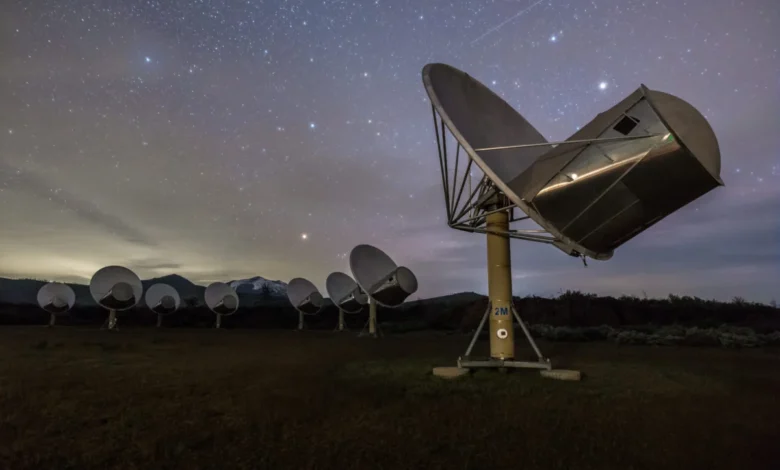
This philosophical shift is no longer confined to theoretical astrophysics or science fiction. Breakthrough Listen and the SETI Institute have formally integrated agentic artificial intelligence into the daily operational framework of the search for extraterrestrial intelligence. At the Allen Telescope Array in the remote HAT Creek Radio Observatory of Northern California, autonomous AI agents are actively steering scientific instruments, cleaning and enhancing incoming data streams in real time, and deploying complex machine learning models—all activated by simple natural language prompts from human researchers. Powered by advanced high-performance computing platforms such as NVIDIA Holoscan, these systems are processing unprecedented volumes of sensor data, enabling an agile, adaptive approach to cosmic observation that was once considered impossible.
The integration of agentic AI into radio astronomy marks a decisive turning point for a field that has historically struggled with data bottlenecks, computational lag, and the sheer needle-in-a-haystack probability of detecting an artificial technosignature among billions of cosmic radio frequencies. As these autonomous observatories peer deeper into the universe, researchers note that the signals they are equipped to catch may ultimately bear more resemblance to the computational architectures that discovered them than to the biological creators who engineered the telescopes.
The Technical Architecture: Terabits a Second, Processed in Flight
To understand the magnitude of this technological leap, one must examine the staggering scale of modern radio astronomy. Modern radio telescopes do not merely listen; they ingest the universe at blinding speeds. They generate enormous volumes of raw data, creating a severe operational challenge for scientists who must identify transient, anomalous, or potentially interesting signals while observations unfold in real time. Historically, this meant recording vast quantities of data onto physical or cloud-based storage drives, shipping or transferring them across networks, and subjecting them to weeks or months of post-processing latency.
At the Allen Telescope Array, that paradigm has been thoroughly dismantled. Through the implementation of DAQIRI—a specialized library within the NVIDIA Holoscan platform—the observatory can pull terabits per second of raw sensor data straight into high-bandwidth GPU memory. This allows observations to be processed "in flight," analyzing signals dynamically rather than warehousing them for future review. Concurrently, CyberEther, an advanced signal-processing framework developed internally at the SETI Institute, performs the heavy mathematical lifting using NVIDIA CUDA-X libraries, including cuFFT (CUDA Fast Fourier Transform) and cuBLAS (CUDA Basic Linear Algebra Subprograms).
The orchestration layer for this massive computational pipeline is handled by Nexus, a web-based observatory orchestrator that serves as the primary agent harness. Nexus provides autonomous agents with a single, unified source of truth regarding instrument states, available compute resources, and data pipelines. Through Nexus, researchers can monitor live packet loss, analyze real-time spectrograms, and dynamically rewrite signal-processing blocks simply by typing natural language prompts. Operating on premises directly adjacent to the telescope hardware, the system leverages NVIDIA RTX PRO 6000 Blackwell GPUs to effortlessly handle throughput capacities reaching 2.4 terabits per second.
When these components are synthesized into a unified operational ecosystem, an autonomous agent gains the capacity to independently point the telescope’s antennae toward a target coordinate, calibrate and focus the instrument to ensure a pristine signal, isolate and patch data transmission errors, and immediately plot the analytical results. Tasks that previously consumed weeks or years of human analysis are now compressed into hours or even minutes.
Chronology and Evolution of the SETI Paradigm
To appreciate the current integration of agentic AI, it is instructive to trace the historical evolution of the search for extraterrestrial intelligence, mapping how technological milestones have continually redefined the boundaries of what is observable.
The modern era of SETI officially began in 1960 with Project Ozma, led by astronomer Frank Drake using the 85-foot Tatel Telescope at the National Radio Astronomy Observatory in Green Bank, West Virginia. Drake tuned into two nearby sun-like stars, Tau Ceti and Epsilon Eridani, across a narrow band of radio frequencies around 1.420 gigahertz—the frequency emitted by neutral hydrogen, famously known as the "water hole." Project Ozma operated manually, analyzing a single frequency channel at a time, and yielded no extraterrestrial signals.
Throughout the 1970s and 1980s, the field scaled up its analytical capacity through the introduction of multichannel spectrum analyzers (MCSAs). The SETI Institute, founded in 1984 by Thomas Pierson, Jill Tarter, and others, centralized and professionalized these endeavors. By the 1990s, NASA initiated a formal SETI program, though congressional funding was abruptly canceled in 1993, forcing the institute to pivot to privately funded ventures like Project Phoenix, which utilized the world’s largest radio telescopes, including Arecibo in Puerto Rico and Parkes in Australia.
The turn of the millennium introduced distributed computing via platforms like SETI@home, which harnessed the idle processing power of millions of home computers worldwide to analyze raw data collected by the Arecibo Observatory. While culturally groundbreaking and computationally massive, SETI@home was fundamentally reactive and offline; data was gathered, shipped, distributed, and analyzed long after the initial observation occurred.
The launch of Breakthrough Listen in 2015, backed by a $100 million investment from Yuri Milner, injected a fresh wave of capital and technological ambition into the discipline. Partnering with major observatories like the Green Bank Telescope, the Parkes Observatory, and subsequently the MeerKAT array in South Africa, Breakthrough Listen drastically expanded the frequency coverage and sensitivity of technosignature searches.
However, the exponential growth of data acquisition soon outpaced traditional human analysis capabilities. Telescopes were generating data faster than scientists could review it, creating a critical vulnerability: transient or intermittent signals could easily be buried in the noise or overlooked during archival delays. The integration of edge computing, high-throughput GPUs, and ultimately agentic AI systems at the Allen Telescope Array represents the culmination of this historical trajectory—shifting SETI from passive recording to active, autonomous, real-time cosmic interrogation.
Supporting Data and Computational Benchmarks
The transition to agentic AI-driven observatories is supported by concrete performance metrics that underscore the necessity of high-performance computing in modern astrobiology.
Radio frequency interference (RFI)—generated by human technologies such as satellites, cellular networks, and aircraft—remains the single greatest obstacle in SETI research. Historical search models were frequently plagued by false positives, requiring tedious manual filtering of millions of locally generated signals. By deploying edge-computed AI models directly at the observatory site, autonomous agents can differentiate between anthropogenic RFI and genuine astronomical anomalies within milliseconds.
The hardware driving this capability represents the cutting edge of modern silicon engineering. The NVIDIA RTX PRO 6000 Blackwell GPUs utilized in the Allen Telescope Array deployment provide the massive parallel processing required to execute complex neural networks simultaneously with high-speed Fourier transforms. Processing 2.4 terabits per second requires memory bandwidth and compute density that far exceed standard enterprise computing infrastructure. By keeping inference on premises—physically adjacent to the telescope receivers—the system eliminates network latency, ensuring that data is cleaned, validated, and analyzed at the exact moment photons strike the metallic dishes.
Furthermore, benchmark tests on the pipeline have already validated its practical utility beyond theoretical simulations. The system successfully achieved the first real-time AI detection of a pulsar—a rapidly spinning neutron star that emits beams of electromagnetic radiation resembling a cosmic lighthouse—located within the Crab Nebula. Detecting a pulsar in real time requires the system to instantly recognize highly structured, periodic high-frequency pulses amidst chaotic background noise, proving that the AI agents possess the precise pattern-recognition capabilities required to identify artificial technosignatures if and when they appear.
Official Responses and Expert Analysis
The convergence of artificial intelligence and astrobiology has elicited profound commentary from leading figures in the scientific community, who view the development not as a cause for dystopian alarm, but as a historic evolutionary bridge.
"As our new agentic observatories reach out into the universe, what they find may have much more in common with themselves than with the humans who created them," observed Andrew Siemion, the Bernard M. Oliver Chair for SETI at the SETI Institute and principal investigator for Breakthrough Listen. "But this isn’t something to fear. Rather, it’s a breakthrough in translation."
Siemion’s assessment highlights a central tenet of modern astrobiological philosophy: biological carbon-based life may be provincially fragile and temporally limited, whereas machine intelligence—characterized by digital encoding, high-speed processing, and resilience to cosmic environments—may represent the enduring, universal medium of advanced technological civilizations. If an extraterrestrial intelligence transmits a message across interstellar distances, the medium of transmission is inherently technological, making an artificial intelligence agent the most logically sound recipient and interpreter.
Other researchers emphasize the practical necessity of autonomy in scaling scientific discovery. As humanity constructs larger radio astronomy installations, such as the upcoming Square Kilometre Array (SKA) in South Africa and Australia, the volume of incoming data will swell from terabits to exabits per second. Human-centric data analysis will become entirely mathematically untenable. The deployment of agentic architectures ensures that astronomy can scale infinitely alongside data generation, maintaining vigilance without being drowned by the sheer volume of the cosmos.
Broader Impact and Future Implications
The integration of agentic AI into the Allen Telescope Array carries profound implications that extend far beyond the immediate search for extraterrestrial life. The technological pipelines developed for SETI—specifically those involving ultra-high-speed data ingestion, in-flight processing, and natural language observatory orchestration—have immediate, highly beneficial applications across mainstream astronomy and astrophysics.
Observatories studying fast radio bursts (FRBs), black hole accretion disks, gravitational wave counterparts, and near-Earth asteroids face identical data-handling crises. By proving that autonomous agents can successfully steer telescopes, correct telemetry errors, and isolate rare cosmic phenomena in real time, the SETI Institute and Breakthrough Listen are pioneering infrastructure that will likely become the standard for all major astronomical facilities in the coming decades.
Looking toward the future horizon, the research team is already evaluating open-source foundation models, including NVIDIA Nemotron, for deployment scenarios where data locality, extreme operational environments, and minimal power consumption are paramount. These models offer the flexibility required for observatories that may someday operate entirely offline—such as autonomous listening posts established on the far side of the Moon, shielded from the heavy radio interference of Earth.
Ultimately, the Halloween realization that humans are building AI agents to listen for alien AI agents reframes humanity’s place in the cosmos. We are no longer merely looking up at the stars with wide-eyed wonder and crude analog receivers. We are extending our digital consciousness outward, matching the presumed technological maturity of the universe with systems capable of comprehending what lies hidden in the noise. Whether those efforts ultimately detect a deliberate signal from an intelligence older than the Earth itself or simply map the hidden rhythms of the natural universe with unprecedented fidelity, the tools of discovery have forever been transformed.