Beyond the Software: Why True Organizational Collaboration Requires Culture Over Tools

In the modern corporate landscape, executive leadership consistently identifies cross-functional collaboration as a foundational pillar of sustained organizational success and market adaptability. Yet, despite heavy financial investments in enterprise software suites, agile project management platforms, and rigid operational hierarchies, many companies continuously fail to generate meaningful teamwork. Industry analysts and workplace psychologists increasingly point to a fundamental miscalculation among decision-makers: an over-reliance on digital tools and structural frameworks, contrasted with a profound neglect of the underlying workplace culture required to sustain them.
When organizations treat collaboration as an engineering problem that can be solved simply by deploying new communication applications or restructuring org charts, they routinely encounter friction, employee burnout, and stagnant innovation. True cooperation cannot be forced through mandates or monitored exclusively via productivity dashboards. Instead, sustainable collaboration requires a deliberate cultivation of employee autonomy paired with organic psychological connectivity—principles vividly illustrated by some of the tech industry’s most prominent organizational experiments.
Decoding the Mechanics of the Spotify Squad Model
To understand the difference between superficial structural design and genuine cultural support, management theorists frequently examine the celebrated "squad" model pioneered by audio-streaming giant Spotify. Developed during the company’s rapid scaling phase in the early 2010s, the model was designed to preserve the speed, agility, and innovative spirit of a small startup within a rapidly expanding enterprise ecosystem.
Under this framework, Spotify organized its engineering and product development teams into autonomous "squads"—small, cross-functional units typically consisting of six to twelve individuals. Each squad operates with a high degree of independence, possessing its own distinct mission, product focus, and complete decision-making authority over how it achieves its stated goals. Rather than waiting for top-down approvals or navigating bureaucratic approval chains, squads function as micro-enterprises dedicated to solving specific user problems.
However, autonomy without alignment can quickly lead to corporate fragmentation. To prevent silos from forming among these independent units, Spotify supplemented its squads with complementary horizontal structures known as "tribes," "chapters," and "guilds." Tribes are collections of squads working in related product areas that sit in physical proximity to encourage casual communication. Chapters represent functional skill-set communities—such as quality assurance engineers or agile coaches—that meet regularly to share technical standards and best practices. Guilds are organic, interest-based communities open to anyone across the entire organization who wishes to share knowledge around a specific topic, ranging from web design to leadership philosophies.
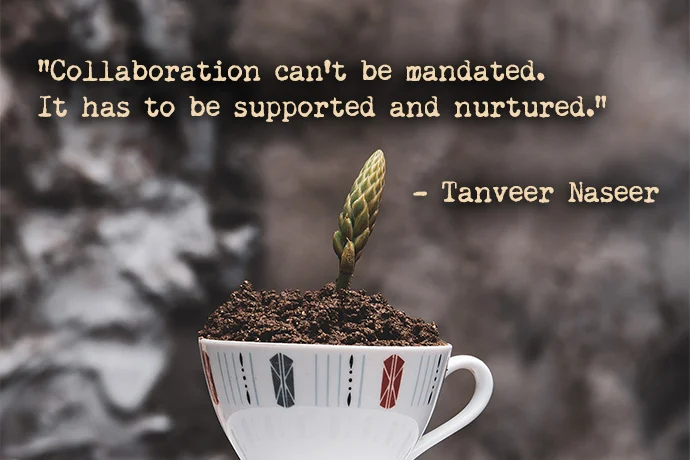
Despite the widespread fascination with this matrixed architecture, business management experts emphasize that the true catalyst behind Spotify’s success is not the organizational chart itself. Rather, it is the underlying philosophy held by the company’s executive leadership: collaboration must be nurtured, not mandated. By pairing genuine autonomy with systemic opportunities for peer-to-peer connection, Spotify created an environment where employees naturally gravitate toward sharing insights, evaluating collective value, and solving complex problems together.
The Shift from Structural Engineering to Cultural Architecture
As remote and hybrid work models have matured over the past several years, the limitations of relying purely on structural solutions have become glaringly apparent. Organizations have rushed to adopt collaboration platforms such as Slack, Microsoft Teams, and Asana, often under the assumption that greater digital connectivity automatically translates into superior teamwork.
However, workplace studies suggest otherwise. According to global workplace research, employees frequently report experiencing "meeting fatigue" and "collaboration overload," where the sheer volume of communication channels detracts from deep, focused work without actually improving cross-departmental innovation. The root cause of this disconnect lies in the absence of a supportive cultural framework. When trust is low and decision-making remains opaque, collaboration tools simply become digital extensions of existing organizational silos.
To bridge the gap between structural design and cultural reality, organizational psychologists and leadership consultants advocate for a deliberate, multi-step approach that redefines how teams interact, make decisions, and measure progress. Below are three practical, evidence-based strategies that modern enterprises can implement to build a genuinely collaborative workplace culture.
Step 1: Practicing Collaborative Visibility Through Transparent Decision-Making
A primary barrier to organic collaboration within traditional corporate hierarchies is the opacity of executive decision-making. When high-level choices are made behind closed doors and communicated downward via formal memos or unidirectional emails, employees often feel alienated from the broader strategic vision. This lack of transparency fosters a defensive corporate culture where departments guard their territories and information is treated as currency.
To counter this dynamic, modern leaders are increasingly adopting the practice of "collaborative visibility." This involves opening up the decision-making process by explicitly sharing the rationale, data, and trade-offs behind organizational choices with the broader team. Rather than simply announcing a new direction, leaders articulate the "why" and actively invite constructive feedback and dissenting viewpoints to inform future iterations.
When employees witness transparent behavior from leadership, psychological safety increases. Team members feel empowered to mirror this openness in their own interactions, sharing their work-in-progress, admitting missteps, and seeking cross-functional input earlier in project lifecycles. Collaborative visibility transforms decision-making from an authoritarian decree into an inclusive, collective endeavor.
Step 2: Implementing Cross-Pollination Sessions Grounded in Divergent Perspectives
Organizational silos naturally form when employees spend the vast majority of their time interacting exclusively with immediate teammates who share similar professional backgrounds, skill sets, and departmental goals. While functional specialization is necessary for operational efficiency, it severely limits an organization’s capacity for creative problem-solving.
This phenomenon is deeply connected to what organizational researcher Siobhan McHale, author of The Hive Mind at Work, describes as the "Law of Multiple Perspectives." In her research, McHale highlights the fundamental truth that not everyone within an enterprise views a challenge through the same lens; operational blind spots are inevitable when groups operate in isolation.
To overcome these cognitive limitations, forward-thinking organizations are implementing regular "cross-pollination sessions." These structured workshops deliberately bring together employees from disparate departments—such as finance, engineering, marketing, and customer support—who would not normally collaborate on a day-to-day basis. Tasked with addressing a unique organizational challenge or product hurdle, these mixed groups are forced to navigate divergent viewpoints and apply varied skill sets to a common problem.
Beyond generating novel ideas and breakthrough solutions, these sessions acclimate employees to the discomfort of bridging communication gaps across professional disciplines. Over time, participants develop greater empathy for the operational pressures faced by other departments, dismantling internal friction and establishing informal communication channels that persist long after the workshop concludes.
Step 3: Measuring Collaboration Efforts Rather Than Assuming Success
A pervasive mistake in corporate management is treating collaboration as an intangible cultural trait that cannot be quantified. Consequently, many executives assume that simply encouraging teamwork is sufficient, failing to evaluate whether meaningful cross-functional cooperation is actually taking place across the enterprise.
Without clear metrics, organizations risk investing time and resources into collaboration initiatives that yield little to no tangible return, or worse, create administrative burdens for employees. To ensure that collaboration efforts are effective, leadership teams must establish objective indicators to measure the health and frequency of teamwork.
Key metrics that organizations can track include:
- Cross-Departmental Project Completion Times: Analyzing whether projects requiring input from multiple business units are moving more efficiently through the pipeline.
- Knowledge-Sharing Frequency: Monitoring the utilization rates of internal repositories, wikis, or cross-functional community forums where insights and documentation are exchanged.
- Rates of Experimentation: Measuring how often teams propose, test, and iterate upon new ideas originating from outside their immediate functional domains.
By tracking these indicators, leadership can identify operational bottlenecks, pinpoint departments that remain isolated, and adjust their cultural support mechanisms accordingly. Measurement provides the empirical clarity necessary to move collaboration from an abstract corporate aspiration to a verifiable operational competency.
Broader Implications and Future Outlook
As the global economy continues to navigate rapid technological advancements, artificial intelligence integration, and shifting labor demographics, the nature of work will demand even higher levels of adaptability and collective intelligence. Enterprises that continue to rely on outdated, command-and-control structures supplemented merely by advanced software tools will likely find themselves outpaced by more agile competitors.
The future of organizational success does not lie in discovering the ultimate collaboration app or replicating an exact structural blueprint like Spotify’s squad model. Instead, it rests upon the willingness of leaders to cultivate an environment characterized by radical transparency, cognitive diversity, and rigorous self-evaluation.
By implementing structured visibility, fostering cross-functional pollination, and measuring the genuine health of internal teamwork, organizations can move past the superficial trappings of modern productivity tools. In doing so, they build a resilient collaborative culture that not only drives business performance, but fundamentally empowers employees to bring their highest levels of creativity, engagement, and collective effort to the workplace every single day.