Bridging the Gap Between Responsibility and Reality: The Rise of Leadership Sustainability in Modern Organizations

Global investments in leadership development have reached unprecedented heights, with corporations, non-profits, and government agencies pouring billions of dollars annually into executive education, specialized coaching, succession planning pipelines, and multi-tiered leadership academies. According to recent industry analytics from corporate learning consortia, global spending on leadership and management training routinely surpasses $360 billion annually, reflecting an organizational consensus that robust talent pipelines are critical for long-term economic survival. These substantial financial commitments have undoubtedly yielded measurable benefits, fundamentally transforming how institutions identify high-potential talent, foster core competencies, and prepare individuals for escalating tiers of corporate responsibility.
Yet, despite this massive influx of capital and strategic focus, organizational psychologists and executive human resources veterans have identified a glaring, unexamined blind spot that threatens the return on investment of these programs. For decades, a foundational assumption has dictated the architecture of talent development: the belief that preparing a professional to assume a leadership role is fundamentally identical to preparing them to sustain leadership effectiveness once they are actively navigating that role. Industry data suggests this presumption may be deeply flawed, as executive burnout rates climb and leadership tenures face mounting pressures from volatile market conditions, rapid technological disruption, and shifting workforce dynamics.
The Anatomy of the Problem: Responsibilities Versus Realities
To understand the core disconnect in contemporary talent management, leadership analysts differentiate between two distinct domains that every executive must navigate: leadership responsibilities and leadership conditions. Responsibilities encompass the formal structural duties assigned to a title—such as managing departmental budgets, driving quarterly financial targets, supervising personnel, formulating strategic plans, and reporting directly to a board of directors or executive committee. Traditional leadership development programs excel at addressing these elements by equipping candidates with competency models, financial literacy, conflict resolution frameworks, and strategic planning methodologies.
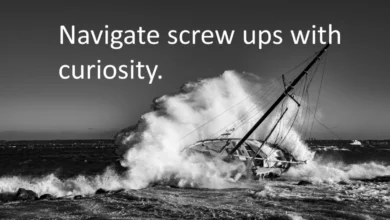
However, leadership conditions describe the fluid, unpredictable, and often chaotic environment in which those responsibilities must actually be exercised. Once a newly minted executive steps into their office, the sterile, controlled case studies of executive education programs are immediately replaced by turbulent realities. Leaders must contend with persistent ambiguity, deeply polarized stakeholder expectations, sudden supply chain disruptions, macroeconomic uncertainty, shifting regulatory landscapes, and crises that no standard curriculum could ever fully simulate.
Chronology of a Paradigm Shift: How Leadership Training Evolved
The evolution of professional leadership training provides vital context for understanding why this gap between responsibility and reality has emerged. During the mid-to-late twentieth century, corporate leadership development was largely transactional and hierarchical. Organizations relied heavily on command-and-control training models that emphasized operational efficiency, administrative compliance, and linear career progression. Leaders were largely prepared for static environments where market shifts occurred over decades rather than days.
Entering the late 1990s and early 2000s, the emergence of the global knowledge economy forced a paradigm shift. Organizations moved toward competency-based frameworks, emotional intelligence training, and experiential learning models. Competency frameworks became the gold standard, mapping out the precise behaviors, skills, and cognitive attributes required for executive advancement. While this approach dramatically improved the readiness of leaders to step into broader roles, it remained fundamentally tethered to the moment of transition. The core institutional question remained focused on the lead-up to the promotion: Is this candidate ready to assume the job?
By the 2010s and 2020s, the acceleration of digital transformation, geopolitical instability, and profound workplace demographic shifts introduced a new operational reality commonly referred to in business strategy as VUCA (Volatility, Uncertainty, Complexity, and Ambiguity). Executives were no longer simply managing steady-state organizations through predictable growth cycles; they were steering enterprises through perpetual disruption. Despite these sweeping environmental changes, the design of most leadership academies and executive development pathways remained anchored to transition milestones. The programs prepared individuals to cross the threshold into a new role, but provided little structural fortification for the psychological and operational endurance required to weather the storm long-term.
Defining Leadership Sustainability: A New Strategic Framework
In response to these systemic vulnerabilities, progressive organizational behaviorists and human capital researchers have introduced a broader conceptual framework known as leadership sustainability. Rather than treating leadership development as a finite, episodic event that culminates upon promotion, leadership sustainability views development as an ongoing, dynamic capability designed to ensure effectiveness across the entire lifecycle of an executive’s tenure.
Leadership sustainability is not a new competency to be added to an already overcrowded corporate framework, nor is it merely a wellness initiative focused narrowly on mitigating burnout. Instead, it represents a fundamental recalibration of the intended outcome of leadership development. It acknowledges that while competencies and skills prepare an individual to assume responsibility, psychological resilience, adaptive capacity, and systemic sense-making determine how effectively that leader sustains performance over years or decades of continual pressure.
Experts emphasize that sustainable leadership requires a distinct set of internal capacities. These include the ability to interpret extreme ambiguity without premature closure, the self-regulatory skill to manage cognitive and emotional responses during high-stakes crises, the agility to pivot strategic direction without destabilizing organizational trust, and the discernment to establish professional boundaries that preserve cognitive stamina. When established playbooks and historical precedents fail to offer clear directives, these meta-capabilities become the primary differentiator between executives who burn out or falter and those who sustain long-term organizational impact.
Quantitative Insights and Market Pressures
Recent empirical research underscores the urgent need for this developmental evolution. According to workforce analytics compiled by executive search and leadership advisory firms, executive burnout has reached historic highs, with over 60 percent of surveyed senior leaders reporting chronic exhaustion and diminished engagement. Furthermore, average executive tenures in major publicly traded corporations have steadily compressed over the past two decades, driven by intense performance pressures, governance scrutiny, and the relentless velocity of operational change.
Data from corporate learning evaluations similarly reveal a troubling phenomenon known as capability decay. While participants in traditional executive education report high satisfaction scores immediately following program completion, longitudinal follow-ups indicate that a significant percentage of acquired strategic behaviors degrade within twelve to eighteen months of re-entering high-pressure operational environments. The daily gravity of urgent operational demands routinely crowds out the strategic behaviors learned in development programs, illustrating that traditional training alone fails to anchor durable behavioral changes under adverse conditions.
Industry Reactions and Expert Perspectives
Human resources executives and organizational development leaders across the Fortune 500 are increasingly taking notice of these structural limitations. In recent executive roundtables focused on talent strategy, chief human resources officers (CHROs) have begun questioning the traditional return on investment metrics associated with legacy leadership pipelines.
Dr. Elena Vance, a senior organizational psychologist and advisory board member for global leadership research initiatives, notes that organizations have historically measured success by the velocity of promotions rather than the durability of performance. “For decades, our industry treated leadership development like an initiation rite—you study the material, pass the milestone, assume the title, and the program considers its job complete,” Vance observed. “We are now realizing that the moment a leader assumes the title is not the finish line; it is merely the starting line of a grueling endurance test. Organizations must pivot from asking whether their leaders are ready for promotion to asking whether their leaders are equipped to survive and thrive within the messy realities of the modern operating environment.”
Similarly, corporate governance experts have begun emphasizing that leadership sustainability directly impacts enterprise risk management. Frequent executive turnover, strategic fatigue, and leadership burnout introduce severe operational friction, erode institutional memory, and create cultural instability. Consequently, progressive boards of directors are beginning to request visibility not just into succession readiness pipelines, but into the long-term support systems and developmental frameworks designed to protect and enhance executive effectiveness over time.
Redesigning Leadership Development for Sustainability
Integrating the principles of leadership sustainability into existing organizational architectures requires a deliberate redesign of how learning interventions are structured, delivered, and evaluated. Crucially, organizational theorists emphasize that leadership sustainability does not replace foundational competency training; rather, it extends and contextualizes it. Foundational skills remain essential, but they must be paired with methodologies that simulate and prepare leaders for environmental volatility.
-
Shift from Event-Based to Continuous Developmental Ecosystems
Traditional leadership development has relied heavily on episodic interventions—such as a week-long executive education seminar at a university or an intensive onboarding bootcamp. Leadership sustainability reframes development as a continuous, iterative ecosystem. This involves embedding reflective practices, peer coaching circles, and action-learning triads directly into the operational cadence of the executive’s routine, ensuring they have structured spaces to process complex, real-time challenges. -
Integration of Advanced Simulations and Pressure-Testing
To prepare leaders for unpredictable conditions, forward-thinking organizations are increasingly utilizing complex, dynamic leadership simulations that mirror the messy realities of crisis management. Unlike traditional case studies with neat, predictable resolutions, these advanced simulations expose leaders to contradictory data streams, rapidly shifting stakeholder demands, and high-stakes ethical dilemmas, forcing them to practice adaptive problem-regulation under pressure. -
Redefining Evaluation Metrics
For leadership sustainability to take root, organizations must expand their evaluative scorecards. While traditional metrics—such as promotion rates, 360-degree feedback scores, and training completion percentages—remain baseline indicators, they must be complemented by metrics that track executive health, strategic retention, team psychological safety, and long-term decision-making quality. Evaluating whether a leader maintains strategic clarity and team engagement across multi-year cycles provides a far more accurate reflection of true leadership efficacy.
Fact-Based Analysis of Strategic Implications
The operationalization of leadership sustainability carries profound implications for organizational competitiveness. In an era where technological disruption, macroeconomic volatility, and workforce transformations are constants, the organizations that win will not simply be those that identify talented individuals fastest, but those that create environments where leaders can exercise sustained, high-level judgment without succumbing to exhaustion or strategic myopia.
When organizations fail to account for leadership conditions, they inadvertently create a revolving door at the executive level, resulting in exorbitant recruitment costs, lost institutional knowledge, and cultural fragmentation. Conversely, enterprises that consciously embed leadership sustainability into their talent strategies foster resilient executive teams capable of navigating ambiguity with composure and strategic foresight.
The transition toward leadership sustainability represents a maturing of the organizational development industry. It moves beyond the simplistic premise that leadership is a destination defined by a title and embraces the nuanced truth that leadership is an ongoing negotiation between structural responsibility and unpredictable reality. As corporate landscapes grow increasingly complex, the mandate for learning leaders is clear: the objective of development is no longer merely to prepare individuals to assume responsibility, but to intentionally fortify them to sustain effectiveness throughout the entire journey that responsibility demands.