The Paradox of Leadership Why Fixing Others Often Masks Deep Self-Deception and Limits Organizational Growth

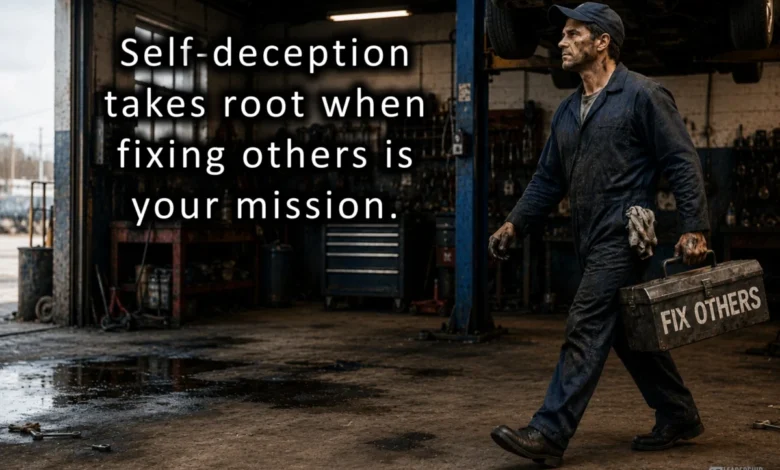
The drive to reform, correct, and "fix" subordinates has long been viewed as a hallmark of proactive management, yet modern psychological research and organizational behavior studies suggest that this impulse often serves as a sophisticated veil for leadership self-deception. When a leader’s primary mission becomes the rectification of others’ perceived flaws, they frequently enter a state of cognitive dissonance where their own contributions to systemic failures remain unexamined. This phenomenon, often referred to in executive coaching as the "fixer complex," creates a fundamental barrier to authentic connection and organizational agility. By focusing externally on the shortcomings of a team, leaders inadvertently build a wall of self-deception that limits their own potential for growth and undermines the very influence they seek to exert.
The core of this issue lies in the distinction between influence and control. Influence requires a genuine connection, a state of being that is inherently vulnerable and reciprocal. In contrast, the mission to fix others is a unidirectional exertion of power that treats people as objects to be repaired rather than partners to be engaged. As relationships become "messy" due to the demands they place on an individual’s character, many leaders retreat into the "easy" path of isolation or the "safe" path of clinical observation, where they can diagnose others without ever having to look in the mirror.
The Evolution of the Fixer Complex a Chronological Perspective
The trajectory of a self-deceived leader often begins with early-career technical proficiency. In the initial stages of a professional career, individuals are rewarded for their ability to solve problems, repair systems, and optimize processes. This "mechanic" mindset is highly effective in junior and mid-level roles where the primary challenges are objective and task-oriented. However, as these individuals ascend to senior leadership, the nature of the challenges shifts from technical to adaptive.
By the mid-career stage, the habit of "fixing" becomes deeply ingrained. When faced with team conflict or missed KPIs, the leader applies the same logic used for broken machinery to human capital. Between the fifth and tenth years of management, if a leader has not transitioned to a high level of self-awareness, the "fixer mission" takes root as a permanent psychological defense. By the time an executive reaches the C-suite, this self-deception can become institutionalized. The leader surrounds themselves with "yes-men" who validate the leader’s diagnosis of others’ failures, further insulating the leader from the reality of their own impact on the corporate culture.
This chronological hardening of the ego results in what organizational psychologists call "leadership blindness." At this stage, the leader is no longer capable of seeing how their own behavior—be it micromanagement, lack of transparency, or emotional volatility—is the root cause of the very performance issues they are trying to "fix" in their staff.
Supporting Data The Cost of Low Self-Awareness
The impact of leadership self-deception is not merely a matter of workplace morale; it has quantifiable financial and operational consequences. A multi-year study conducted by the Korn Ferry Institute analyzed the performance of 6,977 employees at 486 publicly traded companies. The research found that companies with high rates of "highly self-aware" leaders had significantly higher RSR (Return on Stock Revenue) than those with lower rates. Conversely, leaders in "blind spot" categories—those who consistently overrated their own skills compared to the feedback of their peers—were more likely to work for underperforming companies.
Furthermore, data from Tasha Eurich, an organizational psychologist and author of Insight, reveals a startling "self-awareness gap." While 95% of people believe they are self-aware, the actual figure is closer to 10% to 15%. In a leadership context, this means that the vast majority of managers who believe they are "helping" their teams by fixing them are actually operating from a place of profound misunderstanding regarding their own influence.

Employee retention statistics further highlight the danger. According to a 2023 Gallup report, the primary reason employees leave organizations is not salary or benefits, but the relationship with their immediate supervisor. Leaders who focus on "fixing" others create an environment of psychological insecurity. When employees feel they are viewed as "broken" or "inadequate" by their leadership, engagement levels plummet, leading to a 21% decrease in productivity and a significantly higher turnover rate, which costs companies approximately 1.5 to 2 times the employee’s annual salary to rectify.
Signs of Self-Deception in Modern Management
Identifying self-deception requires a rigorous audit of a leader’s internal narrative. While the "fixer" may believe they are acting out of altruism or professional duty, several red flags indicate that the mission is actually a form of ego-protection.
The first sign is a persistent focus on the "weaknesses" of others during performance reviews or casual interactions. If a leader spends more time documenting the failures of their team than they do soliciting feedback on their own performance, they have likely entered a state of self-deception. This is often accompanied by a sense of "righteous indignation." The leader feels justified in their frustration, viewing themselves as the only competent individual in a sea of mediocrity.
Another critical sign is the erosion of deep relationships. Self-deception builds shallow, transactional connections. Because the leader is focused on "repairing" the subordinate, they cannot see the subordinate as a whole person. This creates a "us vs. them" dynamic, even within a single team. The leader becomes isolated, and as the original text suggests, "isolation leads to self-deception." Without the friction of genuine connection, the leader’s internal biases are never challenged.
Finally, a lack of personal change is a definitive indicator. Connected leaders are constantly evolving; they ask, "How do I need to change to better serve this team?" Self-deceived leaders, however, remain static. They expect the world to adapt to them, viewing their own methods as beyond reproach while demanding total transformation from everyone else.
Expert Perspectives and Organizational Responses
Human resources experts and executive coaches are increasingly moving away from traditional "remedial" management training toward "inward-out" leadership development. This shift acknowledges that a leader’s external effectiveness is a direct reflection of their internal clarity.
"The most dangerous thing a leader can do is believe they have ‘arrived’ and that their only remaining task is to bring others up to their level," says Dr. Elena Rossi, a consultant specializing in organizational health. "True leadership starts with the recognition that you are a permanent work-in-progress. When a leader stops working on themselves, they become a bottleneck for the entire organization."
In response to these findings, many Fortune 500 companies have implemented "360-degree feedback" systems that are mandatory for senior executives. These systems are designed to shatter the wall of self-deception by providing raw, anonymous data from subordinates and peers. However, experts warn that data alone is not enough. The leader must possess the humility to accept the data. Without a fundamental shift from a "fixing" mindset to a "connecting" mindset, even the most accurate feedback will be dismissed as the "wrong" perspective of others who "just don’t understand the pressure."

Critical Questions for Self-Reflection
To break the cycle of self-deception, leaders are encouraged to move away from diagnostic questions aimed at others and toward interrogative questions aimed at themselves. Three foundational questions can serve as a starting point for this transition:
-
What am I doing (or failing to do) that contributes to the problems I see in others? This question forces the leader to acknowledge their role as a participant in the organizational system rather than an objective observer. If a team is failing to meet deadlines, a self-aware leader examines whether they have provided clear instructions or if their own shifting priorities have caused the delay.
-
Am I treating this person as a problem to be solved or a partner to be empowered? This distinguishes between control and influence. Treating a person as a "problem" creates resistance; treating them as a "partner" fosters accountability and growth.
-
What is the feedback I am most afraid to hear from my team right now? Identifying the "scary" feedback often points directly to the leader’s primary blind spot. It is in the space of that fear that the most significant leadership growth occurs.
Broader Impact and Future Implications
The shift from self-deception to self-awareness has implications that extend far beyond the individual leader. On a systemic level, organizations that prioritize self-aware leadership foster cultures of psychological safety. In these environments, mistakes are viewed as learning opportunities rather than defects to be "fixed" by a superior. This leads to higher rates of innovation, as employees feel safe to take risks without the fear of being labeled "broken."
In an era of rapid technological change and increasing reliance on emotional intelligence, the "mechanic" model of leadership is becoming obsolete. The future of management belongs to those who can navigate the "messiness" of relationships and who understand that the most important "project" they will ever work on is their own character.
The wall of self-deception may offer temporary comfort and a sense of superiority, but it ultimately limits a leader’s potential. By choosing connection over isolation and personal change over the mission to fix others, leaders can unlock a level of influence that is both sustainable and transformative. The joy of leadership is found not in the "repair" of subordinates, but in the collaborative growth that occurs when a leader is brave enough to change themselves first.