ChatGPT Ads Enhances Platform Capabilities with New Suite of Bidding Measurement and Campaign Management Tools for Performance Marketers.

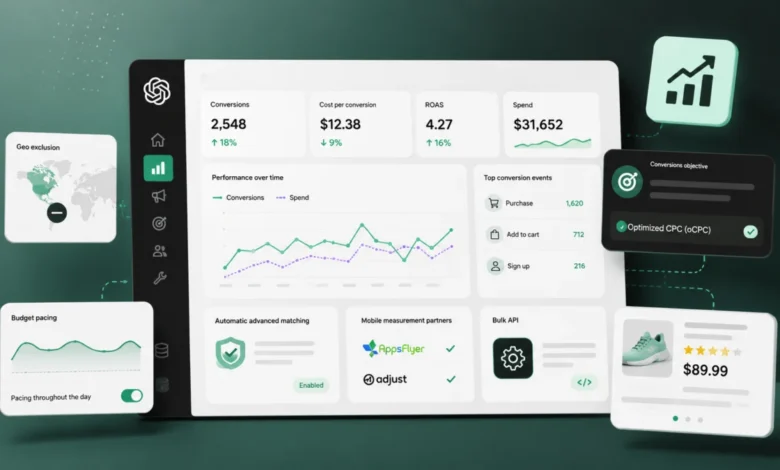
The digital advertising landscape is witnessing a significant shift as OpenAI’s ChatGPT Ads platform rolls out a comprehensive suite of new tools designed to streamline campaign management and improve return on investment for performance marketers. This latest update introduces a variety of features including smarter bidding strategies, sophisticated measurement integrations, improved budget pacing, and enhanced API capabilities. By bridging the gap between its nascent advertising offerings and the mature ecosystems provided by industry leaders like Google Ads and Meta Ads, ChatGPT is positioning itself as a formidable contender in the competitive performance marketing space.
The updates arrive at a time when generative AI platforms are increasingly being utilized not just for creative brainstorming or information retrieval, but as primary search and discovery engines. As user behavior shifts toward conversational interfaces, the demand for robust, data-driven advertising tools within these interfaces has intensified. This release specifically targets the pain points of early adopters, offering the automation and granular control necessary for scaling high-volume campaigns.
The Evolution of the ChatGPT Advertising Infrastructure
The introduction of these tools marks a pivotal moment in the maturity of ChatGPT Ads. Initially launched as a limited experimental offering, the platform is now evolving into a professional-grade advertising environment. The latest release focuses on several core areas that are essential for performance-oriented advertisers who prioritize conversion data over simple engagement metrics.
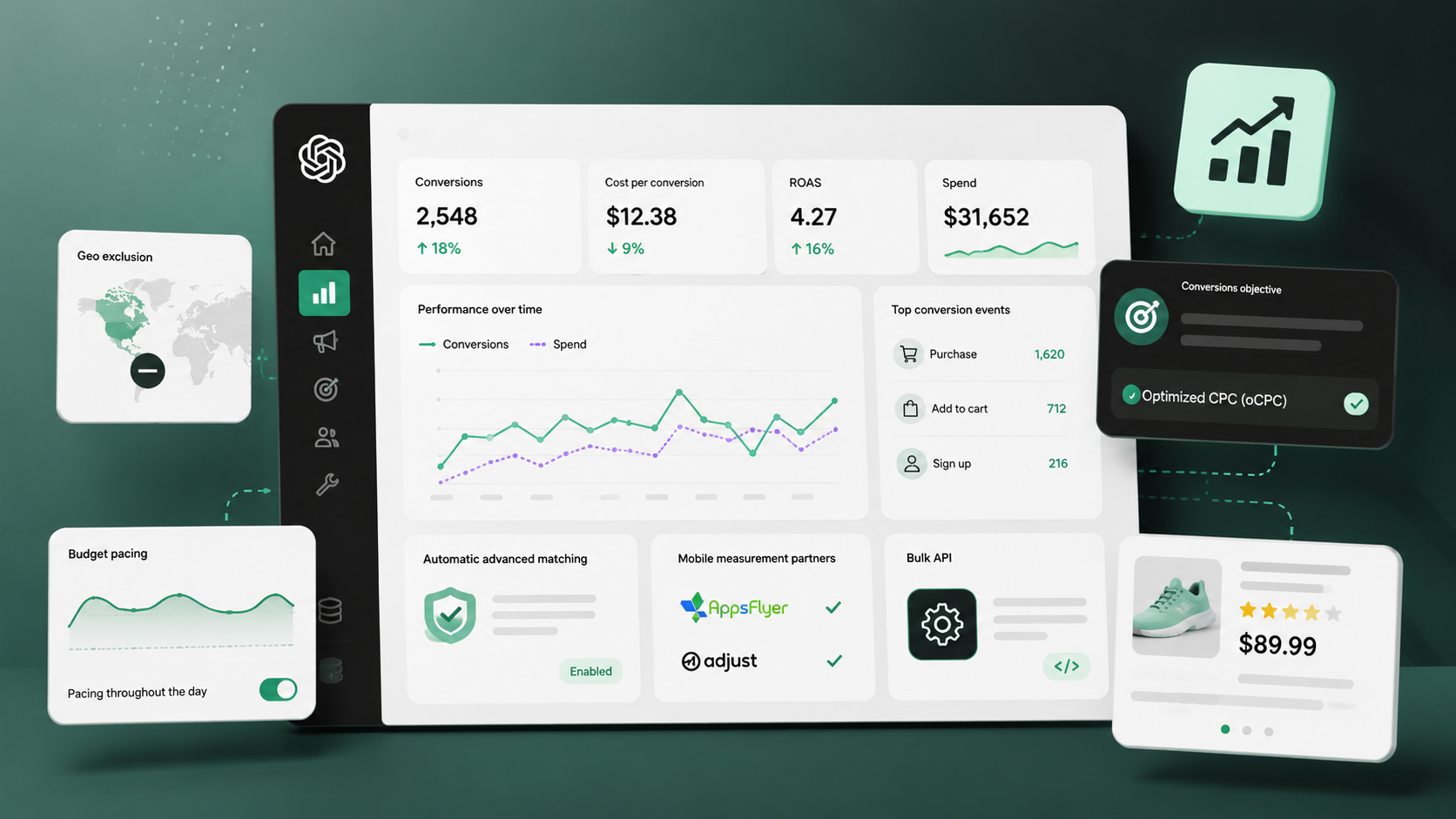
One of the most significant additions is conversion-optimized bidding. Unlike traditional bidding models that focus primarily on click-through rates (CTR), conversion-optimized bidding allows advertisers to leverage machine learning to prioritize users who are most likely to complete a specific action, such as a purchase, a sign-up, or an app download. This shift from "clicks to outcomes" is a standard expectation in the modern ad tech stack and represents a major leap forward for OpenAI’s commercial ecosystem.
Furthermore, the integration of third-party mobile measurement partners (MMPs) such as AppsFlyer and Adjust provides a layer of transparency and accuracy that was previously missing. For app developers and mobile-first brands, these integrations are critical for tracking the user journey from a conversational interaction within ChatGPT to an eventual app install or in-app purchase. By providing these measurement hooks, ChatGPT Ads is making a clear play for the multi-billion dollar mobile advertising market.
A Chronology of OpenAI’s Path to Monetization
The journey toward a fully-featured ad platform has been deliberate. When ChatGPT first launched in late 2022, the focus was almost entirely on user acquisition and model refinement. However, the high operational costs associated with running large language models (LLMs) necessitated a diversified revenue strategy.
- Late 2022 – Early 2023: Launch of ChatGPT and the subsequent introduction of ChatGPT Plus, a subscription-based model for individual users.
- Mid 2023: Introduction of ChatGPT Enterprise and API access, allowing businesses to integrate LLM capabilities into their own workflows.
- Late 2023 – Early 2024: Initial experiments with sponsored content and brand partnerships within the conversational interface.
- Mid 2024: The formal rollout of ChatGPT Ads, providing a self-service platform for a limited group of advertisers.
- Current Phase (Late 2024 – 2025): The introduction of performance-focused tools, including bulk API support, geo-exclusions, and advanced attribution models, signaling a move toward global scalability.
This chronology demonstrates a transition from a "product-first" company to a "platform-first" ecosystem, where advertising serves as a primary pillar of the business model alongside subscriptions and enterprise services.
Technical Enhancements: Bidding, Budgeting, and Bulk Management
The technical specifications of this update address the daily operational needs of media buyers. The platform now supports "Average Daily Budgets," a feature that allows for more consistent delivery across a month-long cycle, preventing the "feast or famine" spending patterns often seen in less mature platforms. This is complemented by improved budget pacing algorithms that ensure ad spend is distributed logically based on peak usage times and conversion opportunities.
For advertisers managing hundreds or thousands of campaigns, the introduction of bulk API support is a game-changer. This allows for the programmatic creation, modification, and deletion of campaigns, which is essential for large agencies and enterprise brands. This capability, combined with "Advanced Matching"—a feature that uses hashed customer data to improve targeting accuracy while maintaining privacy—aligns ChatGPT with the privacy-centric standards of the post-cookie era.
Another crucial feature is the addition of geo-exclusions. Previously, advertisers had limited control over the specific geographical distribution of their ads. The new functionality allows marketers to exclude specific regions or countries, ensuring that budgets are not wasted on areas where products or services are unavailable or where regulatory restrictions apply.
Supporting Data: The Rise of AI-Driven Search and Advertising
Market data underscores the necessity of these updates. According to recent industry reports, the global AI in advertising market is projected to reach over $100 billion by 2028, growing at a compound annual growth rate (CAGR) of nearly 30%. As traditional search engines integrate AI and AI-native platforms like ChatGPT gain market share, the "search intent" that once belonged exclusively to Google is being fragmented.
Studies indicate that users are increasingly turning to LLMs for complex queries that require synthesis rather than just a list of links. For advertisers, this represents a higher level of intent. A user asking ChatGPT for "the best eco-friendly running shoes for marathon training" is significantly further down the purchase funnel than a user searching for "running shoes" on a standard search engine. The ability to bid on these conversational outcomes, rather than just keywords, provides a unique competitive advantage.
Furthermore, internal data from early pilot programs suggests that conversion rates for AI-native ads can be up to 15-20% higher than traditional display ads, provided the context of the ad is seamlessly integrated into the conversation. The new measurement tools will allow advertisers to verify these figures through their own third-party attribution platforms.
Industry Reactions and Market Implications
While OpenAI has not released a formal press statement regarding the individual reactions of its partners, industry analysts have noted a positive shift in sentiment among performance marketers. Agencies that were previously hesitant to allocate significant budgets to ChatGPT Ads due to lack of measurement and automation are now reconsidering their positions.
"The move toward conversion-optimized bidding is the ‘missing link’ for ChatGPT," says one industry analyst who tracks the digital ad duopoly. "For years, Google and Meta have dominated because they could prove the value of every dollar spent. By integrating with AppsFlyer and Adjust, OpenAI is essentially saying they are ready to be audited by the same standards as the incumbents."

However, the expansion of the ad platform also brings challenges. Privacy advocates remain watchful of "Advanced Matching" features, which rely on the handling of user data to improve targeting. OpenAI has countered these concerns by emphasizing the use of hashing and other privacy-preserving technologies to ensure that individual identities are protected while still providing value to advertisers.
The Broader Impact on the Digital Advertising Ecosystem
The maturation of ChatGPT Ads is likely to trigger a ripple effect across the digital advertising landscape. For years, the market has looked for a "third force" to challenge the dominance of Google and Meta. While Amazon and TikTok have made significant strides, OpenAI offers a different value proposition: conversational context.
In a traditional search environment, ads are often seen as a distraction from the user’s goal. In a conversational environment, a well-placed, relevant ad can be part of the solution. If a user is discussing travel plans to Japan, a sponsored suggestion for a specific boutique hotel or a rail pass service feels more like a helpful recommendation than an intrusive banner.
As ChatGPT Ads continues to evolve, we can expect further developments in:
- Creative Automation: Using the underlying GPT models to generate ad copy and imagery on the fly, tailored to the specific context of the conversation.
- Predictive Attribution: Moving beyond historical data to predict which users will have the highest lifetime value based on their conversational history.
- Vertical-Specific Tools: Specialized bidding and measurement for sectors like real estate, automotive, and healthcare, where the customer journey is long and complex.
Conclusion: A New Era for Performance Marketing
The latest updates to ChatGPT Ads signify that the platform is no longer in its "experimental" phase. By introducing conversion-optimized bidding, third-party measurement, bulk API support, and sophisticated budgeting tools, OpenAI is providing the infrastructure necessary for performance marketers to treat the platform as a core part of their media mix.
For advertisers, the bottom line is clear: ChatGPT is evolving into a platform designed for scalability and business outcomes. While it may still lack the decades of historical data possessed by its older rivals, its unique ability to understand and respond to user intent in real-time offers a frontier of opportunity that is only beginning to be explored. As the platform continues to mature, the focus will likely remain on refining these tools to ensure that as the conversation grows, so does the return on investment for the brands that power it.