Profound versus Athena AI for Answer Engine Optimization: A Definitive Comparative Analysis of Leading Market Solutions

In the rapidly evolving landscape of digital search, the emergence of generative AI-powered platforms such as ChatGPT, Perplexity, Gemini, and Google’s AI Overviews has fundamentally altered how brands capture consumer attention. As traditional search engine optimization (SEO) shifts toward answer engine optimization (AEO), businesses are increasingly turning to specialized tools to monitor and influence their visibility within AI-generated responses. Profound and Athena AI (branded as AthenaHQ) have emerged as the primary contenders in this nascent category. This analysis provides an objective, data-verified breakdown of their respective capabilities, pricing models, and operational frameworks as of September 2026.
The Evolution of Search and the AEO Shift
The transition from keyword-based indexing to natural language processing (NLP) and generative retrieval has created a measurement void for marketing teams. Traditional analytics platforms, such as Google Analytics 4, often fail to account for "zero-click" interactions where a user receives an answer directly from an LLM without visiting a website. Both Profound and Athena AI were developed to bridge this gap, offering monitoring layers that parse AI responses to identify citations, sentiment, and competitive positioning.
The urgency for these tools is driven by shifting consumer behavior. Recent industry data suggests that a significant percentage of information-seeking traffic is bypassing traditional search engine result pages (SERPs) in favor of conversational interfaces. Consequently, organizations are no longer just optimizing for blue links; they are optimizing for the "hallucination-free" and authoritative inclusion of their brand assets within AI-generated summaries.
Comparative Architectural Frameworks
While both platforms aim to solve the visibility problem, they do so through distinct operational architectures. Profound is built around the concept of an "AI Marketer," utilizing a credit-based system of autonomous agents that leverage a centralized brand knowledge base. Its strength lies in its monitoring layer, which provides detailed Answer Engine Insights and prompt volume forecasting.
Conversely, Athena AI (AthenaHQ) emphasizes "actionability" as its core value proposition. Its platform is heavily integrated with direct Shopify and GA4 pipelines, facilitating immediate content updates based on performance data. While Profound functions as an advanced diagnostic and strategic tool, Athena AI positions itself as a workflow execution engine, targeting teams that require rapid deployment of content adjustments.
Chronology of Pricing and Market Positioning
Market volatility in the AEO sector has been significant over the past 24 months. As of late 2026, the pricing strategies of both vendors have undergone substantial revisions, rendering many older, third-party review articles obsolete.
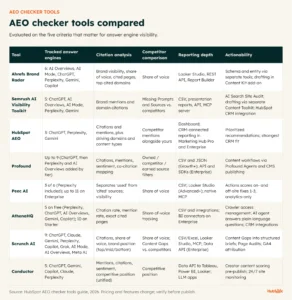
Profound has pivoted away from the $99 to $399 monthly self-serve tiers that defined its early market entry. Currently, the company utilizes a restrictive model consisting of a 7-day free trial followed by a custom-quoted Enterprise plan. This shift suggests a strategic move toward high-value, B2B enterprise partnerships where bespoke implementation is required.
Athena AI maintains a more accessible, though equally complex, pricing structure. It offers a free "Essential" tier, a $295/month "Starter" plan, and a custom-quoted Enterprise offering. The inclusion of a published self-serve price for its Starter tier provides a degree of cost predictability that is currently missing from the Profound model. However, power users should note that both platforms gate their most robust features—such as multi-region tracking and advanced citation engines—behind custom enterprise agreements.
Quantitative Analysis of Engine Coverage
A critical differentiator for users is the breadth of AI engine coverage. Athena AI’s Starter plan explicitly supports 11 models, including industry heavyweights like ChatGPT, Perplexity, Gemini, Claude, and Google AI Overviews, along with niche engines such as Grok and DeepSeek.
Profound’s entry-level offering is more limited, providing access to three primary engines (ChatGPT, Gemini, and Google AI Overviews). While Profound’s full Enterprise suite expands this to nine engines, the barrier to entry remains higher. It is essential for marketing departments to conduct a "referrer audit" before selecting a vendor; if a brand’s target demographic predominantly utilizes Perplexity, paying for access to nine obscure engines provides little return on investment.
Operational Workflow and Content Optimization
The workflow loop for AEO is generally defined by four stages: Measure, Prioritize, Create/Update, and Monitor.

Profound’s strength is in the "Measure and Prioritize" phase. Its agents are designed to analyze vast amounts of data to provide a strategic roadmap for visibility. However, executing the "Create" phase within the platform is often limited by credit consumption. High-volume content creation frequently necessitates an upgrade to an enterprise tier, which can be a point of friction for mid-sized organizations.
Athena AI optimizes the "Create" phase more effectively for its entry-level users. Its content improvement agents are accessible on the $295/month plan, allowing for rapid iteration. However, the platform keeps its "Recommendation Engine"—the analytical layer that tells users what to prioritize—locked behind its enterprise-grade tiers. Consequently, Athena AI is better suited for teams that already possess a clear content strategy, whereas Profound is better for teams seeking data-driven guidance on where to focus their efforts.
Security, Trust, and Organizational Compliance
In an era of stringent data privacy, both companies have adopted transparent security postures, utilizing platforms like SafeBase to host their trust centers.
Profound reports alignment with SOC 2 Type 2, HIPAA, ISO 27001, and NIST 800-53 standards. It is important for procurement teams to distinguish between "alignment" and formal "certification," as these terms are frequently conflated in marketing collateral. Profound’s enterprise tier includes robust security features like SAML/OIDC SSO and role-based access control.
Athena AI holds SOC 2 Type 1 and Type 2 certifications alongside GDPR compliance. Its security architecture mirrors that of Profound, with enterprise-grade access logs and dedicated support SLAs reserved for top-tier contracts. Both companies have demonstrated a commitment to enterprise-standard security, making them viable candidates for regulated industries, provided that the specific documentation is verified via their respective trust centers.
Broader Implications and Strategic Selection
Choosing between Profound and Athena AI is not a matter of identifying a "superior" tool, but rather selecting the architecture that aligns with a team’s internal operational capacity.
For large enterprises with the resources to dedicate personnel to data analysis and strategic optimization, Profound offers a sophisticated environment for long-term brand building and complex AI-engine navigation. Its deep analytical capabilities allow for a level of granular control that is difficult to replicate.
For agile teams and agencies, Athena AI provides a more immediate path to value. Its focus on integration with existing marketing stacks (Shopify, GA4) and its published self-serve pricing allow for faster onboarding. The agency-specific tools offered by AthenaHQ, such as pitch workspaces and multi-brand management, also provide a clearer path for agencies to scale their AEO service offerings.
The Role of Integrated Marketing Platforms
Finally, organizations must consider the role of their existing infrastructure. Dedicated AEO tools are powerful, but they exist in a silo. Larger marketing platforms, such as HubSpot, have begun integrating AEO features directly into their CRM and Content Hub environments.
The primary advantage of an integrated approach is the connection between "visibility gaps" and "actionable content." While Profound and Athena AI can identify that a brand is missing from an AI answer, an integrated platform can leverage CRM data to draft the corrective content automatically within the same dashboard used for publishing. As these ecosystems continue to evolve through 2026, the necessity for standalone AEO tools may diminish for brands already invested in robust marketing automation suites.
Conclusion: Final Procurement Considerations
Before signing any contract, stakeholders should perform a "live domain snapshot." Both vendors are capable of providing a demonstration of their capabilities using a prospective client’s actual URL. This test is the only reliable way to gauge the accuracy of their visibility scores and the quality of their recommendations.
Additionally, firms should rigorously model their projected credit usage. Because both platforms utilize credit-based consumption models for monitoring, underestimating the volume of prompts required to maintain a consistent visibility feed can lead to unexpected budget overruns. By conducting a thorough audit of their specific AI-referral traffic and matching it against the platform’s engine capabilities, businesses can ensure they select a partner that drives measurable, sustainable growth in the new era of generative search.