The Shift from Status to Service: Redefining Leadership in Modern Organizations

The contemporary corporate landscape is undergoing a significant paradigm shift, moving away from traditional, hierarchical management styles toward a model centered on servant leadership. Central to this evolution is the fundamental principle that leaders must earn the commitment of their team by demonstrating an investment in the success of the individual. This approach posits that the most effective way to secure professional loyalty and high-level performance is not through the imposition of authority, but through the consistent practice of serving the best interests of team members.
The Foundation of Servant Leadership
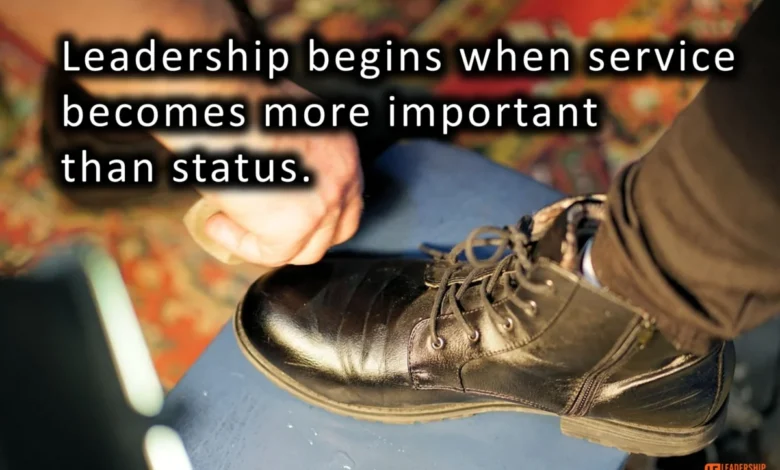
The concept of servant leadership, popularized by management experts and increasingly adopted by Fortune 500 companies, asserts that leadership begins the moment service becomes a higher priority than status. When a manager shifts their focus from personal advancement to the facilitation of their team’s objectives, they create an environment of psychological safety and professional empowerment.
Historical data suggests that organizations prioritizing a "service-first" culture experience higher rates of employee retention and engagement. According to recent workforce studies, employees who feel their leadership is actively invested in their professional development are 30% more likely to remain with an organization for five years or longer. Conversely, self-serving leadership models frequently result in the creation of "self-protective" teams, where members prioritize individual survival over collaborative innovation, often leading to organizational stagnation.
A Chronology of Leadership Evolution
The evolution of this management philosophy can be categorized into three distinct phases over the last several decades:

- The Industrial Era (1950s–1980s): Command-and-control structures dominated. Leadership was defined by status, tenure, and the ability to command obedience. The primary focus was on efficiency and output, often at the expense of individual worker well-being.
- The Transformational Era (1990s–2010s): Companies began to emphasize corporate culture and employee morale. Visionary leadership became the gold standard, though this often centered on the leader’s charisma rather than their service to the workforce.
- The Servant-Leadership Era (2020s–Present): The current climate emphasizes radical empathy and servant-led dynamics. Organizations now recognize that in a volatile, uncertain, complex, and ambiguous (VUCA) environment, the most sustainable competitive advantage is a workforce that feels supported and valued by those at the top of the hierarchy.
The Mechanics of Engagement: How Leaders Build Commitment
To move from a transactional relationship to a transformational one, experts identify five specific behaviors that differentiate high-impact leaders. These actions are designed to dismantle the barrier between management and staff, fostering a culture of mutual respect.
1. Active Listening and Needs Assessment
Before a leader can effectively guide a team, they must understand the unique challenges facing each member. This involves moving beyond surface-level check-ins to identify the obstacles—technological, bureaucratic, or interpersonal—that prevent employees from performing their best work.
2. Removing Administrative Friction
Effective leaders view their role as that of an "enabler." By identifying and dismantling bureaucratic red tape, leaders demonstrate that they are there to clear the path for their team. This practical application of service builds significant institutional trust.
3. Equitable Resource Allocation
Trust is frequently quantified by the allocation of resources. When a leader ensures that their team has the tools, budget, and bandwidth necessary to succeed, they signal that the team’s output is their primary concern. This reinforces the idea that the leader is on the team, rather than the team being a tool for the leader.
4. Public Advocacy and Support
Servant leaders are known for providing air cover for their staff during difficult periods. By taking responsibility for failures and sharing the credit for successes, leaders create a sense of collective identity that motivates team members to act in the organization’s best interest.

5. Consistent Modeling of Values
The final pillar is consistency. If a leader preaches service but practices self-preservation, the disconnect destroys morale. When a leader performs the "grunt work" or demonstrates a willingness to take on the same burdens as the team, they set a standard that the entire organization mirrors.
Quantitative Impacts on Organizational Performance
The shift toward a service-oriented leadership model is not merely a philosophical preference; it is a data-driven strategy for performance optimization. Research indicates that organizations with high "servant leadership" scores demonstrate a 15–20% increase in productivity compared to peers who maintain rigid, status-focused hierarchies.
Furthermore, the "cost of turnover" remains one of the largest silent leaks in corporate balance sheets. With the average cost of replacing a high-level employee ranging from 50% to 200% of their annual salary, the financial incentive for retention is clear. By serving the team, leaders reduce the friction that leads to burnout and attrition.
Expert Perspectives and Theoretical Frameworks
Cheryl Bacheldor, in her seminal work Dare to Serve, emphasizes that the "daring" aspect of leadership lies in the willingness to be vulnerable. By prioritizing the needs of the organization and its people over one’s own ego, a leader creates a virtuous cycle. As noted in the principles of organizational behavior, when leaders serve others, they energize others to serve. This creates a cascading effect: the leader’s service inspires middle management to support their direct reports, which in turn encourages individual contributors to support their peers.
Broader Implications for the Future of Work
The implication for future management is clear: status is a diminishing asset, while service is a compounding one. As the workforce becomes increasingly decentralized and remote, traditional power structures are becoming obsolete. A leader’s influence is no longer derived from their physical presence or their title, but from their ability to foster trust across digital and physical divides.

For organizations struggling with low engagement or high turnover, the diagnostic process begins with a simple question: "Does our leadership exist to serve the team, or does the team exist to serve the status of our leaders?" The answer to this question typically serves as a leading indicator of the organization’s long-term viability.
Conclusion
The transition from a status-driven to a service-driven culture is a deliberate, iterative process. It requires leaders to move past the traditional ego-based metrics of success and embrace a philosophy that measures effectiveness by the growth and well-being of those they lead. By consistently putting the needs of the team first, leaders not only secure the commitment of their workforce but also cultivate an organizational culture that is resilient, adaptive, and prepared for the challenges of the future. As modern business continues to evolve, the capacity to serve will increasingly be viewed as the primary indicator of a successful leader.