From a Struggling Sixth-Grader to a Billion-Dollar Empire: How David Royce Mastered the Unseen Art of Blue-Collar Entrepreneurship


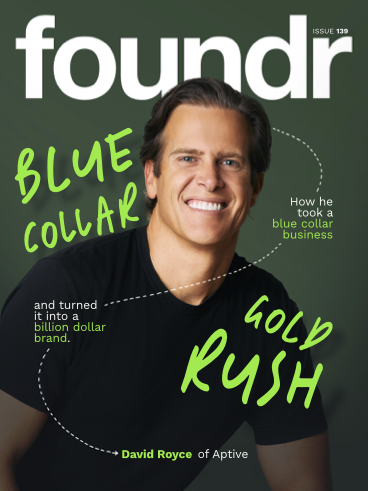
The trajectory of modern business success is frequently romanticized through the lens of Silicon Valley venture capital, elite Ivy League pedigrees, and disruptive software applications. Yet, hidden beneath the glamour of tech monopolies lies a vastly more lucrative, resilient, and often overlooked ecosystem: the blue-collar service sector. David Royce, the founder and chairman of Aptive Environmental—currently the third-largest residential pest control service provider in North America—did not follow the conventional playbook. Instead, his multi-decade entrepreneurial journey demonstrates that generational wealth and enduring commercial empires are frequently built by embracing the unglamorous tasks that others actively avoid.
With a portfolio that boasts three major eight- and nine-figure strategic exits to the same corporate buyer, alongside a fourth enterprise scaling past $500 million in annual revenue, Royce has cemented his reputation as one of the most calculated yet stealthy wealth builders in contemporary American business. His foundational philosophy rejects the notion that industrial selection, academic credentials, or paper-thin prestige dictate a company’s viability. Rather, Royce argues that sustainable enterprise creation is a direct function of willingness: the capacity to endure the most grueling operational demands long enough to achieve absolute mastery.
Early Adversity and the Catalyst of Sales
Long before managing thousands of employees and orchestrating massive corporate acquisitions, Royce navigated an education system that felt entirely unsuited to his cognitive wiring. Struggling profoundly with academic focus, he spent his early years harboring the debilitating belief that he simply lacked intelligence. Like many children navigating undiagnosed neurodivergence, the young Royce internalized his inability to concentrate in conventional classroom settings as a personal intellectual failure.
That trajectory shifted pivotally in the sixth grade when an observant educator, Mrs. Luft, recognized his potential and offered unyielding validation before he could conceptualize it for himself. Only decades later did Royce receive an adult diagnosis of Attention-Deficit/Hyperactivity Disorder (ADHD), a condition he now characterizes as a profound double-edged sword. In environments devoid of intrinsic motivation or stimulation, the condition proved stifling; however, within high-stakes, dynamic domains like sales and entrepreneurship, his neurodivergent brain transformed from a liability into a formidable asset.
The turning point into commercial enterprise, however, was entirely accidental. While completing his undergraduate studies, Royce learned that a peer had earned $25,000 during a single summer through door-to-door sales. Motivated by financial necessity, Royce traveled to Sacramento, California, to test his own aptitude in the field. The initial reality check was harsh. Operating on a strict commission-only structure, Royce failed to secure a single sale during his entire inaugural week, enduring five consecutive days of zero revenue while watching veteran colleagues effortlessly close multiple accounts daily.
Rather than succumbing to defeat or abandoning the venture, Royce elected to systematically analyze his shortcomings. Skipping calls home, he visited a local bookstore, acquired half a dozen instructional texts on sales psychology, and instituted a rigorous ninety-minute daily study regimen. By the conclusion of that summer, operating among a cohort of two hundred representatives, Royce emerged as the top sales rookie in the company. This baptism by fire established a foundational personal thesis: persistence is frequently indistinguishable from genius.

Decoding the Mechanics of High-Performance Sales
Capitalizing on his front-line experiences, Royce eventually codified his empirical discoveries into a structured, highly scalable training curriculum that would later fuel the rapid expansion of his own enterprises. Eschewing passive communication, the curriculum focused heavily on psychological framing, active listening, and physiological presence.
Among the core tenets was the strategic implementation of option closes, replacing traditional binary yes-or-no inquiries with balanced alternatives—such as offering two specific appointment times, both of which favored the salesperson’s operational schedule. Furthermore, Royce introduced the "RAC" methodology: resolve customer doubt immediately, introduce an unexpected value proposition (an "ace"), and execute a secondary close utilizing a modified angle.
Crucially, Royce recognized that non-verbal communication frequently supersedes verbal messaging. He routinely instructed his sales teams that prospective clients reject a representative not due to a flawed script, but because the representative’s physical posture and facial expressions unconsciously telegraph apprehension and insecurity. By instilling unshakable physical poise and methodological discipline, Royce transformed novice recruits into elite revenue generators, enabling them to dramatically outperform veterans from competing organizations.
Transitioning From Employee to Enterprise Architect
Despite tracking toward a traditional career in investment banking upon the completion of his finance degree, Royce’s career trajectory altered permanently following a conversation with his regional manager. Having recently executed a $10 million acquisition of his own startup by industry giant Terminix, the manager challenged Royce’s conventional assumptions about prestige. Pointing out the arduous eighty-to-one-hundred-hour workweeks demanded by Wall Street corporate ladders, the manager urged Royce to leverage his accumulated capital and deep operational knowledge to launch an independent enterprise.
At the time, Royce had amassed $300,000—the equivalent of over half a million dollars adjusted for modern inflation—saved exclusively across four college summers of aggressive door-to-door sales. Originally earmarked for graduate business school tuition, these funds served as the initial capitalization for his first independent pest control venture. Overcoming initial hesitation regarding the perceived lack of corporate glamour associated with the industry, Royce chose long-term economic utility over superficial professional optics, leaning heavily on the operational blueprints provided by his mentor.
The Cash Flow Crucible and the Realities of Rapid Growth

The nascent stages of enterprise ownership, however, were fraught with severe financial peril. During its inaugural year of operation in Los Angeles, Royce’s first company experienced a near-fatal brush with bankruptcy driven entirely by an unexpected commercial paradox: the enterprise was expanding too rapidly to survive.
The underlying business model required the immediate disbursement of sales commissions to representatives upon contract acquisition, long before the recurring revenue streams materialized from the newly secured residential accounts. Having projected an ambitious annual acquisition target of 4,000 to 5,000 new customers—a volume previously unprecedented for a single regional branch—Royce’s team shattered internal benchmarks by onboarding 7,500 clients within twelve months.
This hyper-growth triggered an acute cash flow deficit. Faced with impending insolvency, Royce took the unprecedented step of approaching his top sales leaders, transparently disclosing the liquidity crisis, and requesting a temporary two-month deferral on their commission payouts, sweetened with a generous 10 percent interest return. Bolstered by mutual trust and loyalty, the team agreed, averting disaster and cementing a lifelong operational maxim for Royce: revenues are vanity, profits are sanity, but cash flow is absolute reality.
Mastering the Strategic Asset Sale Model
Armed with hard-earned financial acumen, Royce refined a repeatable, highly sophisticated corporate exit strategy across multiple successive ventures. Rather than executing traditional equity buyouts that frequently fractured corporate culture or dissolved operational infrastructure, Royce pioneered an asset deal structure.
In these transactions, Royce systematically sold only the customer accounts and the corresponding field technicians directly servicing them to major strategic aggregators, who primarily sought dense, recurring revenue streams. Crucially, Royce carved out his core leadership team, operational managers, and high-performing sales force from the acquired assets. Armed with fresh capital and an intact, battle-tested administrative core, Royce immediately launched subsequent enterprises in new geographic markets with superior capitalization, entirely free from external venture capital dilution or investor oversight.
The Blue-Collar Advantage in the Age of Artificial Intelligence
Analyzing the broader macroeconomic landscape, Royce highlights the extraordinary structural advantages inherent in essential, blue-collar industries. Statistical analyses frequently reveal that a substantial percentage of top-tier income earners within the United States derive their wealth not from high-tech software startups, but from mundane, highly resilient service sectors.

These industries possess intrinsic defenses against modern technological disruptions. While artificial intelligence and automated systems rapidly transform white-collar environments—authoring software code, analyzing legal documentation, and managing administrative workflows—they remain fundamentally incapable of performing physical labor. Automation cannot physically inspect a residential roof, remediate complex structural termite infestations, or manually service essential residential infrastructure.
Furthermore, demographic shifts are accelerating opportunities within the sector. As millions of Baby Boomer business owners approach retirement age without internal succession plans, a massive wave of essential service enterprises with established recurring revenue models remains ripe for acquisition, consolidation, and modernization. Because biological pests and fundamental home maintenance needs operate independently of macroeconomic downturns, these businesses offer unmatched recession resilience.
Culture by Design and the Power of Shared Equity
As Royce’s enterprises scaled into multi-state operations, maintaining a cohesive, high-performance corporate culture required deliberate architectural design rather than superficial perks. Drawing inspiration from modern organizational management literature, Royce recognized that corporate culture cannot be left to organic chance.
While Aptive constructed an engaging corporate headquarters featuring extensive recreational facilities and organized elite international retreats for top performers—ranging from skydiving and shark-diving excursions to competitive driving experiences—Royce maintained that corporate perks function merely as temporary stimulation rather than foundational protein. The true cornerstone driving elite talent retention remained the unmatched efficacy of the company’s training and professional development programs.
Most notably, Royce operationalized a profound commitment to employee equity ownership by allocating approximately 25 percent of the company’s enterprise value directly to internal team members prior to major liquidity events. Operating at a scale exceeding $500 million in annual revenue, with industry valuations commanding substantial multiples of top-line performance, this equity distribution translated into life-changing financial windfalls for hundreds of employees. Countless team members utilized their newfound capital to extinguish mortgages, eliminate student loan debt, and secure generational financial stability. Royce’s experience confirmed that genuine employee ownership serves as an exponentially more effective retention mechanism than conventional office amenities.
The Evolution of Executive Leadership and Strategic Missteps
Transitioning from hands-on founder to strategic architect required Royce to master the difficult art of stepping aside. Over a decade, Royce meticulously groomed a trusted protégé—an individual who had risen through the ranks from an entry-level sales representative to head of recruitment—to assume the chief executive officer role at Aptive. The primary obstacle during this succession process was not structural, but psychological: retraining his own instincts to avoid intervening during operational friction, thereby allowing emerging leaders the autonomy to execute their vision.
However, subsequent executive transitions exposed the critical importance of cultural alignment over impressive résumés. During a planned capital-raising and partial sale process, Aptive appointed a seasoned Chief Financial Officer with an extensive background at a multi-billion-dollar technology enterprise. Despite exceptional credentials on paper, the executive struggled to adapt to the nuanced cost-structure realities of a high-growth service organization. Misalignments in expense management coincided with missed corporate forecasting targets during live negotiations with prospective institutional buyers, ultimately causing multiple multi-billion-dollar valuation offers to dissolve.
The experience yielded invaluable corporate governance insights: verify executive capabilities rigorously, protect forecast integrity meticulously during active transactional phases, and utilize initial market explorations as developmental diagnostics to refine enterprise positioning for subsequent market entries.
Legacy and the True Measure of Entrepreneurial Success
Reflecting upon a two-decade career spanning four major enterprises and billions of dollars in cumulative commercial activity, Royce maintains a grounded perspective on the ultimate objectives of entrepreneurship. Rejecting the notion that financial accumulation serves as a static endpoint, he observes that human ambition continuously recalibrates targets upward following the achievement of any milestone.
Ultimately, Royce’s enduring legacy is defined not by terminal corporate valuations or portfolio exits, but by human capital development. Echoing foundational leadership principles, Royce measures his success by the quantity of capable, ethical leaders cultivated along the arduous path of enterprise building. For an entrepreneur who began his journey as a struggling student convinced of his own limitations, the definitive takeaway remains clear: the most valuable opportunities in business invariably masquerade as the tasks others are unwilling to touch.