The Evolution of Enterprise Rank Tracking in the Era of Generative AI and Big Data

The landscape of search engine optimization for large-scale organizations has undergone a fundamental transformation, moving from the simple monitoring of keyword positions to the management of complex data ecosystems. In the current enterprise environment, rank tracking now involves the orchestration of millions of data points across diverse devices, geographical locations, and evolving search features. This shift is driven by the emergence of AI Overviews, featured snippets, and the integration of search intelligence directly into corporate Business Intelligence (BI) tools and Customer Relationship Management (CRM) workflows. For global brands, the ability to synthesize this data into actionable executive reports has become a primary driver of digital market share.
The Paradigm Shift in Search Intelligence
Historically, search tracking was a siloed activity, often relegated to junior analysts who monitored a static list of "money keywords." However, as search engines have evolved into "answer engines," the complexity of the digital shelf has increased exponentially. Data from industry analysts suggests that over 60% of search queries now result in "zero-click" outcomes or are heavily influenced by AI-generated summaries. Consequently, enterprise-grade tools are no longer evaluated solely on their ability to track the "ten blue links" but on their capacity to provide a holistic view of brand visibility across a fragmented digital landscape.
The modern enterprise requires a platform that can handle high data volumes while providing granular insights. This includes real-time refresh rates for high-stakes periods, such as product launches or global sales events, and the ability to track rankings at the city or even zip-code level. Furthermore, the integration of these tools into the broader "tech stack" is now a prerequisite for adoption. When ranking data is paired with web analytics and CRM systems, it allows organizations to draw a direct line from a keyword’s upward movement to a measurable increase in the sales pipeline.

A Chronology of Rank Tracking Evolution
To understand the current state of the industry, it is essential to view the technological progression of search monitoring:
- 2000–2010: The Manual Era. SEO was defined by manual checks and basic automated scrapers. Tracking was limited to desktop results and focused on a small set of broad keywords.
- 2011–2018: The Localization and Mobile Shift. With the rise of the smartphone and Google’s "Panda" and "Penguin" updates, tracking expanded to include mobile-specific rankings and localized results (Local Packs).
- 2019–2022: The SERP Feature Explosion. The introduction of Featured Snippets, "People Also Ask" boxes, and video carousels forced tools to measure "pixel position" rather than just numerical rank.
- 2023–Present: The Generative AI Revolution. The launch of Search Generative Experience (SGE) and AI Overviews has introduced a new layer of complexity: Answer Engine Optimization (AEO). Tracking now requires monitoring citations within Large Language Models (LLMs) like ChatGPT, Gemini, and Perplexity.
Evaluating Enterprise-Grade Requirements
For a software solution to be considered "enterprise-grade," it must meet rigorous standards across several technical and operational dimensions. Industry experts emphasize that the "accuracy methodology" is the most critical factor. Vendors are now expected to provide detailed documentation on their data collection methods, including the use of residential proxies to ensure that results reflect what real users see in specific locales.
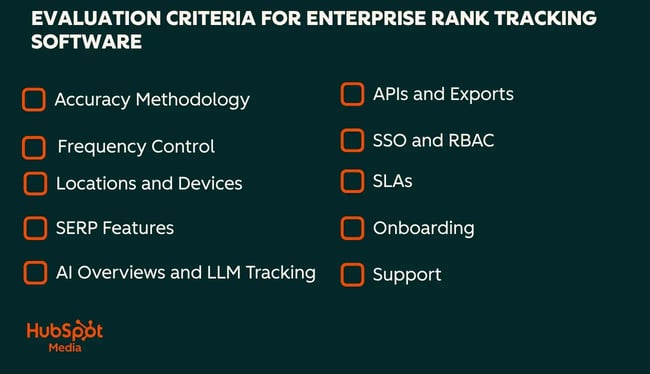
Beyond data collection, governance and security are paramount. Large organizations require Single Sign-On (SSO) and Role-Based Access Control (RBAC) to manage permissions across global teams. Service Level Agreements (SLAs) must guarantee uptime and data freshness, with clear remedies for crawl failures. As one SEO Director at a Fortune 500 retail brand noted, "At our scale, a data gap of 24 hours during a holiday weekend isn’t just a technical glitch; it’s a blind spot that can cost millions in misallocated ad spend."
Leading Platforms in the Enterprise Space
Several platforms have emerged as leaders by addressing the specific needs of large-scale organizations. These tools are characterized by their ability to bridge the gap between raw SEO data and executive-level insights.
HubSpot Marketing and Content Hubs
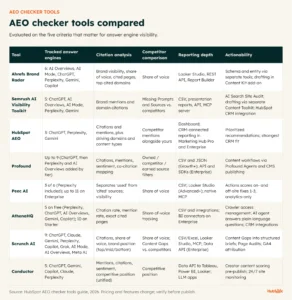
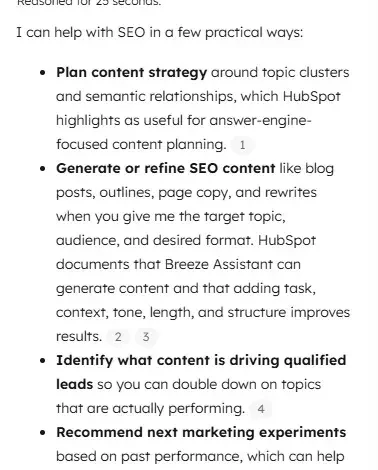
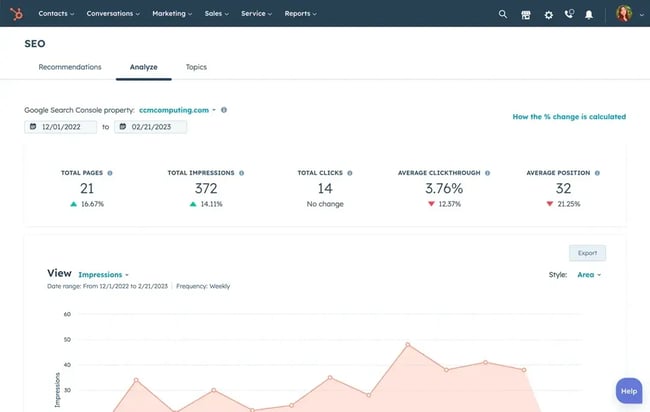
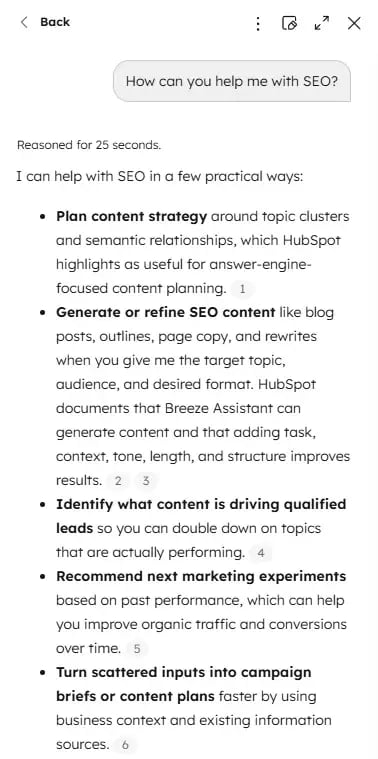
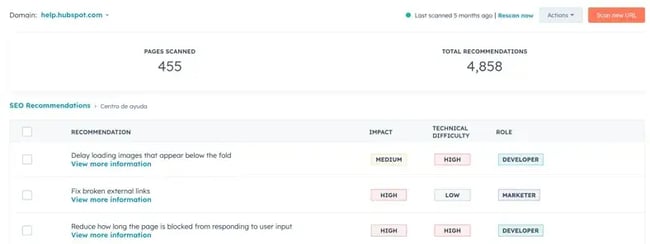
HubSpot has positioned itself as a leader in the "unified data" space. By integrating SEO recommendations directly into its Marketing Hub and Content Hub, the platform removes the friction of data fragmentation. The HubSpot ecosystem allows teams to scan thousands of URLs—including those hosted outside the platform—and prioritize optimizations based on potential impact. A key innovation is the "Breeze Assistant," an AI-driven tool that supports marketing teams in refining their inbound strategy. For enterprises, the primary value proposition is the unification of SEO data with the CRM, enabling a holistic view of the customer journey from search query to closed deal.
Semrush One
As a long-standing incumbent, Semrush has transitioned its massive data infrastructure to include an AI Visibility Toolkit. Semrush One provides a comprehensive environment where traditional keyword research sits alongside "prompt tracking." This allows brands to monitor their "Share of Voice" not just on Google, but across emerging AI platforms. The tool’s strength lies in its competitive intelligence capabilities, offering deep dives into competitor domain health and historical ranking trends that date back years.
Profound
Profound represents a new breed of platform purpose-built for the AI era. Rather than adding AI tracking as a secondary feature, Profound was designed from the ground up to manage brand narratives across the LLM ecosystem. It tracks brand sentiment and citation frequency within engines like ChatGPT and Claude. For enterprise brand managers, this is essential for "Answer Engine Optimization," ensuring that when a user asks an AI for a product recommendation, their brand is not only mentioned but characterized accurately.
The Critical Role of Answer Engine Optimization (AEO)
The rise of generative AI has necessitated a new metric: the AEO score. Tools like the HubSpot AEO Grader have become essential for benchmarking how a brand appears in AI-generated responses. These tools evaluate performance across five dimensions: Brand Trust, Sentiment, Contextual Relevance, Recognition, and Market Position.
The implications of this are significant. A brand may hold the number one organic position for a high-value keyword but be completely absent from the AI Overview that occupies the top half of the screen. This "visibility gap" is a primary concern for enterprise stakeholders. By running regular AEO audits, organizations can identify where their content or schema markup needs adjustment to ensure they remain a cited source in the AI era.
Strategic Competitor Analysis at Scale
At the enterprise level, competitor tracking has moved beyond simple comparison. It now involves sophisticated techniques such as Pixel Position Analysis. Because search features (ads, maps, AI summaries) push organic results "below the fold," being in position one no longer guarantees the highest visibility. Pixel position measures the actual vertical distance from the top of the page, providing a more honest assessment of a brand’s digital real estate.
Furthermore, large organizations must monitor "Brand Variants" and affiliate cannibalization. In industries like financial services or travel, an organization’s own affiliates or sub-brands may inadvertently compete for the same search traffic. Enterprise rank tracking software allows for the segmentation of these entities, enabling a coordinated strategy that maximizes the brand family’s total presence on the Search Engine Results Page (SERP).
Broader Impact and Industry Implications
The shift toward integrated enterprise rank tracking is fundamentally changing the role of the SEO professional. It is no longer a purely technical role but one that requires a deep understanding of data science, brand management, and business strategy. As search data becomes more integrated with BI and CRM systems, SEO is being recognized as a primary source of market intelligence.

The financial implications are also shifting. Organizations are moving away from "per-keyword" pricing models in favor of platform-based investments that offer scalability. The focus has moved toward ROI—not just in terms of traffic, but in terms of "pipeline contribution."
In conclusion, for the modern enterprise, rank tracking software is a non-negotiable component of the corporate infrastructure. The ability to monitor, analyze, and act upon search data at scale is the difference between digital leadership and obsolescence. As search continues to evolve through AI and machine learning, the platforms that can provide a unified, accurate, and actionable view of the digital landscape will be the ones that drive the next generation of business growth. Regardless of the specific tool chosen—be it the integrated ecosystem of HubSpot, the data depth of Semrush, or the AI-focus of Profound—the objective remains the same: transforming search visibility into a measurable business advantage.