Mastering the Art of Delegation: How Modern Leaders Drive Growth and Employee Empowerment

In the contemporary corporate landscape, characterized by rapid technological shifts and increasing market volatility, executive leadership is undergoing a fundamental transformation. The traditional model of the "heroic leader" who maintains absolute control over every operational detail is being replaced by a more sustainable and economically effective approach: the strategic art of delegation. As workloads expand beyond the capacity of any single individual, the ability to effectively distribute responsibility has moved from a soft skill to a critical business imperative. This shift is not merely a response to personal burnout but a calculated strategy to enhance organizational agility and financial performance.
The Economic Imperative of Strategic Delegation
While delegation is often discussed in the context of time management, its impact on the bottom line is quantifiable. Research conducted by Gallup, involving an analysis of the growth trajectories of various firms, indicates that leaders who possess a high "delegator talent" generate significantly better financial outcomes. Specifically, the study found that CEOs who excel at delegation achieve a 33% higher revenue growth rate than those with low or limited delegation skills.
This performance gap is attributed to the "multiplier effect." When a leader focuses exclusively on high-value strategic tasks while empowering their team to handle operational and tactical responsibilities, the organization’s total output increases exponentially. Conversely, leaders who fail to delegate create a "bottleneck effect," where the pace of the entire organization is limited by the speed and bandwidth of a single person. Industry analysts note that this 33% revenue premium reflects not just more work being done, but higher-quality work being produced by specialized team members who are closer to the technical or customer-facing aspects of the business.
Defining the Art of Delegation in the Modern Workplace
To understand why some leaders succeed where others fail, it is necessary to distinguish between "dumping" tasks and "strategic delegation." Professional management consultants define the art of delegation as the intentional transfer of authority and responsibility in a way that aligns with both organizational goals and individual development. It is not an act of off-loading undesirable chores; rather, it is a sophisticated mechanism for building organizational capacity.
The process involves three primary objectives:
- Competency Expansion: Identifying tasks that serve as "stretch assignments" for subordinates, allowing them to acquire new skills under controlled conditions.
- Trust Architecture: Building a culture where employees feel safe to exercise judgment and take ownership of outcomes.
- Adaptive Evolution: Strengthening the organization’s ability to learn and pivot by decentralizing knowledge and decision-making power.
By viewing delegation as an investment in human capital, leaders transform their role from a supervisor of tasks to a curator of talent. This approach ensures that the organization remains resilient even in the absence of the primary leader, a factor that is increasingly prioritized by boards of directors and investors looking for long-term stability.
A Chronological Framework for Implementation
The transition from a centralized command structure to a delegated empowerment model typically follows a structured chronology. Management experts suggest that this evolution does not happen overnight but requires a phased approach to ensure operational continuity.
Phase One: Assessment and Alignment
The process begins with a rigorous audit of the leader’s current workload. Leaders are encouraged to categorize tasks based on their strategic importance versus their operational frequency. In this initial stage, the focus is on identifying "high-growth" tasks—responsibilities that are currently handled by the leader but could serve as powerful learning opportunities for a team member. This phase requires an honest assessment of the team’s current capabilities and the identification of gaps that need to be bridged through training or mentorship.
Phase Two: The Definition of Success
Once a task is identified for delegation, the leader must establish clear parameters. This involves moving away from prescribing "how" a task should be done and focusing instead on "what" the successful outcome looks like. Journalistic observations of high-performing tech firms show that the most successful delegators provide a "definition of done." By setting clear expectations and key performance indicators (KPIs), the leader provides a roadmap for the employee without infringing on their creative or operational autonomy.
Phase Three: The Transfer of Autonomy
The final and often most difficult phase is the actual relinquishing of control. In this stage, the leader moves into a support role. This transition is marked by a shift from constant monitoring to scheduled check-ins. Analysts point out that the psychological "safety net" provided during this phase is crucial. Employees must feel that they have the autonomy to approach the problem in their own way, provided they meet the established objectives.
The Psychology of Trust and Employee Retention
The implications of delegation extend far beyond immediate productivity. In the current "war for talent," where employee engagement is a primary concern for Human Resources departments, delegation serves as a powerful retention tool. When employees are given responsibilities that matter—work that has a direct, visible impact on the organization’s mission—their sense of purpose and job satisfaction increases.
Statements from organizational psychologists suggest that the "autonomy-mastery-purpose" framework is essential for modern workforce motivation. Delegation addresses all three: it provides autonomy in execution, fosters mastery through stretch assignments, and clarifies purpose by connecting individual tasks to broader organizational goals. When a leader demonstrates trust through delegation, it creates a reciprocal sense of loyalty. Employees who feel trusted and empowered are statistically less likely to seek opportunities elsewhere, reducing the significant costs associated with turnover and retraining.
Analyzing the Barriers: Why Leaders Struggle to Delegate
Despite the clear economic and cultural benefits, many leaders find delegation difficult. Fact-based analysis of management behavior identifies several common barriers:
- The "Self-Excellence" Bias: The belief that "if you want something done right, you have to do it yourself." This cognitive bias often leads leaders to overvalue their own contributions while undervaluing the potential of their team.
- Fear of Risk: The concern that an employee’s mistake will reflect poorly on the leader. This fear often leads to micromanagement, which stifles the very growth delegation is meant to foster.
- Loss of Identity: Many leaders rose to their positions because they were excellent "doers." Relinquishing the "doing" can lead to an identity crisis, where the leader feels they are no longer adding value if they aren’t personally executing tasks.
Overcoming these barriers requires a shift in the leader’s internal metric of success. Instead of measuring their value by their personal output, they must measure it by the output and growth of their team.
Practical Applications: Questions for Organizational Growth
For leaders looking to initiate this change, industry workshops often recommend a reflective approach. Before delegating, a leader should be able to answer two fundamental questions:
- What specific task can be delegated this week that will provide a genuine challenge and development opportunity for a specific team member?
- What resources, information, or support systems must be in place to ensure that the employee has a high probability of success in this new effort?
These questions shift the focus from the leader’s need to "get rid of work" to the employee’s need to "gain experience." This subtle shift in perspective is what separates effective managers from visionary leaders.
Broader Impact and Future Implications
As the global economy moves further into the digital age, the "art of delegation" is expected to evolve alongside artificial intelligence and automation. Future leaders will not only delegate to human subordinates but will also need to manage the delegation of tasks to automated systems. This "algorithmic delegation" will require even greater precision in defining outcomes and monitoring high-level performance.
The broader implication for the business world is a move toward more horizontal, decentralized organizational structures. Companies that master delegation are inherently more scalable. They can grow faster because their leadership is not a bottleneck, and they can innovate more quickly because ideas and execution are distributed across a diverse pool of empowered employees.
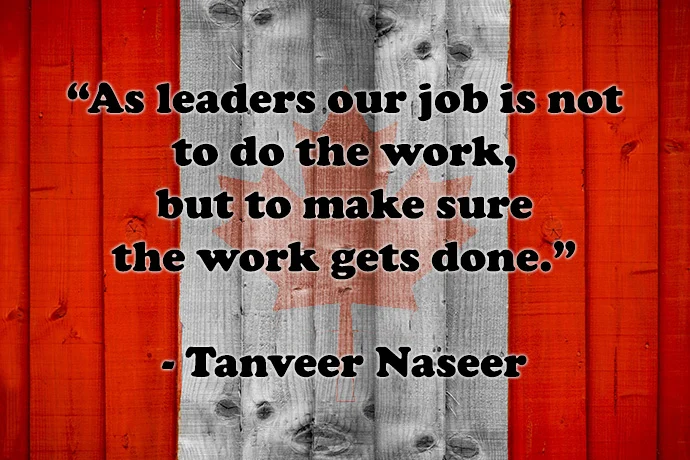
In conclusion, delegation is the primary mechanism through which leaders multiply their impact. By moving from a mindset of "doing" to a mindset of "ensuring," leaders invest in the long-term health of their organizations. The data is clear: those who master this art drive more revenue, foster more loyal teams, and build more resilient businesses. In the final analysis, the most successful leaders are not those who do the most work, but those who build the most capable teams. Through the strategic and empathetic application of delegation, leaders do more than manage workloads—they cultivate the future of their industry.