Mastering the Art of Delegation How Modern Leaders Drive Growth and Employee Empowerment

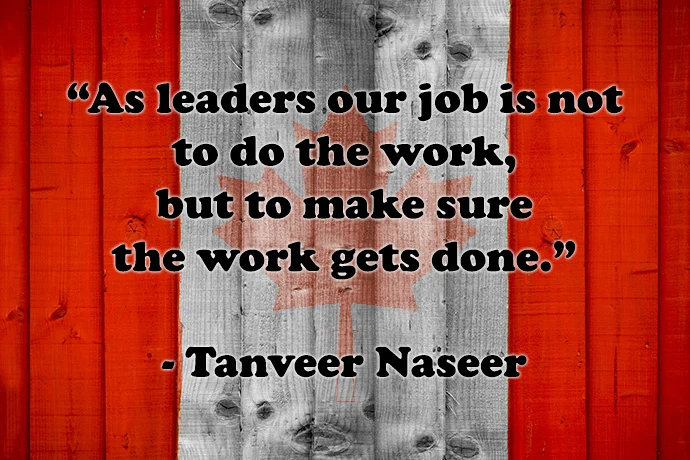
In the contemporary corporate landscape, characterized by rapid digital transformation and shifting market dynamics, the traditional image of the "heroic leader" who manages every detail is rapidly being replaced by the "strategic delegator." As workloads expand and organizational structures become increasingly complex, the ability to distribute authority and responsibility has transitioned from a soft skill to a fundamental economic driver. Recent management studies and economic data suggest that the failure to delegate is no longer just a personal productivity issue for executives; it is a systemic bottleneck that stifles organizational growth, reduces revenue potential, and accelerates employee turnover.
The Economic Imperative of Effective Delegation
The business case for delegation is increasingly supported by empirical data. Research conducted by Gallup, which analyzed the performance of entrepreneurial profiles and corporate leadership, revealed a significant correlation between delegation skills and financial performance. According to the study, leaders who possess a high "Delegator" talent generate 33% more revenue than those with low or limited delegation tendencies. This financial disparity is attributed to the fact that effective delegators are able to focus on high-value strategic activities—such as market expansion, innovation, and relationship building—while their teams handle operational execution.
Furthermore, the impact of delegation extends to human capital valuation. In an era where "The Great Resignation" and "Quiet Quitting" have dominated HR discourse, the psychological benefits of delegation serve as a retention tool. When employees are given autonomy over significant tasks, their level of engagement increases. Data from the Society for Human Resource Management (SHRM) indicates that employees who feel empowered are 67% more likely to demonstrate high levels of effort in their roles. Consequently, delegation is not merely a method for clearing a leader’s desk; it is a mechanism for increasing the total productive capacity of the organization.
The Historical Evolution of Management Authority
To understand the current emphasis on the "art of delegation," it is necessary to examine the chronological shift in management philosophy over the last century. During the early 20th century, the prevailing model was "Taylorism" or scientific management, which emphasized strict hierarchy and the separation of "thinking" (management) from "doing" (labor). In this era, delegation was rare; instead, leaders issued specific, repetitive commands.
By the mid-20th century, the rise of the "knowledge worker," a term coined by Peter Drucker, began to challenge this rigid structure. Drucker argued that because knowledge workers often know more about their specific tasks than their managers do, delegation became a necessity rather than an option. The 1980s and 90s saw the introduction of "Empowerment" as a corporate buzzword, though it was often implemented superficially.
In the 2020s, the timeline of delegation has reached a critical inflection point. The transition to remote and hybrid work environments has made micro-management physically and logistically impossible. This has forced a rapid maturation of delegation practices, moving away from "checking in" toward "outcome-based" management. Modern delegation is now viewed as a form of "distributed leadership," where the goal is to create an organization of leaders rather than a collection of followers.
A Strategic Framework: Three Steps to Mastery
Mastering delegation requires a departure from the "dumping" of tasks—the common mistake of offloading undesirable work without context. Instead, experts suggest a three-step framework designed to balance operational efficiency with employee development.
1. Strategic Alignment of Task and Talent
The first step involves a sophisticated assessment of both the task and the individual. Effective leaders do not simply look for the person with the most free time; they look for the person for whom the task represents a "stretch goal." This involves balancing an employee’s current competency with their potential for growth. By delegating work that aligns with an employee’s professional aspirations, the leader transforms a routine task into a developmental opportunity. This creates a "dual-purpose" outcome: the work gets done, and the employee’s value to the company increases.
2. Definition of Success and Boundary Setting
A primary cause of delegation failure is "expectation misalignment." To mitigate this, leaders must provide comprehensive clarity regarding the desired outcome while remaining flexible on the methodology. This involves defining what a "successful outcome" looks like in measurable terms. By focusing on the "what" rather than the "how," leaders provide a roadmap for the employee while leaving room for creative problem-solving. This step also requires the establishment of clear resource boundaries—what budget, time, and personnel the employee has at their disposal to complete the task.
3. The Cultivation of Autonomy and Trust
The final, and often most difficult, step is the intentional withdrawal of the leader from the process. Once responsibility is assigned, the leader must demonstrate trust by granting the employee full autonomy. This does not mean abandonment; rather, it means shifting the leader’s role from "supervisor" to "resource." In this phase, the leader provides support and mentorship only when requested or at predetermined milestones, avoiding the trap of constant monitoring. Psychological research into "Self-Determination Theory" suggests that autonomy is one of the three basic human needs that drive motivation; when leaders honor this, they unlock a higher level of performance from their staff.
Overcoming the Psychological Barriers to Delegation
Despite the clear economic and organizational benefits, many leaders struggle to let go. Management consultants identify several "psychological anchors" that prevent effective delegation:
- The Perfectionist Trap: The belief that "if you want it done right, you have to do it yourself." This mindset fails to account for the "opportunity cost" of the leader’s time.
- The Fear of Obsolescence: Some leaders fear that if their team becomes too self-sufficient, their own role will be diminished. In reality, the most successful leaders are those who make themselves "dispensable" in daily operations so they can be "indispensable" in long-term strategy.
- The Guilt Factor: New managers often feel guilty about "burdening" their team with more work, failing to realize that many employees view new responsibilities as a sign of trust and a path to promotion.
Industry analysts suggest that overcoming these barriers requires a cultural shift within the organization. Companies that reward leaders for "developing talent" rather than just "hitting targets" see a much faster adoption of delegation practices.
Expert Analysis: The Broader Implications for Organizational Resilience
The long-term implication of mastering delegation is the creation of organizational resilience. In a volatile economic climate, companies with centralized decision-making are fragile; if the leader is unavailable or overwhelmed, the entire system grinds to a halt. Conversely, organizations that have mastered the art of delegation possess "cognitive diversity" and "distributed intelligence."
When responsibilities are spread across a team, the organization develops a "bench" of future leaders who are already experienced in high-stakes decision-making. This simplifies succession planning and ensures that the company can adapt to sudden market shifts without waiting for orders from the top.
Furthermore, the rise of Artificial Intelligence (AI) is expected to further transform the delegation landscape. As AI takes over routine administrative tasks, the tasks remaining for humans will be increasingly complex and creative. In this environment, the "art of delegation" will involve not just delegating to humans, but managing a hybrid workforce of human talent and automated systems. Leaders who cannot master the nuances of trust, expectation-setting, and autonomy today will likely find themselves unable to navigate the even more complex delegation requirements of the near future.
Conclusion and Future Outlook
The art of delegation is far more than a management technique; it is a fundamental shift in how power and potential are distributed within a business. By moving away from the "command and control" models of the past and toward a model of "empowerment and growth," leaders can multiply their impact exponentially.
As organizations look toward the 2030s, the ability to delegate will likely be the primary differentiator between companies that scale and those that stagnate. Leaders are encouraged to begin this transition by asking a simple, reflective question: "What task am I doing today that someone on my team could do better, or could learn from doing?" The answer to that question is the first step toward a more productive, profitable, and empowered organization. Through delegation, leaders stop being the bottleneck and start being the catalyst for their organization’s future success.