Dying in Plain Sight: How Border Surveillance Technology Fails Migrants in the California Wilderness

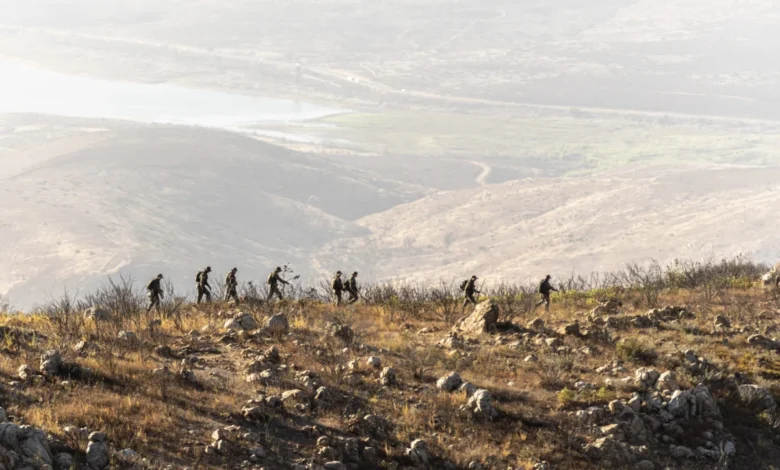
The arid, rugged terrain of the Otay Mountain Wilderness in Southern California is among the most heavily monitored stretches of land on the planet. Blanketed by an interconnected network of autonomous surveillance towers, thermal-imaging cameras, seismic ground sensors, radar, and aerial drones, federal authorities boast near-total visibility of the international boundary. Yet, beneath the gaze of million-dollar artificial intelligence and high-resolution optical lenses, migrants continue to perish from exposure, dehydration, and exhaustion, often just a stone’s throw from the very technology designed to track them.
This grim paradox sits at the center of an investigation by the Times of San Diego and MIT Technology Review. Analyzing data from 2022 through 2025, journalists discovered that at least 138 migrant remains were recovered within the operational range of border surveillance towers in Southern California. Topographical modeling indicates that more than half of these individuals died in locations with a direct line of sight to a camera, raising critical questions about whether advanced surveillance systems are failing to detect people in life-threatening emergencies, or whether those detections are simply being ignored.
The Tragedy of Graciela Gómez Hernández

The human cost of this high-tech border enforcement is reflected in the final hours of 30-year-old Graciela Gómez Hernández. On the afternoon of September 14, 2025, Gómez Hernández crossed the international border from Tijuana into Southern California, embarking on a clandestine journey through the Otay Mountain Wilderness. A mother of three from southern Mexico, she had kept her crossing a secret from her family until the day before, driven by economic desperation after her husband stopped sending financial support. Her oldest son had recently asked for a bicycle; she hoped to find work in the United States to provide for her children and parents.
Paying roughly $1,150 to smugglers, she set off on foot without a physical guide, relying on phone location pings to mark her progress. As she navigated the steep, sagebrush-covered hillsides, the physical toll of the wilderness quickly set in. By mid-afternoon, the combination of punishing heat, lack of water, and steep inclines overwhelmed her.
Between 2:00 p.m. and 3:00 p.m., Gómez Hernández contacted her mother and sister via WhatsApp voice messages. "I can’t do it anymore," she whispered in a final audio recording. Hours later, her transmissions ceased.
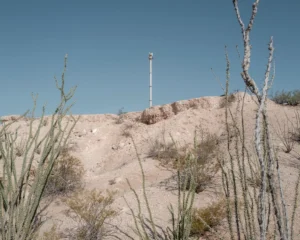
Despite being alone in the wilderness, Gómez Hernández was surrounded by surveillance infrastructure. According to family messages, she reported seeing helicopters overhead and white Border Patrol trucks patrolling the roads below. More critically, a slender, gray surveillance tower equipped with long-range electro-optical and infrared lenses stood just one mile away. A second, newer AI-enabled tower stood 1.4 miles from her final known location.

Despite this dense web of observation, no emergency aid was dispatched. Two weeks passed before search groups obtained her GPS coordinates and relayed them to authorities. On October 4, 2025, a forensic investigator discovered her skeletal remains scattered across a dirt path roughly 100 yards north of the border. Her body had largely decomposed, leaving investigators unable to conclusively determine whether she succumbed strictly to environmental exposure or dehydration delirium, which often prompts victims to shed their clothing in their final moments. Her remains were eventually returned to Mexico, where her family held a funeral nine months later.
A Surveillance Landscape Expansion
The tragedy of Gómez Hernández is not an isolated incident, but rather a symptom of a rapidly expanding federal security apparatus. Over the past two decades, the United States government has invested billions of dollars into border technology. According to a Government Accountability Office (GAO) report released in June 2026, the Customs and Border Protection (CBP) agency currently operates 803 surveillance towers along the southwestern border, with plans to deploy an additional 175 units. Bolstered by funding initiatives such as the 2025 One Big Beautiful Bill Act, the tower count is projected to reach 2,300 by 2034.
The architecture of this system relies heavily on autonomous towers manufactured by defense contractors like Anduril and General Dynamics. These installations utilize artificial intelligence and machine learning algorithms to automatically distinguish human movement from wildlife, tracking targets across distances of five to seven miles. Proponents of the technology argue that it acts as a force multiplier. In public statements, border officials and defense contractors have asserted that autonomous surveillance towers have successfully identified hundreds of thousands of crossings and directly contributed to interdictions and life-saving operations.

However, human rights advocates, search-and-rescue volunteers, and internal government memos paint a starkly different picture of operational efficacy.
Operational Flaws and Broken Promises
Despite the billion-dollar price tag associated with the border tower initiative, the technology suffers from significant vulnerabilities. An internal CBP memo obtained by investigative media outlets in late 2024 revealed that approximately 30% of the older-generation surveillance towers—requiring human operators to monitor live feeds—were non-operational due to outdated equipment or missing replacement parts. These non-functional towers effectively functioned as multi-million-dollar scarecrows, providing a false sense of security while offering zero operational oversight.
Even newer, AI-driven towers face severe environmental limitations. Military and academic evaluations, including reports from the RAND Corporation, note that rugged mountainous terrain, dense brush, and extreme weather conditions frequently disrupt camera functionality. Portable towers mounted on trucks have suffered from calibration failures, with cameras becoming stuck in fixed zoom positions due to the vibrations of unpaved mountain roads.

Furthermore, analysts point out that the primary utility of surveillance towers has been deterrence rather than rescue. By blanketing traditional, accessible crossing routes with sensors and cameras, federal enforcement successfully funnels migrants into more remote, hostile, and dangerous geographic corridors, such as the punishing elevations of the Otay Mountain Wilderness.
"People are crossing through areas that are further out and more extreme, where we have very little hope of finding them in a search," said Rafael Hernández Larraenza, leader of the Desert Angels search and rescue group.
The Response Gap: Detection Versus Intervention
The proximity of migrant deaths to high-resolution cameras highlights a devastating policy and operational failure: either the surveillance systems failed to detect individuals in distress, or they detected them and authorities made a conscious decision not to intervene.

Immigration researchers note that Border Patrol agents frequently prioritize interdicting large groups of crossers over locating single individuals. According to Bryce Peterson of the advocacy group No More Deaths, lone hikers or distressed migrants wandering off-trail are often ignored by patrolling agents because apprehending a single person is not viewed as an efficient use of enforcement resources.
Moreover, the influx of automated alerts generated by AI towers has occasionally overwhelmed agents in the field. Smugglers have adapted to the technology by instructing migrants to cross individually rather than in groups, intentionally flooding the surveillance network with disparate targets that outpace available personnel.
When migrants realize they are being monitored by sensors or law enforcement trucks, they often attempt to evade capture by moving at dangerous speeds through extreme heat without stopping to hydrate. This frantic pace accelerates the onset of heatstroke and severe dehydration, dramatically narrowing the window for survival.
Broader Implications and Humanitarian Concerns

As the federal government continues to scale up its technological infrastructure—incorporating everything from underground seismic sensors and aerostats to Department of Defense spy satellites—humanitarian organizations warn that the death toll in the borderlands will likely persist.
Search-and-rescue coordinators report that despite fluctuations in overall migration numbers and apprehensions following changes in federal administrations, the systemic drivers of migration—poverty, violence, and economic instability in Latin America—remain unchanged. Desperate families continue to risk their lives on treacherous northern treks, gambling that they can outrun or bypass a digital panopticon.
For the family of Graciela Gómez Hernández, the technology represents a profound institutional indifference to human life. Nearly a year after her death, a simple wooden cross stands on the hillside where her remains were recovered—a memorial dedicated by search volunteers and maintained with floral tributes. Yet, just a mile away, federal contractors continue to service and upgrade the very surveillance towers that watched over her final, desperate hours, underscoring a grim reality where technological capability and humanitarian intervention remain tragically disconnected.