How Artificial Intelligence and Advanced Materials Are Rewriting the Physical Limits of Tech Infrastructure


The rapid expansion of artificial intelligence is colliding with fundamental physical realities, shifting the primary bottleneck of technological progress from software algorithms to the physical chemistry of advanced materials. As data centers scale up to handle unprecedented computational loads and semiconductor manufacturers chase microscopic performance gains, the infrastructure underpinning the AI boom is approaching hard thermodynamic and electrical limits. To overcome these constraints, industry leaders are turning to specialized polymers, high-voltage architectural components, and novel thermal management solutions. Simultaneously, the discovery process itself is undergoing a paradigm shift, with chemical and material science enterprises deploying generative artificial intelligence to navigate millions of molecular combinations at unprecedented speeds.
This convergence of digital computing and molecular engineering was recently examined on an episode of Business Lab, produced in partnership with specialty materials leader Syensqo and hosted by MIT Technology Review. The discussion highlighted how the demands of modern data centers and semiconductor fabrications are forcing the materials science sector to evolve rapidly, transforming chemistry from a passive supporting framework into the active defining boundary of technological capability.
The Historical Evolution of Semiconductor Chemistry and Advanced Materials
For decades, the semiconductor and electronics industries have driven microelectronic scaling, shrinking the physical footprint of processors while exponentially increasing computational power. Over a thirty-three-year career at Syensqo, Chief Technology and Innovation Officer Mike Finelli has witnessed this transformation firsthand. Semiconductors served as one of the foundational markets when Finelli entered the chemical sector, supporting successive waves of innovation that enabled the shift from bulky computing hardware to hyperconnected mobile devices.
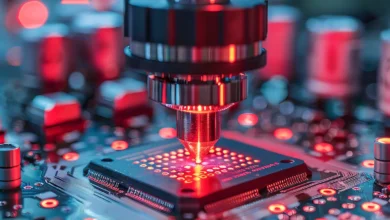
However, the generative AI boom has introduced a fundamentally different scale of operational stress. Traditional server architectures and silicon fabrication methods are being pushed past their historical thresholds. In modern semiconductor manufacturing, silicon wafers are processed inside massive, highly specialized chambers subject to extreme thermal ranges, aggressive plasmas, and highly reactive chemical environments. The sealing materials, gaskets, and containment components surrounding these wafers must endure punishing conditions without degrading, shedding particulates, or failing structurally.
Beyond fabrication, the chips themselves generate unprecedented quantities of heat and demand exceptional electrical purity. These mounting requirements have elevated the role of advanced chemistry, moving specialty materials away from basic commodity applications and toward what industry insiders term the "top of the performance pyramid."
Navigating the Performance Pyramid and Cross-Industry Innovations
In contemporary materials engineering, meeting a single operational benchmark is no longer sufficient. Modern data centers and semiconductor fabrications operate under the "and, and, and" principle—demanding materials that simultaneously deliver high thermal stability, exceptional electrical performance, chemical and plasma resistance, high purity, and long-term mechanical reliability under severe stress.
To address these compounding demands, chemical engineers are increasingly looking across traditional industry boundaries for transferable technologies. A prime example involves the cross-pollination of material solutions developed for the electric vehicle (EV) sector into AI data center infrastructure. The rapid expansion of electric mobility required breakthroughs in high-voltage architecture, energy density management, and rapid thermal dissipation.
Within an electric vehicle, the battery system delivers massive currents—often reaching hundreds of kilowatts—through specialized copper bus bars insulated by high-performance polymers. These insulating materials must withstand sudden, extreme temperature spikes without losing dielectric integrity. As modern AI data centers transition toward high-voltage architectures to improve energy efficiency and minimize power distribution losses, the high-voltage thermal management and bus bar insulation technologies proven in EVs are being seamlessly transferred to server farms.
Similarly, advanced battery binder chemistry—developed to ensure lithium-ion cathodes maintain structural integrity over a decade of continuous cycling—is finding new life in stationary energy storage systems. Because modern AI data centers increasingly rely on renewable energy sources to power their operations, robust battery energy storage systems are essential for smoothing peak electrical loads and providing reliable backup power. Furthermore, innovations in fluid circulation, such as dielectric materials designed for direct immersion cooling, offer a critical alternative to inefficient air-cooling methods, directly addressing the massive heat rejection challenges of dense server clusters.
The Integration of AI Agents in Molecular Discovery and Synthesis
While AI infrastructure places unprecedented demands on materials science, artificial intelligence is simultaneously revolutionizing how new materials are discovered and brought to market. Historically, the development of novel specialty polymers and chemicals was a linear, labor-intensive process. Scientists relied on empirical literature, existing patents, and historical expertise to select a narrow subset of potential molecular combinations out of millions of theoretical candidates. These selected molecules were then synthesized and tested in physical laboratories through iterative trial and error—a cycle that could take years.
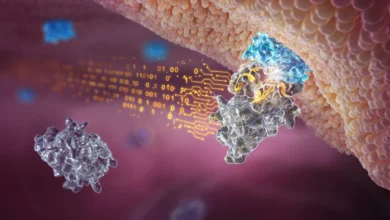
To break this traditional timeline, companies like Syensqo have integrated advanced artificial intelligence tools into their research and development pipelines, partnering with technology providers like Microsoft to deploy generative AI agents. This digital infrastructure radically alters the discovery workflow by allowing researchers to digitally synthesize millions of potential molecular combinations in silico.
Once the molecular space is mapped, physics-based simulation models evaluate the candidates against a rigorous matrix of performance criteria, predicting everything from chemical stability and electrical properties to potential toxicity and environmental impact. Automated ranking algorithms then filter the millions of theoretical compounds down to a highly targeted priority list—often narrowing the field from millions of possibilities to roughly a hundred top candidates for physical laboratory synthesis.
Rather than replacing human expertise, this digital augmentation acts as a cognitive multiplier for scientists. By automating the exhaustive search and predictive screening phases, researchers can bypass months of trial-and-error experimentation, directing their focus toward solving complex engineering hurdles and accelerating commercial deployment timelines.
Sustainability as a Core Metric of Technical Performance
In addition to technical and computational pressures, the commercial landscape for advanced materials is being reshaped by stringent environmental and sustainability mandates. Historically, environmental compliance was treated as a secondary consideration or a regulatory hurdle addressed late in the commercialization process. Today, leading chemical manufacturers are embedding sustainability assessments at the very inception of the research cycle.
Performance remains the fundamental entry ticket for any industrial material; customers will not adopt a sustainable product if it compromises technical reliability or safety. However, the modern definition of performance has expanded to incorporate comprehensive life-cycle assessments. Companies are deploying specialized evaluation matrices, such as sustainable portfolio management tools, to quantify the environmental and social impact of a product before laboratory development even begins.
At Syensqo, reported figures indicate that approximately 88 percent of the company’s portfolio consists of sustainable solutions designed to reduce greenhouse gas emissions, improve energy efficiency, lower water consumption, or minimize waste during production. In the context of semiconductor manufacturing and data center operations, this philosophy drives the development of next-generation heat transfer fluids. While older fluorinated fluids could handle thermal loads, many carried high global warming potentials. The creation of environmentally optimized dielectric fluids allows operators to execute direct immersion cooling without sacrificing thermal performance or accelerating ecological degradation, effectively removing the traditional trade-off between industrial efficiency and environmental stewardship.
The Self-Reinforcing Cycle of Technological Innovation
Looking toward the future, industry analysts and technology leaders anticipate a self-accelerating loop where artificial intelligence and materials science continuously propel one another forward. This feedback mechanism operates on a reciprocal basis: artificial intelligence tools enable the discovery and synthesis of advanced materials capable of withstanding the extreme physical limits of next-generation hardware. In turn, these advanced materials build the resilient, high-performance physical infrastructure required to train and run increasingly powerful artificial intelligence models.
As these computational systems grow more sophisticated, they will further refine the predictive models used by chemical engineers, driving subsequent waves of molecular discovery at an exponentially faster pace. This virtuous cycle of innovation promises to redefine the boundaries of what future computing architectures can achieve, bridging the gap between digital intelligence and physical chemistry to shape the technological landscape of the coming decades.
Related posts: