The Comprehensive Guide to Mastering Voice Agents: A Strategic Roadmap for AI Development

Voice interfaces are rapidly evolving from niche novelty features into the primary mechanism for human-computer interaction, signaling a profound shift in how users engage with artificial intelligence. While the rapid adoption of large language models (LLMs) has revolutionized text-based communication, the next frontier in the digital economy is the implementation of sophisticated voice agents capable of listening, understanding, and responding in real-time. As businesses from healthcare providers to customer service centers move to integrate these technologies, developers must bridge the gap between static text processing and the fluid, low-latency requirements of conversational audio.
The Architecture of Conversational AI
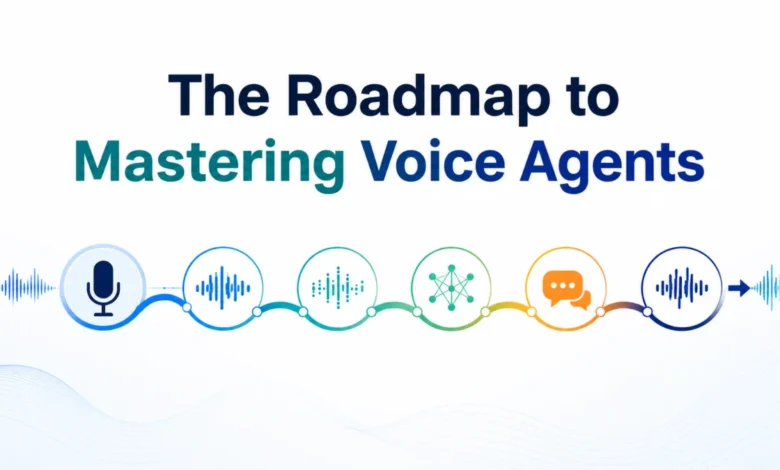
A voice agent is fundamentally an AI system engineered to facilitate bidirectional communication through spoken language. Unlike text-based agents that operate within a vacuum of structured data, a voice agent requires a complex, three-stage pipeline to manage the transition between audio and machine-readable data.
The process begins with Automatic Speech Recognition (ASR), also known as Speech-to-Text (STT). This stage requires robust signal processing to convert acoustic waves into text, accounting for environmental variables such as background noise, varying speech cadences, and diverse linguistic accents. Once transcribed, the input is passed to an LLM or a reasoning engine. This central layer mirrors the architecture of text-based systems but requires specialized prompting strategies to handle the brevity and conversational nuances inherent in speech. Finally, the Text-to-Speech (TTS) layer converts the model’s reasoning into natural-sounding audio output, completing the loop.
Industry Context and Historical Evolution
The development of voice agents has accelerated significantly between 2022 and 2026. Initially, voice assistants were limited by rigid, intent-based frameworks—often called "command-and-control" systems—which required users to memorize specific phrasing to trigger actions. The emergence of generative AI and transformer architectures fundamentally altered this trajectory.
Data from recent industry reports suggests that the global market for voice-enabled AI is expected to maintain a compound annual growth rate (CAGR) exceeding 20% through the remainder of the decade. This growth is driven by the integration of AI into enterprise workflows, where efficiency is measured by the reduction of "mean time to resolution" (MTTR). In clinical settings, for instance, voice agents are now being used to transcribe patient interactions and update electronic health records (EHR) in real-time, reducing the administrative burden on practitioners.
Key Operational Differences: Latency and Context
For engineers transitioning from text to voice, the most critical hurdle is the management of latency. In text-based systems, a delay of two seconds is largely imperceptible to the user. In voice-based interaction, a two-second pause is perceived as a significant technical failure, often causing the user to repeat themselves or terminate the session.
Furthermore, voice agents lack the visual cues of text-based interfaces. They cannot rely on bullet points, bold text, or hyperlink navigation. Instead, the "Conversation Design" must rely on pacing, tone, and strategic brevity. The loss of visual structure places a premium on linguistic clarity; if an agent provides a complex answer, the user may struggle to retain the information, necessitating a shift toward conversational, modular response generation.
A Seven-Stage Roadmap for Development
Mastering the creation of these systems requires a disciplined, layered approach to technical proficiency.
Stage 1: Pipeline Fundamentals
Developers must first master the mechanics of the three-stage pipeline. This involves understanding audio encoding formats (such as Opus, MP3, or WAV), sampling rates, and the impact of word error rates (WER) on the downstream performance of the language model.
Stage 2: The Language Processing Layer
While the LLM core remains the "brain" of the operation, it must be tuned for oral communication. This involves prompt engineering specifically designed to shorten response lengths and ensure the output is structured for auditory processing rather than visual consumption.
Stage 3: Real-Time and Streaming Architectures
To minimize latency, developers must move away from "batch" processing—where the system waits for the full text to be generated before converting it to audio. Streaming architecture allows the TTS engine to begin synthesizing the start of a sentence while the LLM is still generating the end, drastically reducing wait times.
Stage 4: Advanced Conversation Design
Technical capability is rarely the sole determinant of success. Conversation design incorporates human-factors research to ensure the agent handles interruptions, disfluencies (such as "um" or "ah"), and turn-taking logic. These elements define the "personality" of the agent and are critical for user retention.
Stage 5: Tooling and Persistent Memory
A static agent is limited; a dynamic agent is integrated. By allowing the model to call external APIs—such as real-time database queries or calendar management tools—the agent evolves from a chatbot into a functional assistant. Memory, or the ability to track state across multiple interactions, is the final component required to create a sense of continuity.
Stage 6: Production Deployment and Evaluation
Moving to production involves managing telephony infrastructure, such as SIP (Session Initiation Protocol) trunking, and implementing continuous monitoring for latency. Evaluation metrics shift from simple text-matching to qualitative analysis of task completion rates and user sentiment scores.
Stage 7: Specialized Advancements
The final frontier includes sophisticated features like multilingual support, real-time emotion detection, and custom voice cloning. These features allow organizations to maintain brand consistency while catering to diverse global user bases.
Analysis of Implications
The rapid deployment of voice agents carries significant implications for user privacy and data security. Because these systems process audio, they inherently collect biometric voice data, raising concerns regarding consent and data storage regulations. Furthermore, the reliance on cloud-based LLMs for processing creates a dependency on high-bandwidth, stable internet connections, which remains a barrier in certain geographic regions.
From an economic perspective, the shift toward voice-first interfaces is expected to disrupt traditional customer service sectors. As automation handles more complex, empathetic, and nuanced conversations, the role of human agents will likely transition toward high-level oversight and the management of edge-case scenarios that AI cannot yet resolve.
Conclusion: The Path Forward
The mastery of voice agents is not merely a technical challenge; it is a synthesis of engineering, linguistics, and user experience design. As the technology matures, the competitive advantage will go to organizations that prioritize the "human" element of the interaction—ensuring that the speed of the machine does not come at the expense of the clarity or utility of the information provided. By following a structured, stage-based roadmap, developers can effectively mitigate the complexities of the STT-LLM-TTS pipeline, ultimately delivering tools that are not only functional but essential in an increasingly conversational digital landscape.
Related posts: