The State of the Software as a Service Industry in 2016 and the Evolution of Digital Enterprise Scaling


The year 2016 represented a watershed moment for the Software as a Service (SaaS) industry, characterized by an unprecedented democratization of institutional knowledge. As the sector transitioned from a speculative frontier into a foundational pillar of the global digital economy, practitioners, venture capitalists, and bootstrapped founders began systematically documenting the mechanics of scaling. This transparency transformed the SaaS ecosystem, shifting the focus from rudimentary customer acquisition to sophisticated, data-driven growth models, high-retention product design, and the professionalization of the "customer success" discipline.
The Changing Landscape of Market Saturation
A decade prior to 2016, SaaS growth was frequently achieved through sheer momentum and effective sales execution. By 2016, however, the barrier to entry for creating, marketing, and distributing software had collapsed. With the proliferation of low-code development tools and integrated marketing technology stacks, the market became profoundly crowded.
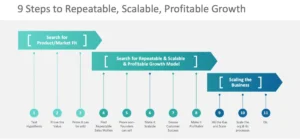
Data from the period indicated that while reaching the initial $1 million to $2 million in Annual Recurring Revenue (ARR) had become significantly more accessible, the "chasm" between $10 million and $100 million in ARR had widened. This reality forced a strategic pivot across the industry. Established firms like HubSpot and Atlassian began to serve as templates for growth, moving away from purely product-led acquisition toward comprehensive, multi-channel strategies. Experts such as Brian Balfour noted that companies were becoming over-reliant on the concept of "product-market fit" as a singular goal, neglecting the more nuanced "four fits"—market, product, channel, and model—necessary to sustain a $100 million enterprise.
Chronology of Strategic Evolution
The evolution of SaaS in 2016 followed a distinct trajectory of maturation:
- Q1 2016: Focus intensified on the "Mid-Market" and "Enterprise" tiers. Startups that had previously focused exclusively on small and medium-sized businesses (SMBs) began to "go upmarket," introducing compliance, security, and administrative features required by larger organizations.
- Q2 2016: The industry saw a surge in documentation regarding "Sales Decks" and storytelling. As competition intensified, the narrative—rather than just the feature set—became the primary differentiator in the sales process.
- Q3 2016: A clear divide emerged between funded and self-funded (bootstrapped) models. Research comparing 37 distinct SaaS companies highlighted that while funded companies pursued aggressive, often loss-leading growth, bootstrapped entities prioritized operational efficiency, often achieving profit margins exceeding 50% within a year of operation.
- Q4 2016: The discourse shifted toward the "Post-SaaS" era. Thought leaders began to analyze how the next generation of software would move beyond simple subscription models to provide deeper business insights and automated outcomes.
The Customer Success Paradigm
One of the most significant shifts in 2016 was the formalization of "Customer Success" as a distinct operational department rather than an auxiliary function of customer support. Companies realized that in a high-churn, low-touch environment, retaining a customer was more economically viable than acquiring a new one.
Industry analysis revealed that high-performing SaaS organizations utilized automated email sequences and usage data to trigger interventions before churn occurred. For instance, the "no-touch" or "low-touch" model gained traction, where support teams were empowered to handle not just technical issues, but upsell opportunities and account health monitoring. This shift fundamentally altered the role of the CEO, who was now expected to be the primary architect of a "customer-driven" culture, ensuring that feedback loops from the end-user were integrated directly into the product development cycle.
Economic Viability: Bootstrapping vs. Venture Funding
The 2016 fiscal year provided a wealth of case studies for the "profitable SaaS" movement. With platforms like Hacker News and independent blogs hosting detailed financial disclosures, the industry saw a move toward radical transparency.
ConvertKit’s transition from a cash-flow-negative entity to a business with a 51% profit margin over five months became a hallmark case study. Similarly, BuzzSumo’s rapid climb to $2.5 million in ARR in its first year underscored the effectiveness of content-led growth strategies. These examples served to challenge the prevailing narrative that venture capital was a prerequisite for success. Analysts at firms like FE International observed that the valuation of these businesses was increasingly tethered to "SaaS metrics"—specifically MRR (Monthly Recurring Revenue), churn rates, and LTV/CAC (Lifetime Value to Customer Acquisition Cost) ratios—standardizing how these companies were bought, sold, and scaled.
Technical and Quantitative Literacy
The democratization of SaaS knowledge was facilitated by the widespread sharing of proprietary templates and metrics spreadsheets. During 2016, it became common for founders to publish their MRR, churn, and burn rate data publicly. This practice provided a benchmark for early-stage founders to evaluate their performance against industry standards.
Furthermore, the integration of data science into marketing workflows became a standard expectation. The distribution of "ready-to-go" marketing spreadsheets and analytical frameworks allowed even non-technical founders to apply quantitative rigor to their growth experiments. This transition marked the end of the "gut-feeling" era of SaaS marketing and the beginning of a data-informed operational standard.
The Future of SaaS: Disruption and Next-Generation Models
As 2016 concluded, the industry began to speculate on the future of the software model itself. Observers noted that while SaaS had successfully disrupted the on-premise software industry, the model was beginning to face its own set of challenges, including "subscription fatigue" and the commoditization of basic functional software.
Industry experts argued that the next wave of SaaS would move from being a "displacer" of legacy systems to a "disruptor" of business processes. The focus shifted toward deep business intelligence, where software would not merely act as a system of record, but as a system of intelligence that proactively provides actionable insights to users. The rise of machine learning and artificial intelligence as embedded features in 2016 products hinted at a future where software would automate complex decision-making, rather than just digitizing manual tasks.
Implications and Broader Impact
The overarching implication of the 2016 SaaS environment was that the barrier to building a scalable business had been replaced by a barrier to gaining attention. As the market reached a point of saturation, the "service" component of Software as a Service returned to the forefront. Brands that prioritized customer education, community building, and high-touch success models proved to be the most resilient against competition.
Furthermore, the professionalization of the SaaS industry meant that investors, founders, and employees were operating from a shared playbook. This standardization of metrics and best practices reduced the "risk of the unknown" for new entrants, leading to a more efficient, albeit more competitive, ecosystem. As the industry looked toward 2017, it was clear that the successful companies would be those that could effectively bridge the gap between technical innovation and a deep, empathetic understanding of the customer’s business lifecycle. The era of the "all-purpose" SaaS tool had waned, replaced by an era of niche-specific solutions, personalized user experiences, and a relentless focus on sustainable, long-term profitability.