Amazon Web Services Named a Leader in the 2026 Gartner Magic Quadrant for Contact Center as a Service for the Fourth Consecutive Year

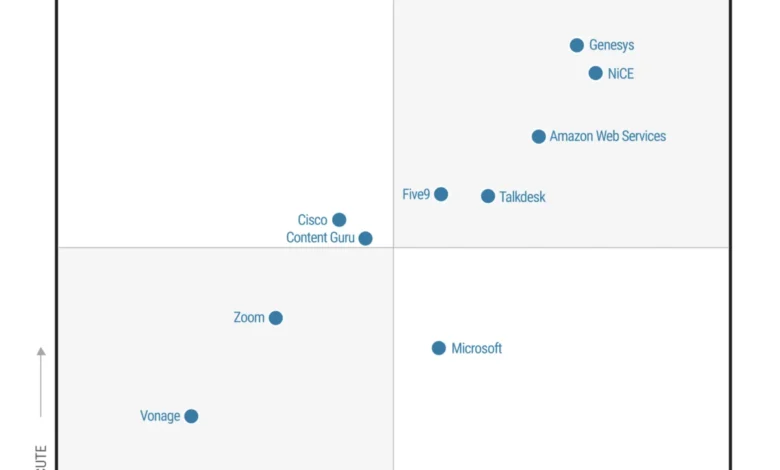
For the fourth year running, Amazon Web Services (AWS) has secured its position as a "Leader" in the 2026 Gartner Magic Quadrant for Contact Center as a Service (CCaaS). This designation, announced on October 19, 2026, by analysts Drew Kraus and colleagues, reaffirms the cloud giant’s sustained influence in the evolving landscape of customer experience (CX) technology. As businesses grapple with the dual pressures of rising consumer expectations and the rapid integration of generative artificial intelligence, the recognition serves as a bellwether for the industry’s shift toward hyper-personalized, context-aware service models.
The Evolution of the CCaaS Market
The Contact Center as a Service (CCaaS) market has undergone a radical transformation over the past decade. Initially conceived as a cloud-based replacement for on-premises legacy hardware, the sector has evolved into a strategic nerve center for enterprise operations. According to recent market analysis, the global CCaaS market is projected to reach significant growth milestones by 2030, driven largely by the move away from siloed voice-only systems toward omnichannel platforms that unify email, chat, social media, and voice into a single, intelligent stream.
AWS entered this space with the launch of Amazon Connect, a platform designed to democratize access to contact center technology through a flexible, usage-based pricing model. By removing the high barrier to entry associated with traditional, hardware-heavy infrastructure, AWS disrupted the market, forcing incumbents to pivot toward more agile, software-defined architectures.
A Chronology of Industry Recognition
AWS’s path to becoming a consistent leader in the Gartner Magic Quadrant is marked by a series of strategic technical pivots:
- 2023: AWS begins the deep integration of machine learning into the contact center, focusing on real-time sentiment analysis and agent assist tools.
- 2024: The company emphasizes "omnichannel parity," ensuring that customer data flows seamlessly between digital and voice touchpoints, a feature that began to distinguish market leaders from legacy providers.
- 2025: The introduction of more robust generative AI capabilities, allowing for automated summaries of complex interactions and real-time knowledge base retrieval.
- 2026: The current year, characterized by the rise of "agentic" AI, where systems move beyond simple information retrieval to executing complex multi-step workflows on behalf of the customer.
This four-year streak reflects a long-term commitment to what AWS characterizes as "customer experience without compromise." By consistently meeting the criteria set forth by Gartner—which evaluates vendors on their "Ability to Execute" and "Completeness of Vision"—AWS has maintained a dominant foothold in the enterprise sector.
Technical Pillars: The "Connect Customer" Philosophy
The core of the AWS strategy, particularly with the evolution of Amazon Connect, centers on the "living picture" of the customer. In a modern retail or financial services environment, a customer interaction is rarely a single, isolated event. It is part of a broader, multi-channel narrative.
AWS’s approach prioritizes three functional pillars:
- Unified Context: By aggregating historical interactions, intent data, and profile information, the system allows agents to bypass the tedious "verification and explanation" phase of a support call, creating a more seamless, human-centric interaction.
- Resolution-Focused Architecture: While much of the industry has prioritized "deflection"—using automated chatbots to keep customers away from human agents—AWS has positioned its platform for high-value, complex resolutions. Whether it is a mortgage renegotiation or a contested insurance claim, the system is designed to handle the "heavy lifting" that requires both technical precision and human empathy.
- Agentic AI Integration: The 2026 update to the platform highlights the shift toward agentic AI. Unlike static bots that follow rigid decision trees, these systems are designed to parse user intent and perform actions—such as updating a database or modifying a service contract—within a secure, auditable framework.
Industry Implications and Strategic Analysis
The recognition of AWS as a leader has broader implications for the enterprise technology ecosystem. As organizations move toward a post-deflection model, the competition between cloud providers (AWS, Microsoft, Google, and others) is increasingly focused on the "intelligence layer."
Analysts note that the primary competitive advantage for AWS lies in its massive ecosystem. Because Amazon Connect is built upon the same global infrastructure as AWS’s broader cloud services, it offers a level of scalability that remains difficult for smaller, niche players to match. Furthermore, the integration with AWS’s AI stack (such as Amazon Bedrock) provides a "fast-track" for businesses that have already invested in the AWS cloud to deploy sophisticated AI models within their customer service departments without having to manage complex third-party API integrations.
However, the industry faces significant challenges. Data privacy and the "black box" nature of generative AI remain top-of-mind for CIOs. AWS has addressed these concerns by emphasizing the "auditable" nature of its actions, ensuring that every AI-driven step can be traced, monitored, and overridden by a human supervisor. This balance between automation and human oversight is expected to be the defining characteristic of the 2027 market landscape.
Official Perspectives and Future Outlook
While Gartner maintains a strict policy of neutrality—noting that its publications consist of the opinions of its research organization and should not be construed as statements of fact—the designation is widely viewed as a critical validation for stakeholders.
For the team at AWS, the recognition is a culmination of feedback from engineers, partners, and the end-users who shape the platform’s iterative development. As the company looks toward the next decade, the focus is expected to shift toward proactive, rather than reactive, service. Instead of waiting for a customer to contact the center with a problem, the integration of real-time telemetry and predictive analytics suggests a future where companies can identify and resolve potential service failures before the customer is even aware of them.
The 2026 report serves as a benchmark for where the industry stands: in a state of rapid transition from reactive, siloed service centers to proactive, intelligent, and integrated experience hubs. For enterprises, the choice of a CCaaS provider is no longer just a decision about telephony; it is a fundamental choice about how the business will interact with its customers for the foreseeable future.
Contextualizing the Gartner Framework
It is essential to view the Gartner Magic Quadrant not as a static ranking, but as a snapshot of the market’s competitive landscape at a specific point in time. The criteria for 2026 placed a heightened emphasis on the ethical use of AI, the depth of technical integration with enterprise resource planning (ERP) systems, and the ability to maintain consistent service quality at scale.
Vendors are evaluated on their ability to adapt to shifting technological trends—most notably the integration of Large Language Models (LLMs) into standard workflows. In this regard, AWS’s ability to leverage its internal AI research capabilities provided a significant advantage in the 2026 evaluation cycle.
As the digital transformation of the customer service sector continues, the gap between traditional providers and those capable of deploying complex, agentic AI solutions is likely to widen. The current leadership of AWS in this space suggests that the company is well-positioned to maintain its momentum, provided it can continue to navigate the dual requirements of rapid innovation and strict enterprise-grade security.
For businesses currently assessing their CCaaS infrastructure, the 2026 report provides a comprehensive overview of the market’s capabilities. Whether an organization is a small-to-medium enterprise looking to improve its first-contact resolution rates or a global conglomerate managing millions of interactions, the underlying technologies—contextual intelligence, agent empowerment, and seamless AI integration—now represent the standard baseline for excellence in customer experience.