A Gentle Introduction to Model Distillation and the Escalating Industry Conflict

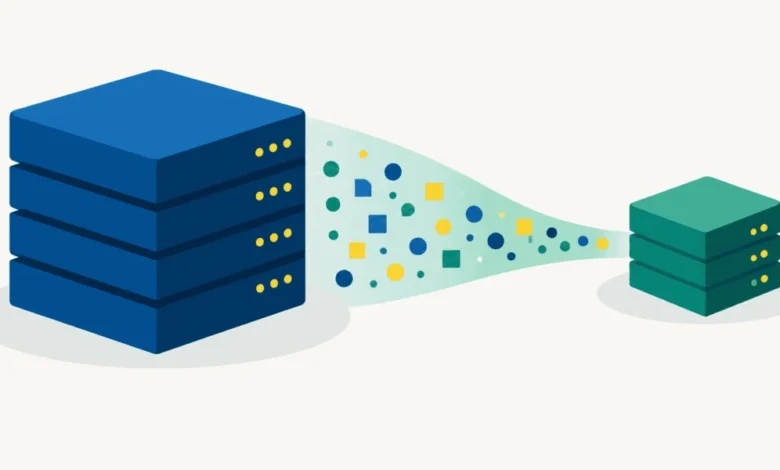
The most sophisticated artificial intelligence models currently in existence, such as OpenAI’s GPT-4, Anthropic’s Claude 3.5, and Google’s Gemini 1.5, represent the pinnacle of modern computational achievement. However, their sheer scale—often exceeding hundreds of billions of parameters—renders them functionally impractical for widespread, low-latency deployment. These models require massive data centers, significant energy consumption, and high operational costs, making them inaccessible for lightweight applications like mobile devices or edge computing. To bridge the gap between monumental research breakthroughs and commercial viability, the AI industry has turned to a process known as model distillation. While this technique has long been a standard engineering practice for optimizing neural networks, it has recently moved to the center of a geopolitical and corporate firestorm, sparking allegations of large-scale intellectual property theft and technological espionage.
The Mechanism of Distillation: Understanding Dark Knowledge
At its core, model distillation is a compression technique where a smaller, computationally efficient "student" model is trained to mirror the behavior and output of a massive "teacher" model. Traditional machine learning training relies on "hard labels"—for instance, identifying an image as either a dog or a cat. This binary approach, however, discards vital relational data. A teacher model does not merely see a "dog"; it perceives a probability distribution—an 85% likelihood of a dog, a 13% chance of a cat, and a negligible probability of other objects.
Geoffrey Hinton, the pioneer of this framework, famously dubbed the information contained within these subtle probability distributions as "dark knowledge." By training the student model on these soft outputs rather than just the final, correct label, the student inherits the teacher’s nuanced understanding of how concepts relate to one another. This allows the smaller model to achieve a level of performance that would otherwise be impossible to reach through standard training methods alone. In the classical era of AI, this involved "temperature scaling," a method used to soften the teacher’s output to make the differences between classes more apparent, thereby providing a richer signal for the student to learn from.
Evolution of Distillation in the LLM Era
As the industry shifted from classification tasks to Large Language Models (LLMs), the classical approach required a fundamental transformation. Because LLMs generate text token-by-token across vast vocabularies, the traditional probability distribution methods became increasingly complex to implement. Modern distillation has consequently branched into three distinct methodologies:
- Synthetic Data Distillation: Currently the industry standard, this method involves the teacher model generating massive volumes of high-quality training text—such as chain-of-thought reasoning, code, and structured prose—which is then used to fine-tune the student model. This requires only API access to the teacher, making it highly scalable.
- Feature Distillation: This involves the student model replicating the internal activation patterns and latent representations of the teacher’s intermediate layers. This provides a deep, structural understanding but necessitates "white-box" access to the teacher’s architecture.
- Logit-Based Distillation: This is an extension of the classical framework applied at the token level, matching the full probability distribution of the teacher’s output during the generation process.
A Chronology of Conflict: The 2026 Escalation
While internal distillation—where a company refines its own models—is considered standard industry practice, the events of early 2026 marked a shift toward unauthorized external distillation. The following timeline outlines the major public confrontations regarding this practice:
- January 2026: OpenAI submits a formal memo to the U.S. House Select Committee on China, alleging that the research lab DeepSeek utilized obfuscated routing and unauthorized API access to systematically extract the internal reasoning capabilities of its proprietary models.
- March 2026: Anthropic releases a technical report documenting the activity of 24,000 automated accounts that generated over 16 million queries targeting Claude’s agentic reasoning and coding capabilities.
- April 2026: During testimony in a high-profile lawsuit, Elon Musk admits that xAI "partly" utilized data from OpenAI’s models during the training phase of Grok, framing it as an industry-wide norm.
- June 2026: Anthropic publicly accuses Alibaba’s Qwen lab of executing an unprecedented campaign involving 25,000 accounts and 28.8 million exchanges with Claude to facilitate large-scale distillation. Alibaba denies these claims, asserting their models were developed through independent research.
- July 2026: Google’s Threat Intelligence Group reports the disruption of over 100,000 prompts linked to a coordinated distillation attack on Gemini, marking a new phase in active defense.
Economic and Legal Implications
The economic implications of these allegations are profound. When an organization spends upwards of a billion dollars on R&D, compute, and talent to train a frontier model, the ability for a competitor to "harvest" those capabilities for a fraction of the cost poses an existential threat to the business model of AI labs.
For instance, DeepSeek claimed their V3 model cost roughly $5.6 million to train. Independent observers at SemiAnalysis suggested that the true cost, when accounting for the underlying research and infrastructure, was likely north of $1.3 billion. If unauthorized distillation is indeed being used to bypass the "cold start" problem of training a frontier-class model, the playing field is being leveled in ways that traditional copyright and patent law were not designed to address.
Legally, the situation is murky. In the United States, raw model outputs are not currently protected by copyright, meaning that labs must rely on restrictive terms-of-service agreements. Enforcing these agreements against foreign entities or actors using obfuscation techniques like third-party routing remains a significant hurdle. Furthermore, there has been no judicial ruling or independent forensic audit to confirm the extent of these "harvesting" claims, leaving the industry in a state of speculative uncertainty.
Future Outlook: The Arms Race Between Defense and Extraction
The structural tension is clear: the more useful and accessible a model is, the more vulnerable it is to being distilled. In response, AI labs are pivoting toward a defensive posture. This includes implementing more sophisticated rate-limiting, developing hidden watermarks within model outputs to track provenance, and sharing threat intelligence to identify anomalous traffic patterns across the industry.
However, these defenses are not panaceas. Watermarks can be stripped or blurred through paraphrasing; aggressive rate-limiting risks alienating legitimate enterprise users; and the decentralized nature of the global AI ecosystem makes it difficult to prevent determined actors from accessing model outputs.
Ultimately, model distillation has become a victim of its own success. It is the very engine that allows the democratization of high-performance AI, yet it is also the tool that undermines the competitive moat of the labs that build those models. As the industry moves forward, the focus will likely shift from purely increasing model scale to developing robust, verifiable ways to govern the interaction between frontier models and the public, ensuring that the fruits of innovation are not simply harvested without compensation. For now, distillation remains a double-edged sword—a vital engineering necessity and an unresolved point of contention that will shape the legal and technical landscape of AI for the remainder of the decade.
Related posts: