Nintendo Launches Customer Appreciation Sale Following $300 Million Tariff Refund

Nintendo of America has officially launched its sweeping "Customer Appreciation Sale," offering discounts of up to 30% across a wide variety of digital games, hardware accessories, physical bundles, and downloadable content (DLC). The promotional event, which runs through September 26, is accessible via the Nintendo eShop, the official Nintendo Store, and major retail partners including Amazon, Best Buy, and Walmart.
While the timing of the retail event has sparked widespread consumer interest, industry analysts and economic observers note that the sale directly follows Nintendo’s receipt of a substantial $300 million government tariff refund. Although the gaming giant has framed the event as a gesture of gratitude toward its loyal consumer base, financial experts emphasize that the capital injection from the federal tariff settlement has provided the company with the fiscal flexibility required to implement widespread price reductions without impacting profit margins on legacy inventory.
Background Context and Regulatory Origins
The origins of the $300 million capital return trace back to multi-year legal and regulatory challenges concerning import tariffs levied on consumer electronics and gaming hardware manufactured overseas. Over the preceding cycles of international trade disputes, electronic hardware importers—including major console manufacturers like Nintendo, Sony, and Microsoft—faced aggressive import duties that significantly raised supply chain expenditures.
In the subsequent legal proceedings, trade courts and federal oversight bodies determined that certain import tariff assessments had been improperly calculated or unlawfully applied under established international trade guidelines. Consequently, the United States government mandated the retroactive issuance of tariff refunds to qualifying corporations. Nintendo’s allocation of approximately $300 million in returned duties created an unexpected financial windfall for the multinational corporation, prompting questions from consumers and market analysts regarding how the unexpected capital would be deployed.
Rather than absorbing the funds directly into corporate reserves or allocating them exclusively to research and development for next-generation hardware architectures, Nintendo leadership elected to channel a portion of the relief back into consumer-facing price incentives. The Customer Appreciation Sale represents the primary manifestation of this strategy, providing measurable savings to millions of households navigating broader economic inflationary pressures.
Scope of the Sale: Hardware, Software, and Accessories
The promotional event focuses heavily on first-party software titles, downloadable expansion bundles, and select legacy accessories compatible with both the original Nintendo Switch ecosystem and newer hardware iterations.
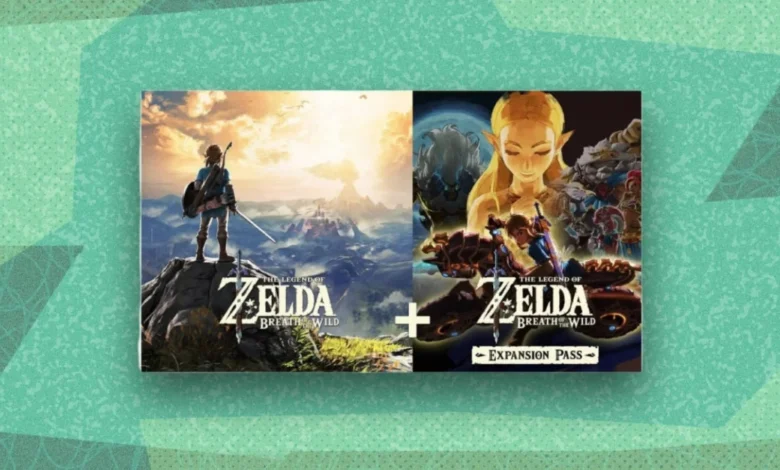
First-party software remains the primary driver of consumer savings during the event. High-profile titles that historically maintain strict pricing baselines across the industry are seeing rare 30% discounts. Notably, Amazon and participating retailers have marked down The Legend of Zelda: Breath of the Wild + Expansion Pass Bundle to $55.97, down from its standard retail price of $79.98. Similar price cuts apply across a broad catalog of critically acclaimed franchise entries, spanning platformers, role-playing games, and multiplayer titles.
Hardware enthusiasts evaluating the current market will note distinct product segmentation within the sale. While the newly introduced Nintendo Switch 2 hardware and its dedicated software library are largely excluded from direct price cuts—largely due to high initial demand and tight supply chains—older peripherals remain heavily discounted. A prime example is the standard Nintendo Pro Controller. While the newly launched Pro Controller 2 retails for $90 and frequently faces supply shortages, the original Nintendo Pro Controller remains fully compatible with the modern Switch 2 architecture. During the appreciation sale, the legacy Pro Controller has been discounted to $55.99 from its standard $79.99 MSRP, offering a cost-effective alternative for gamers seeking premium tactile inputs without paying full price for next-generation peripherals.

Additionally, third-party and officially licensed accessories are seeing promotional pricing. Specialty storage and transport cases, such as themed travel solutions designed to accommodate both the console body and controllers, have received modest price reductions across major online storefronts.
Consumer Demand and the "Zelda Effect"
The launch of the Customer Appreciation Sale coincides with heightened consumer enthusiasm surrounding Nintendo’s flagship intellectual properties, most notably The Legend of Zelda franchise. Recent corporate announcements concerning preorders for upcoming legacy remasters and modern installments—including heightened anticipation around The Legend of Zelda: Ocarina of Time re-releases—have driven increased traffic to digital and physical retail channels.
Consequently, limited-edition hardware variants, specialized controllers, and collector-edition Amiibos have experienced rapid sell-through rates independently of the sale. Analysts observe that the timing of the 30% software discounts serves to capture this pre-existing consumer momentum, converting browser interest into confirmed transactions while inventory levels remain stable.
Financial and Economic Implications
From a macroeconomic perspective, Nintendo’s decision to tie a promotional retail event to a government tariff refund offers a fascinating case study in corporate treasury management and public relations. Historically, corporations receiving windfall tax adjustments or regulatory rebates rarely attribute public price adjustments directly to those refunds, preferring instead to present discounts as standard seasonal marketing initiatives.
By explicitly acknowledging the $300 million tariff recovery in tandem with the rollout of the Customer Appreciation Sale, Nintendo has positioned itself as a consumer-aligned enterprise willing to pass regulatory savings down to the end-user. This approach mitigates potential public scrutiny regarding the retention of government-refunded capital while simultaneously stimulating end-of-quarter sales velocity.
Furthermore, the sale acts as an effective inventory management tool. As the consumer electronics market transitions deeper into the lifecycle of next-generation hardware, clearing legacy software licenses, digital expansion bundles, and first-generation accessories allows major retailers to optimize warehouse space and capital allocation.
Market Outlook Through September 26
With the Customer Appreciation Sale scheduled to run through September 26, retail analysts expect sustained high traffic volumes across both digital storefronts and physical retail partners. While stocks of physical media and select third-party accessories may fluctuate based on regional demand, digital storefronts such as the Nintendo eShop ensure uninterrupted availability for downloadable software and expansion passes.
Consumers looking to maximize their purchasing power during the promotional window are advised to verify participating retail listings and check digital availability prior to purchase, as pricing structures remain subject to retailer-specific adjustments and inventory limits following the conclusion of the event.