The consumer technology landscape has reached a significant inflection point regarding wearable computing, transitioning rapidly from experimental novelties to genuinely practical daily tools. While the broader consumer market remains captivated by developments in generative artificial intelligence software, smart glasses have quietly emerged as the hardware medium most likely to define the next decade of personal computing. Hardware capabilities, thermal management, battery densities, and display optics have finally advanced to a stage where facial computers are functional, comfortable, and aesthetically acceptable for daily public use.
Major technology conglomerates—including Meta, Apple, and Google—alongside a dynamic ecosystem of agile hardware startups, are aggressively positioning themselves for a future where millions of consumers routinely wear computing hardware on their faces. For consumers looking to purchase cutting-edge wearable technology as a holiday gift this year, the market presents a bewildering array of form factors, use cases, price points, and underlying architectures. Navigating this diverse product category requires understanding not just brand reputations, but the fundamental divergence in engineering philosophies that separate modern smart eyewear into distinct operational classes.
The Evolution of Wearable Computing and Market Dynamics
The journey toward modern smart eyewear has been long and fraught with high-profile missteps. A decade ago, early iterations like Google Glass captured the public imagination but suffered from severe hardware limitations, inadequate battery life, cultural anxieties regarding privacy, and a clumsy aesthetic that marked wearers as walking oddities. For years, the industry struggled to reconcile the immense power demands of augmented reality optics with the strict weight and thermal constraints of traditional eyewear frames.
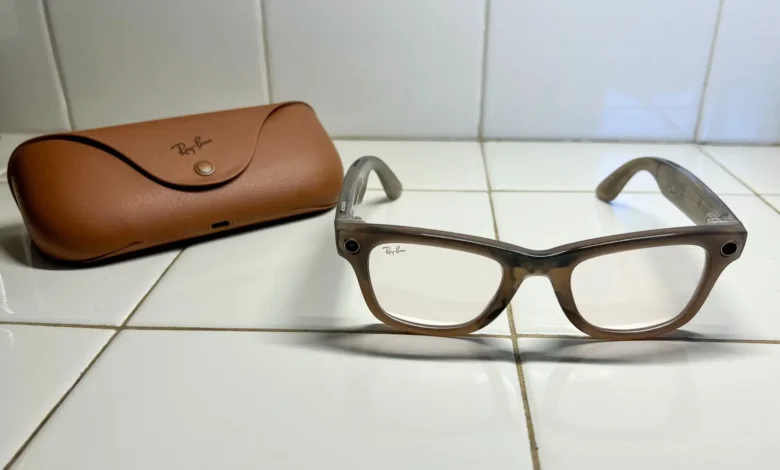
By 2024, however, significant breakthroughs in micro-LED display panels, waveguide optics, and highly efficient system-on-chips (SoCs) transformed the paradigm. Industry analysts note that camera-equipped frames alone now constitute roughly 80% of the active smart glasses market, largely driven by viral consumer adoption and strategic partnerships between traditional fashion brands and software giants. Meta’s collaboration with EssilorLuxottica to produce Ray-Ban branded smart frames demonstrated conclusively that consumers are willing to embrace face-worn cameras and AI assistants if the underlying hardware is indistinguishable from high-end designer sunglasses.

Concurrently, heavyweights like Apple—having reportedly paused development on immediate successors to its high-end Vision Pro mixed-reality headset to fast-track lightweight smart glasses—are pivoting toward the face-worn form factor as the ultimate destination for spatial computing. This shifting corporate focus underscores a broader industry consensus: heavy, isolated headsets will remain niche tools for enterprise applications, immersive gaming, and specialized media consumption, while lightweight spectacles will serve as the ubiquitous interface for ambient computing.
Categorizing Smart Eyewear: Form Follows Function
Because the term "smart glasses" is applied indiscriminately to devices ranging from basic audio frames to complex optical head-up displays, industry observers generally segment the market into four distinct categories. Understanding these classifications is critical for purchasers attempting to match a device to a recipient’s lifestyle.
Audio-First Smart Glasses
Audio-first devices function essentially as premium wireless earbuds seamlessly integrated into structural eyeglass temples. Utilizing directional open-ear speakers or bone-conduction transducers, these frames allow users to stream music, listen to podcasts, conduct telephone conversations, and interact with voice-activated artificial intelligence assistants without obstructing the ear canal. They rely entirely on a tethered smartphone to process computational tasks, featuring neither onboard cameras nor visual displays.
These devices appeal primarily to consumers seeking a safer, more comfortable alternative to traditional in-ear headphones for office environments, urban commuting, or casual outdoor recreation. Representative hardware in this segment includes specialized audio frames from traditional eyewear manufacturers and consumer tech brands alike.
Camera-First Smart Glasses
Camera-first frames prioritize visual capture, embedding ultra-compact, high-resolution sensors within the frame chassis to record still photographs and high-definition video directly from the user’s perspective. Despite ongoing societal debates regarding surveillance and public privacy, camera-centric wearables command the vast majority of current consumer market share.

Designed explicitly for content creators, active travelers, and spontaneous documentarians, these frames enable hands-free recording without the awkwardness of holding a smartphone aloft. The Ray-Ban Meta collaboration remains the undisputed market leader in this category, offering deep integration with multimodal AI agents that can analyze the user’s immediate visual field in real time.
Media-First Smart Glasses
Media-first smart glasses operate as ultra-portable, high-definition virtual monitors designed for private consumption. Rather than projecting digital information onto the physical world, these devices utilize internal micro-OLED displays to project massive, high-contrast virtual screens directly into the user’s field of vision. Requiring a physical cable tether to a compatible host device—such as a modern smartphone, handheld gaming console, or laptop—they replicate the visual experience of sitting in front of a massive home theater screen while sitting in an airplane seat or a crowded coffee shop.
Frequent travelers, mobile professionals, and competitive gamers represent the primary target demographic for this hardware class, exemplified by advanced offerings from specialized optics firms like Xreal.
Head-Up Display (HUD) Smart Glasses
Head-up display glasses represent the most sophisticated intersection of traditional eyewear and augmented reality. These devices project discreet, monochrome digital overlays directly into the peripheral vision of clear or lightly tinted lenses, delivering contextual information such as turn-by-turn navigation prompts, incoming message notifications, live teleprompter text, or real-time language transcriptions. Engineered for all-day wear, they favor subtle utility over immersive multimedia consumption.
Busy executives, field service professionals, and early-adopting technology enthusiasts benefit most from HUD technology, as demonstrated by minimalist engineering marvels like the Even Realities G2.

Curated Hardware Selection: Matching Devices to Recipients
For gift-givers navigating the complex holiday marketplace, analyzing specific hardware deployments provides a clearer roadmap for matching devices to individual user profiles.
Best for Gamers and Frequent Travelers: Xreal XBX a01
For recipients who log extensive hours in transit or demand mobile multi-monitor productivity, the Xreal XBX a01 presents an exceptional value proposition. Priced competitively at approximately $299, these media-first glasses connect seamlessly via USB-C to any video-output-capable device, instantly projecting a virtual display equivalent to a 147-inch television screen at pristine 1080p resolution.
The optical fidelity and portability make them an indispensable accessory for airline passengers seeking privacy during long-haul flights or remote professionals requiring an expansive virtual workspace without packing physical monitors. While they lack onboard cameras or standalone computing power, their specialized focus on high-definition media consumption executes flawlessly.
Best for Professionals and Tech Enthusiasts: Even Realities G2
Professionals and enterprise users who require constant situational awareness without the distraction of immersive screens will find the Even Realities G2 to be a benchmark achievement in wearable engineering. Eschewing heavy video playback capabilities in favor of subtlety, the G2 frames integrate a discreet monochrome head-up display.
A simple upward glance activates the optical projection system, surfacing critical data streams such as minimalist navigation maps, incoming communications feeds, and specialized micro-applications capable of tasks ranging from live translation to acoustic tuning. Encased in frames that are virtually indistinguishable from conventional high-end prescription eyewear, they bridge the gap between enterprise utility and professional fashion.

Best for Athletes and Outdoor Adventurers: Bleequp Rangers
Active consumers who prioritize rugged durability and athletic documentation will find specialized utility in the Bleequp Rangers. Retailing at $379, these lightweight sports frames omit complex artificial intelligence voice assistants and optical HUD projections in favor of robust physical performance tracking.
Equipped with a 16-megapixel still camera and high-definition video capture capabilities, open-ear audio drivers, turn-by-turn routing, and an integrated peer-to-peer communication function, they are purpose-built for long-distance running, cycling, and extreme sports. With optional extended battery accessories capable of sustaining up to four hours of continuous recording, the Rangers provide a comprehensive digital toolkit for endurance athletes.
Best for the Fashion-Forward: Chamelo Music Shield
For style-conscious recipients where visual aesthetics outweigh raw computational utility, the Chamelo Music Shield represents a fascinating hybrid product. While omitting advanced artificial intelligence, onboard cameras, and head-up optical displays, the frames function as premium audio glasses featuring electrochromic lenses.
With a simple swipe of the finger along the frame temple, users can dynamically adjust the tint of the lenses from light to dark, matching environmental lighting conditions or personal wardrobe choices. Though positioned as much as a stylish lifestyle accessory as a piece of technology, the Music Shield demonstrates how modern engineering can successfully fuse consumer electronics with high-fashion sensibilities.
Broader Implications and Industry Outlook
The rapid maturation of smart eyewear carries profound implications for the broader technology and telecommunications sectors. As artificial intelligence models become increasingly multimodal—capable of processing simultaneous streams of high-definition video, spatial audio, and contextual biometric data—the smart glasses form factor provides the ideal physical chassis for ambient computing. Unlike smartphones, which require conscious manual interaction and distract the user’s gaze downward, wearable face computers integrate seamlessly into human physical movement, promising a more natural, less intrusive computing paradigm.

However, widespread adoption continues to face significant hurdles that manufacturers must navigate carefully. Privacy advocates and regulatory bodies maintain heightened scrutiny regarding the surreptitious recording capabilities of camera-first devices, prompting hardware developers to implement increasingly visible indicator lights, restricted software zones, and robust data encryption protocols. Furthermore, battery chemistry and thermal dissipation constraints mean that true, all-day augmented reality—featuring full-color, high-brightness holographic displays anchored seamlessly to the physical world—remains several years away from mainstream commercial viability.
Despite these challenges, the current market generation proves that smart glasses are no longer an expensive science experiment. Whether a consumer seeks an immersive private home theater for travel, a subtle productivity HUD for the corporate boardroom, or a stylish audio-visual companion for outdoor recreation, wearable computing has firmly established its place in the modern technological ecosystem.