The Future of Sustainable Productivity: Why Managing Your Energy Capacity is the New Competitive Advantage


In an era defined by constant connectivity and the rapid acceleration of workplace demands, the traditional metrics of productivity—such as the number of tasks completed or hours logged—are increasingly viewed as insufficient indicators of professional health. A paradigm shift is currently underway, emphasizing "energy capacity management" over mere task volume. As of September 2026, corporate wellness experts and systems engineers are reporting a surge in the adoption of proactive, AI-driven workload visualization tools designed to prevent burnout before it manifests. This approach moves beyond the reactive nature of standard project management software, shifting the focus toward a preemptive assessment of individual cognitive reserves.
The Science of Capacity-Based Scheduling
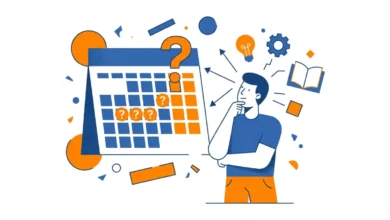
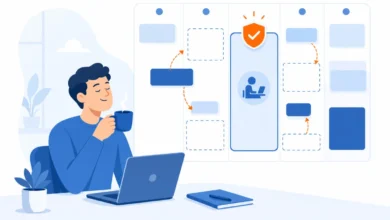
The core of this trend lies in the development of "Capacity Bar" agents—automated systems that scan professional calendars to assign a numerical value to meetings, deep-work sessions, and collaborative obligations. By visualizing these requirements against a personal baseline, professionals can identify, in advance, when their upcoming week exceeds their threshold for sustainable performance.
Current data suggests that cognitive load management is becoming a critical component of human resource strategy. According to organizational psychology research, the human brain functions on a finite energy reserve that fluctuates based on external demands. A task that feels manageable at 90% capacity can be perceived as an insurmountable crisis when an individual is operating at 10% capacity. By quantifying these states, the "Capacity Bar" agent provides a quantitative warning system, allowing individuals to renegotiate or cancel commitments before their mental battery is fully depleted.
Chronology of the Shift Toward Proactive Load Management
The movement toward this methodology began in early 2024, as the widespread integration of Large Language Models (LLMs) into daily workflows necessitated a new way to handle the resulting increase in output.
- Early 2024: Organizations observed a marked increase in "admin fatigue," where the speed of AI-generated work outpaced the human ability to process and manage the resulting commitments.
- Late 2024 – 2025: Productivity consultants began advocating for "Preemptive Load Management," a system where users assess their energy levels on a 1-to-10 scale prior to confirming any new social or professional invitation.
- 2026: The widespread adoption of custom API-integrated agents has allowed for the automation of this assessment. These agents now routinely scan calendars, flag "high-energy" conflicts, and suggest rescheduling based on historical performance data.
The Dichotomy of Analog and Digital Tools
While digital agents excel at efficiency, recent industry analysis indicates that they often fail to address the underlying psychological stress of high-output environments. Consequently, there has been a resurgence in "Analog Reset" practices. Experts suggest that while digital tools should be used for load management, tactile, analog methods—such as the "Paper Morning" technique—are superior for stress reduction.
The "Paper Morning" involves documenting one’s thoughts and anxieties on paper before engaging with digital inboxes. This practice serves as a low-stimulus buffer, allowing the brain to categorize information before the day’s agenda is dictated by external sources. Complementing this is the "Digital Sunset," where screens are systematically powered down, allowing for a period of sensory rest—often supplemented by time in nature—which facilitates a cognitive recovery that digital notifications cannot replicate.
Practical Frameworks for Implementation
Industry leaders have begun formalizing these strategies into actionable frameworks. The following three pillars are now commonly cited in corporate productivity seminars:
1. The 1-to-10 Energy Assessment
Before replying to any request, professionals are encouraged to rate their current energy state. If the rating is below a predetermined threshold, the individual is advised to decline or postpone the commitment. This prevents the "sunk cost" fallacy, where individuals agree to obligations they cannot fulfill, leading to eventual burnout.
2. The 15-Minute Post-Meeting Buffer
To prevent the "avalanche effect"—where unprocessed meeting notes accumulate until they become overwhelming—professionals are increasingly mandating a 15-minute buffer after every scheduled interaction. These blocks are used specifically for data entry, task generation, and system updating. Some advanced users utilize AI agents to transcribe meetings and generate action items, reducing the manual administrative burden during this buffer time.
3. The "Brain Dump" Inventory
When faced with amorphous stress, practitioners are utilizing a "Paper Inventory" method. By listing every source of anxiety in a single column and identifying the "minimum next action" in an adjacent column, individuals can distinguish between actionable tasks and passive worries. This distinction significantly reduces the cognitive load associated with ambiguous obligations.
Broader Economic and Corporate Implications
The shift toward capacity-based management has profound implications for workplace culture. Historically, "availability" was a proxy for competence. However, as organizations recognize the long-term cost of employee burnout—including high turnover rates and decreased creative output—the ability to proactively manage one’s capacity is being redefined as a professional skill.
"The goal is not to do less work, but to perform work when the individual is capable of high-level output," says one workplace efficiency analyst. By reframing scheduling as a collaborative adjustment rather than a rigid set of mandates, professionals can build more resilient working relationships. When an individual communicates, "I am at full capacity; can we move this to next week?", it is increasingly received as a sign of professional maturity and organizational awareness rather than a lack of dedication.
Integrating Play and Recovery
A significant, yet often overlooked, factor in sustained productivity is the reintegration of "non-work joy." Many professionals who suffer from chronic fatigue have been found to have completely abandoned hobbies that provide intrinsic, rather than extrinsic, reward.
Current guidelines suggest that scheduling at least 15 minutes of "low-performance play"—activities that do not require an audience or an output goal—serves as a critical antidote to burnout. Whether it is reading, engaging in a physical sport, or practicing a craft, these moments of silence and play provide the neurological downtime necessary for long-term cognitive endurance.
Conclusion: The Future of the Workday
As we look toward the remainder of the decade, the integration of technology and human-centric management will likely continue to evolve. The reliance on automated agents to provide a "warning system" for the week ahead is no longer a niche practice but a growing requirement for high-functioning teams.
The successful professional of the future will be one who treats their energy reserves as a non-renewable resource, leveraging AI for the logistical management of their time while utilizing analog practices to protect their cognitive clarity. By viewing every "yes" as a withdrawal from a finite energy account, individuals can transition from a state of reactive exhaustion to one of proactive, sustainable contribution. Ultimately, the most sophisticated productivity tool remains the ability to recognize when to stop, when to reset, and when to protect one’s capacity for the challenges that truly matter.