The True Cost of Home Remodeling: Why Renovation Projects Frequently Exceed Time and Budget Expectations

The pursuit of the perfect home through extensive renovation is a quintessential American ambition, yet it has evolved into one of the most volatile and financially taxing endeavors a property owner can undertake. As supply chain volatility, labor shortages, and bureaucratic hurdles converge, the prospect of a "gut remodel"—a comprehensive overhaul of a property’s interior and structural components—has become a high-risk venture that frequently defies initial financial and temporal projections. Industry data suggests that what begins as a vision of home improvement often concludes as a logistical struggle, characterized by significant cost overruns and protracted timelines that can fundamentally alter the value proposition of real estate ownership.
The Economic Reality of Renovation Timelines
The disparity in building timelines across the United States is stark, reflecting a complex landscape of local zoning laws, permitting backlogs, and regional labor availability. According to data compiled by ResiClub, utilizing research from University of Chicago and Princeton scholars, the variance in construction efficiency is extreme. In municipalities such as San Francisco, the path from initial permit application to final project sign-off for a single-family home can span nearly five years, with an average of 1.1 years dedicated solely to the permitting process. In contrast, jurisdictions such as Colorado Springs, El Paso, and Indianapolis frequently facilitate the completion of similar projects within a six-month window.
Nationally, the trend toward increased friction in residential construction is unmistakable. Government data indicates that the time required to process single-family building permits has nearly tripled since the turn of the century, rising from an average of 1.6 months in 2000 to approximately 4.9 months by 2023. This escalation in regulatory wait times serves as a foundational delay, compounding the subsequent risks associated with material procurement and contractor scheduling. When these systemic delays are coupled with the inherent complexities of historical or older housing stock, the potential for a project to spiral beyond its original scope becomes a statistical probability rather than a mere possibility.
The Hidden Financial Architecture of Remodeling
The common perception of a remodeling budget often ignores the "iceberg effect," where the construction bid represents only a fraction of the total economic impact. When a property owner purchases a fixer-upper, the financial commitment extends well beyond the contract signed with a general contractor.
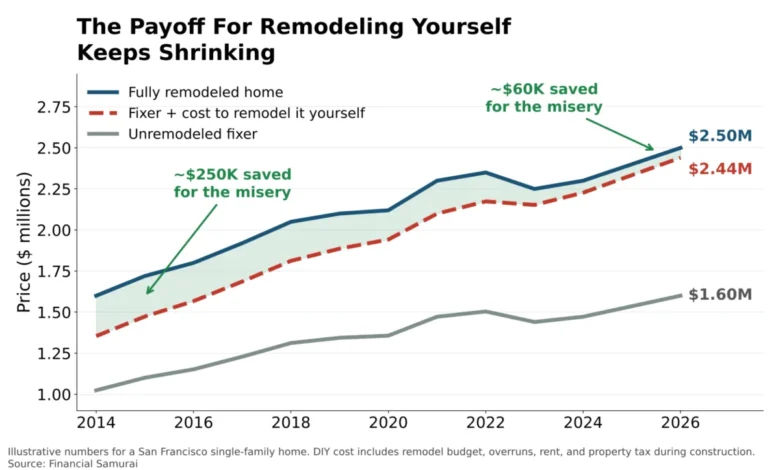
Consider a scenario where a property is purchased for $1.6 million, with an earmarked $400,000 for a comprehensive renovation. If the project follows industry-standard patterns of a 50% cost overrun, the construction expenditure rises to $600,000. When combined with the carrying costs of the property—including mortgage interest, insurance, and property taxes—the total outlay increases significantly. Furthermore, if the homeowner must secure temporary housing during the construction phase, monthly rental costs can quickly add hundreds of thousands of dollars to the total project cost.

This financial strain is exacerbated by the opportunity cost of capital. The hundreds of thousands of dollars tied up in a non-productive asset during a multi-year construction delay could have been allocated to liquid investments or other diversified assets. When these variables are aggregated, the total economic investment often exceeds the market value of the finished home, complicating the return on investment (ROI) that many homeowners initially rely upon to justify the endeavor.
Regulatory and Logistical Challenges
The primary drivers of project failure are often external factors beyond the control of the homeowner or the general contractor. Modern building codes are increasingly rigorous, requiring specialized inspections for electrical, plumbing, structural, and environmental compliance. Each stage of the construction process requires sign-offs from municipal authorities, and in high-demand markets, the scarcity of available inspectors can create a bottleneck that halts progress for weeks at a time.
General contractors frequently report that labor shortages in the skilled trades—specifically electricians, master plumbers, and framers—have driven up hourly wages and extended project durations. In this environment, subcontractors may juggle multiple job sites to maximize their own revenue, leading to gaps in work on individual properties. For the homeowner, this results in a phenomenon known as "construction creep," where the project remains in a state of suspended animation while waiting for specific trades to arrive.
The Shift Toward Turnkey Properties
Given the mounting risks associated with large-scale renovations, a growing segment of the real estate market is shifting its preference toward fully remodeled or "turnkey" homes. While these properties command a premium, buyers are increasingly calculating that the cost of the premium is often lower than the aggregate cost of financing, managing, and enduring a multi-year renovation.
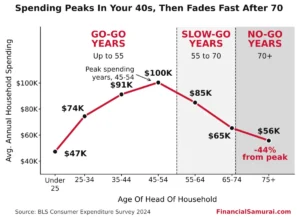
Market analysts suggest that in many urban centers, the premium for finished homes has not kept pace with the rising costs of construction and the inflation of labor. Consequently, buying a home that has already been renovated by a professional developer often provides a more predictable financial outcome. This trend is particularly pronounced among buyers aged 40 and older, who prioritize the stability of their living environment over the potential for "sweat equity."
The Case for Pragmatic Renovation
For those who proceed with a remodel, success is usually predicated on rigorous preparation and a realistic assessment of potential pitfalls. Industry experts recommend several best practices to mitigate risk:

- Contingency Funding: Establishing a financial buffer of at least 30% to 50% above the initial estimate is essential to accommodate price fluctuations in materials and unforeseen structural issues.
- Professional Oversight: Engaging a reputable project manager or an architect who maintains strong relationships with local permitting offices can expedite the administrative aspects of the build.
- Scope Limitation: Avoiding radical structural changes and focusing on cosmetic upgrades or high-impact, low-complexity renovations often yields a better return on both time and money.
- Phased Implementation: Breaking a large-scale project into manageable phases allows homeowners to potentially reside in a portion of the property while work is conducted elsewhere, reducing the burden of off-site rental costs.
Societal and Environmental Implications
The surge in residential remodeling also carries broader societal implications. In dense urban neighborhoods, the prevalence of construction activity contributes to noise pollution, traffic congestion, and increased demand for municipal services. Furthermore, the environmental impact of demolition—generating significant construction debris and waste—is a growing concern for sustainability-minded city planners.
As neighborhoods undergo "gut-and-renovate" cycles, the character of the community can shift. While these investments often enhance property tax bases and improve infrastructure, they can also lead to inflationary pressure on housing costs, making homeownership increasingly unattainable for lower- and middle-income residents.
Conclusion: Weighing the Trade-offs
Ultimately, the decision to embark on a significant home renovation is a choice between two distinct paths: the pursuit of a highly personalized, custom-designed living space, or the pursuit of financial and temporal efficiency. The "thousand-yard stare" associated with seasoned renovators is a testament to the emotional and physical toll that these projects exert.
As the construction landscape becomes increasingly complex, the market is signaling that time and certainty are becoming the most valuable commodities. For the vast majority of homeowners, the most prudent financial strategy remains the acquisition of a property that meets their functional requirements without the necessity of extensive intervention. While the dream of creating a bespoke home is compelling, the reality of the construction gauntlet—with its inevitable delays, cost escalations, and logistical challenges—often serves as a stark reminder that in the realm of real estate, the most expensive path is frequently the one that requires the most work.