AI-Powered Genomic Initiative Releases 3D Structures for Thousands of Viral Protein Complexes to Bolster Global Pandemic Preparedness

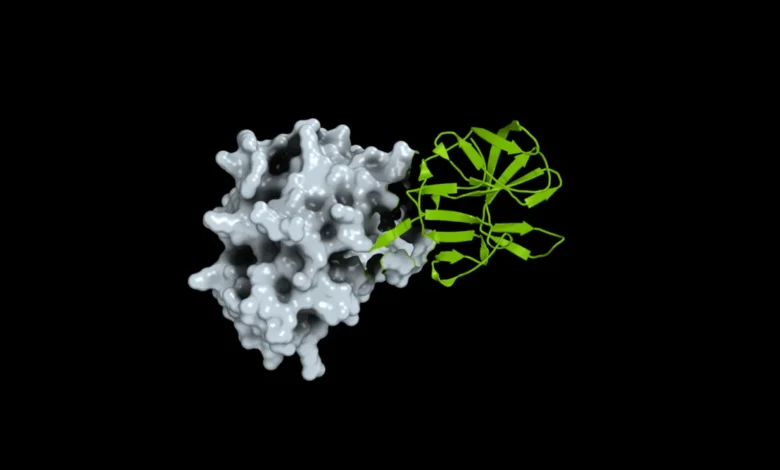
The global scientific community has taken a monumental step forward in preemptive healthcare as a high-profile coalition, spearheaded by NVIDIA, Google DeepMind, and the European Molecular Biology Laboratory’s European Bioinformatics Institute (EMBL-EBI), publicly released predicted three-dimensional structures for the protein complexes of more than 2,800 viruses. Published to the globally accessible AlphaFold Database, this unprecedented dataset aims to democratize foundational biology and equip researchers worldwide with the structural blueprints necessary to combat future pathogen outbreaks before they materialize.
When SARS-CoV-2 emerged in late 2019, scientists benefited from decades of foundational academic literature regarding coronaviruses. This historical body of work allowed researchers to understand key viral proteins rapidly, facilitating vaccine development at a historic pace. However, epidemiologists and virologists warn that the next global health crisis may stem from an entirely novel pathogen—a scenario colloquially referred to as "Disease X"—where researchers will lack a foundational head start. To bridge this critical knowledge gap, the newly released AI-driven dataset serves as a biological stockpile, offering predictive insights into viral proteomes long before an outbreak begins.
The urgency of this initiative is underscored by probabilistic models from institutions like the Center for Global Development, which estimates an approximately 50 percent probability that the world will face a pandemic as severe as COVID-19 by the year 2050. By combining advanced artificial intelligence with high-performance computing, the international research collaborative seeks to mitigate this existential threat by preemptively mapping the microscopic architectures of viruses known to infect humans, ranging from common-cold variants to emerging public health threats such as Mpox.
Technological Innovation: Accelerating Proteomics with AI and GPUs
Generating structural predictions for thousands of viral proteomes requires unprecedented computational power. Traditionally, determining the 3D structure of a protein or protein complex relied heavily on experimental techniques such as X-ray crystallography, nuclear magnetic resonance spectroscopy, or cryogenic electron microscopy. While exceptionally precise, these legacy methods are labor-intensive, frequently requiring years of painstaking laboratory work and incurring significant financial costs for each individual structure mapped.
To bypass these traditional bottlenecks, the coalition utilized AlphaFold2, Google DeepMind’s revolutionary artificial intelligence model designed to predict how amino acid sequences fold into intricate three-dimensional shapes. By integrating Google DeepMind’s model with the NVIDIA BioNeMo Inference Runtime—a GPU-accelerated framework optimized for generative biology—the research team successfully scaled inference across thousands of viral proteomes. This technological synergy reduced the time required to predict complex structures from years and months down to mere minutes.
Furthermore, to ensure that the scientific community can build upon these advancements, NVIDIA has openly released the BioNeMo Structure Prediction Pipeline. This GPU-accelerated workflow allows independent researchers and academic laboratories to transition seamlessly from a raw protein sequence to a predicted 3D structure for their own custom targets. This democratization of high-performance bioinformatics tools ensures that resource-constrained laboratories can participate meaningfully in global health research.
Revealing the Unknown: A Treasure Trove for Hypothesis Generation
Most proteins do not operate in isolation; instead, they form intricate complexes comprising multiple molecules to execute sophisticated biological functions. Within virology, these complexes often dictate how a virus interacts with host cells, evades the immune system, or replicates. Consequently, they serve as the primary targets for therapeutic drugs, monoclonal antibodies, and vaccine designs.
The newly expanded AlphaFold Database introduces structural predictions for thousands of protein interactions, approximately 30 percent of which are entirely unprecedented within the scientific literature. These shapes and interaction models have never been documented in the Protein Data Bank, the primary repository for experimentally determined protein structures. This vast expanse of novel data transforms the database into a powerful engine for scientific hypothesis generation.
Rather than working in the dark—a common reality for graduate students and early-career researchers attempting to map uncharted proteomes—modern biologists can immediately examine high-confidence structural predictions. This allows research teams to formulate targeted experimental designs, testing predictions in the laboratory rather than wasting valuable time on exploratory guesses.
Global Collaboration and Timely Deployment
The release of this comprehensive dataset coincides strategically with high-level international dialogues on health security. Unveiled concurrently with a United Nations General Assembly meeting convened by the World Economic Forum in New York City, the initiative highlights the intersection of advanced technology and global health diplomacy.
The collaborative effort transcends corporate and institutional boundaries, uniting organizations such as the Coalition for Epidemic Preparedness Innovations (CEPI), EMBL-EBI, Google DeepMind, NVIDIA, Seoul National University, Sungkyunkwan University, the Swiss Institute of Bioinformatics, and the University of Glasgow. This multidisciplinary coalition reflects a growing consensus that pandemic preparedness requires open-science frameworks that transcend geopolitical and economic divides.
With this latest update, the AlphaFold Database now houses more than 260 million protein and protein complex predictions, covering virtually every cataloged protein known to science. By making these resources freely and openly available, the initiative directly lowers the barriers to entry for scientists in low- and middle-income settings who frequently find themselves on the front lines of emerging infectious disease outbreaks.
Expert Perspectives and Strategic Implications
Leaders across digital biology and virology have lauded the release as a watershed moment for translational science. Industry experts emphasize that open access to structural biology data is no longer merely an academic luxury, but a fundamental pillar of global biosecurity infrastructure.
“Our ambition with the AlphaFold Database has always been to democratize access to foundational biology at scale,” noted Risha Patel, life sciences partnerships manager at Google DeepMind. “This collaboration to bring thousands of viral complexes into the database will equip scientists around the world with insights they need to help prepare for future outbreaks.”
Echoing this sentiment, Jo McEntyre, interim director of EMBL-EBI, emphasized the equity dimensions of the project. “Making this data open is critical for understanding viral diagnostics and developing treatments and vaccines,” McEntyre stated. “The dataset also covers lesser-studied viruses and lowers the barriers for scientists in low-resource settings who are confronting outbreaks firsthand.”
Virologists who remember the speculative nature of historical structural biology view the initiative through a deeply personal lens. Joe Grove, professor of molecular virology at the Medical Research Council-University of Glasgow Centre for Virus Research, recalled conducting his doctoral studies without access to structural blueprints. “When I did my Ph.D., there were no structures for any of the proteins we were investigating. It was like working in the dark—we had to guess what was going on,” Grove observed. “This dataset is a powerful tool for all the researchers doing their Ph.D.s now, giving them high-quality structural data that’s going to accelerate fundamental science.”
From an industrial perspective, the focus remains on empowering the broader research ecosystem. Chris Dallago, applied research science team lead in digital biology at NVIDIA, described the repository as a catalyst for discovery. “This database is an engine for hypothesis generation,” Dallago explained. “We’re enabling biologists and the AI community to investigate protein interactions, not just as single molecules but as complexes, so the whole field can move forward.”
Looking Ahead: The Future of Biodefense and Digital Biology
As the global scientific community digests the implications of this massive data release, the focus shifts toward utilization and empirical validation. While AI-driven structural predictions offer unprecedented velocity, high-confidence models must still undergo rigorous experimental verification in biosafety laboratories. Nevertheless, by narrowing the infinite possibilities of protein folding down to precise, high-probability structural candidates, computational biology has drastically shortened the timeline from pathogen discovery to countermeasure development.
The integration of generative artificial intelligence, high-performance GPU computing, and open-access data repositories establishes a new paradigm for pandemic preparedness. By systematically stockpiling structural knowledge before the next microbial threat emerges, the global research community is positioning itself to respond with unprecedented agility, potentially averting the catastrophic socio-economic tolls witnessed during past global health emergencies.
Researchers, bioinformaticians, and public health officials can explore the newly released viral protein complex dataset directly through the AlphaFold Database Pandemic Preparedness Portal. Furthermore, developers and structural biologists can access the underlying computational workflows via the BioNeMo Structure Prediction Pipeline repository on GitHub, ensuring that the tools for genomic defense remain distributed, transparent, and perpetually evolving.