The United States Department of Defense is seeking a financial commitment of $30.3 million over the next five years to develop and deploy an advanced iteration of the conventional lie detector. Detailed within a recent Department of Defense budget justification document, the initiative—officially designated as Polygraph+ or Polygraph Next—aims to revolutionize federal vetting protocols and insider threat detection mechanisms. Spearheaded by the Defense Counterintelligence and Security Agency, the program pivots heavily on the integration of artificial intelligence, machine learning algorithms, and contactless monitoring techniques commonly referred to as standoff sensing.
This ambitious financial and technological undertaking emerges during a period of acute institutional sensitivity inside the Pentagon. Under the leadership of Defense Secretary Pete Hegseth, defense officials have increasingly relied on polygraph examinations as an aggressive investigative tool to trace and neutralize unauthorized disclosures of classified information to the media. The urgency behind the Polygraph+ project underscores a broader administrative push to tighten internal security protocols, even as legal scholars, technological historians, and data scientists raise profound skepticism regarding the scientific validity of automated deception detection.
Chronology of Crisis and the Push for Modernization
The genesis of the Polygraph+ budget request is directly traceable to a series of high-profile security breaches that rattled the highest echelons of the American military establishment. In September, investigative reports revealed that approximately 50 military officers serving on the elite Joint Staff were subjected to mandatory polygraph examinations. This extraordinary measure was authorized in the wake of leaked reports detailing the dangerous depletion of United States weapons stockpiles amid escalating regional tensions and military engagements involving Iran.
Faced with persistent leaks that exposed vulnerabilities in national defense postures, Pentagon leadership intensified its reliance on credibility assessments to police its own ranks. Recognizing the limitations of legacy machinery, the Defense Counterintelligence and Security Agency integrated the Polygraph+ initiative into its budgetary planning for fiscal year 2027. While the congressional appropriations committees have yet to approve the $30.3 million allocation, the inclusion of the project signals a clear institutional intent to overhaul the technological framework governing federal background checks and security clearances.
The pursuit of next-generation lie detection is not an isolated experiment but the culmination of years of exploratory prototyping. In 2023, the Defense Innovation Unit, an organization within the Pentagon tasked with accelerating commercial technology for military utility, launched an open solicitation process for commercial deception-detection prototypes. Following evaluations, the Defense Innovation Unit awarded development contracts to two distinct corporate entities: Presage Technologies and Altec Research.
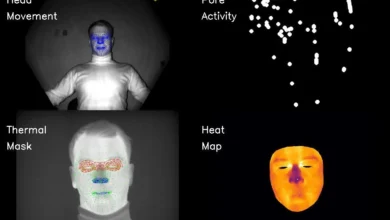
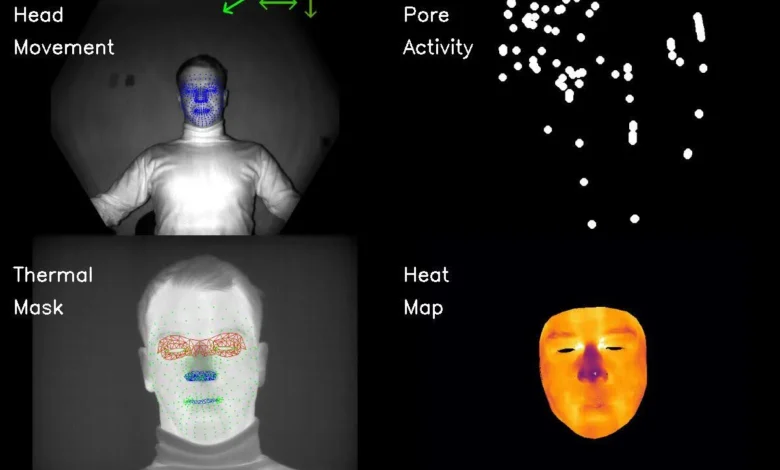
Presage Technologies put forward systems designed to analyze physiological metrics, such as heart rate and respiration, utilizing standard optical cameras. Meanwhile, Altec Research, traditionally a medical sensor manufacturer, branched into non-contact sensing by developing prototypes capable of monitoring subtle human indicators including head movement, facial skin temperature fluctuations, and microscopic pore activity. Although corporate representatives from Presage and Altec, alongside the Defense Innovation Unit, declined to provide updated comments regarding the current integration of their prototypes into the broader Polygraph+ initiative, the prior contracting efforts illuminate the technological trajectory favored by the Department of Defense.
A Century of Controversy: The Scientific Legacy of the Polygraph
To understand the magnitude of the Pentagon’s proposed modernization, one must examine the foundational fragility of the technology it seeks to replace. The modern polygraph machine traces its operational roots back to the 1920s. For nearly a century, examiners have relied on a relatively uniform array of physiological measurements—including blood pressure, pulse rate, respiration depth, and galvanic skin response—to infer whether an individual is being truthful.
The standard examination process involves establishing a physiological baseline through innocuous inquiries, such as verifying the color of the sky, before introducing targeted, high-stakes investigative questions, such as inquiries into past criminal behavior or security violations. Examiners then analyze variances in physiological reactivity to render a final judgment on the subject’s veracity.
Despite the federal government conducting tens of thousands of these assessments annually for personnel screening, the scientific community has consistently challenged the reliability of the polygraph. Its findings are rarely deemed admissible in American courts of law due to profound evidentiary concerns. Historical evaluations by legislative and scientific bodies have painted a damning picture of the technology’s efficacy. In 1983, the Office of Technology Assessment, a now-defunct congressional research agency, concluded that there existed very limited empirical evidence supporting the validity of polygraphs in personnel security screening. Two decades later, in 2003, the United States National Research Council delivered a similarly critical assessment, declaring that the scientific evidence substantiating the efficacy of polygraph testing was weak at best.
Statistical realities compound these foundational scientific concerns. While the American Polygraph Association asserts that traditional polygraphs maintain an accuracy rate ranging between 80% and 94%, independent reviews highlight the catastrophic societal consequences of marginal error rates when applied at scale. The Department of Defense employs approximately 2.8 million active military personnel and civilian workers. Even within the optimistic parameters cited by industry proponents, an imperfect screening mechanism applied across millions of individuals risks generating false positives for tens of thousands of loyal civil servants and service members, potentially derailing careers based on erroneous algorithmic or physiological interpretations.
Furthermore, the administration of traditional polygraphs suffers from severe subjective vulnerabilities. Different examiners frequently arrive at conflicting conclusions when reviewing the exact same physiological charts. Studies have consistently demonstrated that demographic factors, including race and ethnicity, can skew examiner interpretations, with minority populations disproportionately flagged as deceptive due to baseline physiological variations or cultural communication differences. Additionally, the mechanics of the test are notoriously vulnerable to countermeasures. Interviewees who undergo brief training can systematically manipulate their physiological responses—such as by altering their breathing patterns or applying subtle physical stimuli, like stepping on a tack hidden inside a shoe—to artificially inflate baseline reactions and successfully beat the examination.

The Illusion of the Pinocchio Effect and the Limits of AI
As the Department of Defense looks toward artificial intelligence and machine learning to salvage the credibility assessment process, outside experts warn that technological sophistication cannot overcome a fundamental biological reality: humans do not possess a single, universally consistent physiological marker for deception.
Dr. Sophie van der Zee, an associate professor specializing in deception studies at Erasmus University in Rotterdam, notes that the primary utility of the polygraph has historically been psychological deterrence rather than empirical discovery. "If you know how it works, you can beat it," van der Zee observes, noting that many subjects make preemptive confessions simply out of fear of the machine. "But that only works if people think a polygraph works."
Over the decades, government agencies and private innovators have repeatedly attempted to engineer a foolproof deception detector, cycling through thermal imaging cameras, pupil-tracking software, and functional magnetic resonance imaging brain scans. None of these methodologies have achieved reliable validity outside controlled laboratory environments. "There is still no Pinocchio’s nose," van der Zee adds, emphasizing that human deceit is multifaceted and cognitively complex, defying simplistic categorization.
Proponents of the Polygraph+ initiative argue that artificial intelligence can transcend these historical limitations by identifying complex, multidimensional patterns in data that human examiners are incapable of processing. Modern AI models are increasingly tailored for multi-modal deception detection, a paradigm that attempts to synthesize disparate physiological and behavioral metrics into a unified credibility score that is ostensibly more difficult to game.
Deception researchers typically categorize the internal human mechanics of lying into three distinct domains: physiological stress, cognitive load, and the conscious effort required to suppress the truth. Traditional polygraph technology focuses almost exclusively on physiological stress. By combining multiple sensing modalities—such as standoff thermal imaging, micro-expression analysis, vocal inflection tracking, and ocular movement monitoring—developers hope to construct a holistic assessment tool that addresses all three fronts.
This concept is far from novel. Throughout the 2000s, academic researchers at Manchester Metropolitan University in the United Kingdom developed a pioneering automated credibility assessment system known as Silent Talker, which generated deception scores derived from real-time video footage. This technology was subsequently folded into iBorderCtrl, an experimental, EU-funded pilot project targeting border security. Concurrently, the United States developed AVATAR, a computerized interview kiosk that incorporated automated eye-tracking, acoustic analysis, and body movement detection for border checkpoint screening. Ultimately, all of these ambitious projects quietly faded from operational deployment as real-world limitations and privacy concerns mounted.
Legal and Ethical Implications of Algorithmic Interrogation
Legal scholars and civil liberties experts have voiced profound alarm over the Pentagon’s financial commitment to Polygraph+, characterizing the fusion of artificial intelligence and flawed polygraph methodologies as a regression in administrative justice.
Dr. Kyri Kotsoglou, a legal scholar at Northumbria University in the United Kingdom who specializes in the application of polygraph technology within justice and security systems, evaluates the Pentagon’s initiative with stark skepticism. "It’s a misguided effort to reduce the complex to something that is tangible," Kotsoglou states. He describes the integration of machine learning into polygraph protocols as "the worst of both worlds," arguing that it compounds inherent scientific invalidity with the opaque, unaccountable nature of algorithmic decision-making.
Even if advanced machine learning models succeed in identifying previously undetected patterns in physiological datasets, Kotsoglou and other legal analysts point out that algorithms cannot reliably link those patterns to the act of lying in the absence of an objective ground truth. "Even if you have all the records in the world from polygraph tests, you don’t know whether those polygraph tests are right or not," notes Marion Oswald, a professor of law who has collaborated extensively with Kotsoglou on the use of credibility assessment technologies in legal frameworks.
Oswald suggests that the rush to fund Polygraph+ functions less as a scientific breakthrough and more as a direct institutional reaction to the political pressures facing the current administration. She argues that the technology is being deployed primarily as an instrument of intimidation and deterrence designed to suppress internal dissent and enforce organizational conformity, rather than a reliable method for gathering actionable intelligence.
"It seems very much a response to the concern of the current administration to leaks and perceived lack of loyalty," Oswald concludes. "[Lie detection is] being used as a threat, to intimidate and force people to confess to things, as opposed to anything that’s actually getting valid information."
As the $30.3 million budget request proceeds through congressional review, the Department of Defense faces a critical crossroads. The ultimate fate of the Polygraph+ initiative will test whether lawmakers are willing to finance next-generation surveillance and vetting tools rooted in historically contested science, or whether mounting skepticism from the legal and academic communities will stall the Pentagon’s quest for the technological elusive ideal of absolute truth detection.