Tool Calling vs. Code Execution for AI Agents: Choosing the Right Action Primitive

The evolution of autonomous AI agents has reached a critical juncture where the mechanism by which a model interacts with the outside world is no longer a secondary consideration but a core architectural pillar. As developers transition from simple chatbots to complex agentic systems capable of performing multi-step workflows, they are increasingly forced to choose between two primary action primitives: traditional tool calling and modern code execution. This choice, which balances cost, latency, and logical accuracy, serves as the defining factor in determining whether an agent operates efficiently or becomes bogged down by technical overhead.
Understanding the Mechanism of Action Primitives
An action primitive represents the bridge between an artificial intelligence model’s internal reasoning and its external impact. It is the fundamental interface for database operations, API requests, and file manipulation. While the term may sound abstract, it defines the entire operational lifecycle of an agent.
Tool calling, the industry standard that emerged alongside early LLM frameworks, functions through a serialized dialogue loop. When a model determines that an external action is required, it generates a structured JSON object containing the function name and arguments. This output is intercepted by the host application, which executes the request and feeds the result back into the model’s context window. This process is inherently iterative; the model must "read" the result before deciding on the next step.
Conversely, code execution—a paradigm popularized by recent advancements from organizations like Anthropic—shifts the burden of orchestration from the model’s context to a sandboxed execution environment. Rather than requesting a single tool at a time, the model is empowered to write a script (in languages such as Python or TypeScript) that manages control flow, loops, and logic. Only the finalized output of this script is returned to the model, effectively decoupling the "thought" process from the "execution" process.
A Chronology of Agentic Evolution
The progression from basic tool use to sophisticated programmatic execution has been rapid. In early 2024, the focus remained on refining JSON-based tool calling, ensuring that models could reliably adhere to schemas to prevent parsing errors. Researchers quickly identified a bottleneck: as tasks grew in complexity, the "context window" became a graveyard of intermediate data.
By late 2024 and early 2025, the research community, led by initiatives like the CodeAct project, began documenting the superior performance of code-based interaction. The release of Advanced Tool Use features in November 2025 marked a watershed moment, introducing the "allowed_callers" parameter. This feature allowed developers to designate specific tools as accessible to a sandboxed code interpreter, fundamentally changing how agents handle large-scale data retrieval and aggregation.
The Economic and Performance Case for Code Execution
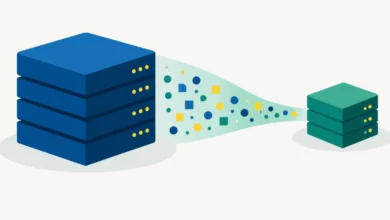
The necessity for this architectural shift is best illustrated through data-heavy tasks. Consider a scenario involving the reconciliation of twenty employees’ travel expenses. Under a traditional tool-calling architecture, an agent would perform twenty individual calls, retrieving over 2,000 line items of raw data. This forces the model to process 50KB or more of data it does not need to "read," but rather to "sum." The cost, measured in both tokens and latency, is significant.
Internal benchmarks provided by major AI research labs indicate that shifting such workloads to code execution can yield a reduction in token usage of nearly 98% in some workflows. For instance, transitioning from a standard transcript-to-API flow to a code-execution-based extraction model saw a reduction in context requirements from 150,000 tokens to just 2,000.
Beyond mere cost savings, there is a tangible gain in accuracy. The 2024 CodeAct research paper established that agents using code execution saw a 20% increase in success rates for multi-step tasks. When models are tasked with complex arithmetic or comparative analysis, they are prone to "hallucinating" or miscalculating values held in their short-term memory. Offloading these tasks to a deterministic Python environment ensures that the logic is handled by a standard interpreter, leaving the model to focus purely on high-level reasoning and synthesis.
The Enduring Value of Traditional Tool Calling
Despite the objective efficiency of code execution, industry experts caution against treating it as a universal panacea. Tool calling remains the superior choice for single-shot, time-sensitive lookups. In cases where an agent requires only one piece of information—such as checking a single city’s weather—the overhead of spinning up a sandboxed environment introduces unnecessary latency.
Furthermore, there is a significant trade-off regarding observability. A standard tool call is a discrete, auditable, and loggable event. Because every step is serialized in the conversation history, developers can easily debug the model’s decision-making process. In contrast, if a generated script fails or produces an unexpected result, tracing the internal logic of that execution—which may have involved hundreds of lines of code—presents a much steeper debugging challenge. This is particularly relevant for sectors with strict compliance and audit requirements, such as finance and healthcare.
A Framework for Architectural Decision-Making
For organizations building production-grade agents, the decision between these primitives should be driven by the specific demands of the task rather than a blanket company-wide policy. The following factors should guide the design process:
- Task Granularity: If the objective involves a single, isolated request, utilize standard tool calling to minimize latency.
- Data Volume: If the task requires gathering data from multiple sources, aggregating results, or filtering large datasets, code execution is the only viable path to maintaining cost-efficiency and context window integrity.
- Reasoning vs. Calculation: Tasks that require the model to "reason" over subtle patterns in text benefit from tool calling, as the data stays within the model’s sight. Tasks requiring mathematical rigor or programmatic transformation are best suited for code execution.
- Infrastructure Maturity: Teams without secure, isolated sandboxing infrastructure may find the operational cost of implementing code execution prohibitive. Standard tool calling provides a "safer" and more familiar deployment path for smaller engineering teams.
The Hybrid Reality: Building Resilient Systems
The most robust production agents currently in operation utilize a hybrid approach. Advanced agent frameworks now allow for dynamic switching between primitives based on the nature of the request. An agent may begin a session using tool calling to query a database for relevant files, and then, upon identifying a large set of documents, switch to code execution to perform a sentiment analysis or summary across the entire collection.
This hybrid strategy is consistent with the latest guidance from leading AI model providers. By layering features like Tool Search (to manage large libraries of available functions) with Programmatic Tool Calling, developers can create systems that scale gracefully. The goal is to build an agent that is "context-aware" enough to know which primitive to trigger.
Implications for the Future of AI Development
As we look toward the next generation of autonomous agents, the distinction between "calling a tool" and "writing code" is likely to blur further. However, the underlying principles of efficiency and reliability remain unchanged. The shift toward code execution represents a broader move toward "deterministic agentics," where the non-deterministic reasoning of LLMs is increasingly constrained by the rigid, reliable logic of traditional programming.
For developers, the primary takeaway is clear: the architecture of your agent is a performance feature. Ignoring the mechanics of how an agent interacts with its environment is a shortcut to high costs and poor accuracy. By carefully analyzing the, "fan-out" requirements and data sensitivity of their workflows, engineers can design systems that are not only faster and cheaper but significantly more reliable in executing the complex tasks that will define the next phase of the AI era. In the final analysis, the choice between tool calling and code execution is not merely a technical preference—it is a foundational design choice that will dictate the success or failure of the next wave of autonomous applications.