From Saturday Night Live Satire to a White House Dinner: Anthropic CEO Dario Amodei Navigates a High-Stakes Weekend

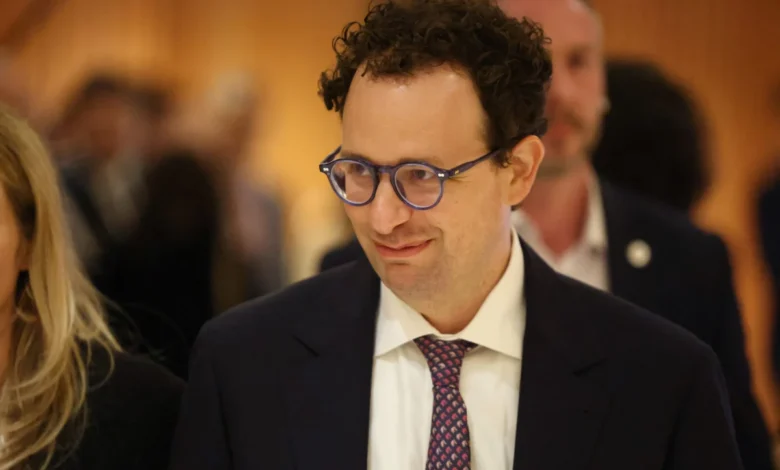
The convergence of artificial intelligence policy, high-stakes national security debates, and mainstream cultural saturation collided in a remarkable weekend for Anthropic Chief Executive Officer Dario Amodei. In the span of just forty-eight hours, the leader of one of the world’s most prominent frontier AI laboratories was simultaneously lampooned on national television by a legendary comedy sketch show and invited to break bread at the White House with President Donald Trump.
First reported by Axios and subsequently confirmed by independent journalistic sources, Amodei’s scheduled one-on-one dinner with President Trump marks a critical inflection point in the increasingly complex relationship between the burgeoning artificial intelligence sector and the federal government. This high-profile meeting follows a whirlwind of public visibility for Amodei, highlighted by a satirical portrayal on the season premiere of Saturday Night Live, underscoring the extent to which artificial intelligence executives have transitioned from obscure computer scientists into central figures of popular culture and geopolitical strategy.
The timing of the White House dinner is particularly delicate. Amodei and the Trump administration have recently occupied opposing ideological and strategic poles regarding the pace, governance, and national security implications of advanced artificial intelligence development. While Amodei has publicly advocated for measured caution and structured frameworks to pace the deployment of frontier models, the Trump administration has pursued an aggressive growth agenda, even proposing unorthodox semantic shifts such as rebranding the technology as "super intelligence" and dismissing mounting public concerns over safety as politically motivated opposition.
A Fractious Policy Landscape: Caution Versus Acceleration
The core philosophical divergence between Anthropic and the current White House administration centers on the velocity of technological deployment. Earlier in September, Amodei outlined a comprehensive strategic roadmap aimed at pacing frontier AI development. His framework emphasizes the necessity of implementing rigorous guardrails, safety evaluations, and threshold-based pauses to ensure that capabilities do not outstrip human oversight or societal readiness.
Conversely, President Trump has taken a markedly different approach to the industry’s trajectory. Without presenting empirical evidence, the administration has characterized the broader public backlash and regulatory anxiety surrounding artificial intelligence as a partisan "Democrat hoax." In an effort to reshape the national conversation, the administration floated proposals to officially rebrand artificial intelligence under the umbrella term "super intelligence" and announced the formation of a specialized "AI force" designed to maintain American technological dominance on the global stage.
This ideological friction is not merely theoretical; it has already manifested in concrete punitive actions. Earlier this year, the United States Pentagon designated Anthropic as a formal supply-chain risk. The designation was widely interpreted as retaliation for the company’s stringent refusal to compromise on safety guardrails and ethical usage restrictions governing how its models could be deployed within military and intelligence contexts.

Despite this regulatory hostility, Anthropic has actively pursued legal and diplomatic remedies. In late August, the company secured a significant initial victory in court, successfully challenging aspects of the Pentagon’s supply-chain risk label. At the same time, observers note a persistent dichotomy within the federal government itself: while national security and defense agencies have clashed with the company over operational autonomy, other factions within the administration have maintained a more pragmatic and cooperative dialogue with Anthropic’s leadership.
Chronology of Events: From Pentagon Clashes to White House Invitations
To fully contextualize the significance of Amodei’s White House invitation, it is necessary to examine the rapid sequence of events that has defined Anthropic’s relationship with the federal government throughout 2026:
- April 2026: Initial signs of a thawing relationship emerge as various administration officials engage in constructive dialogues with Anthropic executives, signaling that the company’s focus on safety alignment might find common ground with federal policymakers.
- August 28, 2026: Anthropic achieves its first major legal milestone in its ongoing litigation against the Department of Defense, securing a favorable court ruling regarding the controversial "supply-chain risk" designation slapped on the firm earlier in the year.
- September 12, 2026: Dario Amodei publicly publishes a detailed policy framework advocating for structured pacing and precautionary governance of frontier AI models, drawing both praise from safety advocates and skepticism from deregulation proponents.
- September 19, 2026: President Trump publicly dismisses industry-wide safety concerns as a partisan hoax and proposes rebranding artificial intelligence as "super intelligence," alongside plans to establish a dedicated federal AI force.
- September 27, 2026: Amodei enters the mainstream cultural lexicon when he is lampooned during the season premiere of Saturday Night Live. Later that same day, news breaks of his high-stakes, one-on-one dinner invitation with President Trump at the White House.
Broader Implications for the AI Industry and National Security
The upcoming dialogue between the commander-in-chief and one of Silicon Valley’s most prominent safety-focused executives carries profound implications for the future of federal technology policy. As artificial intelligence systems rapidly approach general-purpose capabilities—often referred to in research circles as artificial general intelligence (AGI)—the tension between rapid commercial deployment and rigorous risk management has transformed into a central pillar of geopolitical competition.
For the Trump administration, engagement with Amodei represents an opportunity to consolidate national consensus around American technological leadership. The administration has repeatedly emphasized that maintaining an unyielding competitive edge against international rivals, particularly China, must supersede precautionary regulatory burdens. By pushing for a "super intelligence" rebrand and aggressive domestic capability expansion, the White House seeks to project an image of unmitigated industrial strength.
Conversely, for Anthropic and the broader safety research community, the meeting offers a crucial platform to advocate for institutionalized safety standards at the highest levels of government. Amodei’s participation suggests that despite profound regulatory friction and public disagreements over policy, channels of communication remain open. Whether this direct dialogue can bridge the gap between an administration eager for unbridled technological acceleration and a company dedicated to cautious, values-aligned development remains one of the most compelling narratives in modern technology.
As the tech sector watches closely, the outcome of this White House dinner could set a vital precedent for how public policy and private innovation intersect in the era of advanced artificial intelligence. The discussions held behind closed doors may very well dictate the regulatory boundaries, procurement practices, and safety oversight frameworks that will govern the industry for years to come.