Navigating the Gauntlet of Congressional Oversight: A Strategic Framework for Corporate Leadership

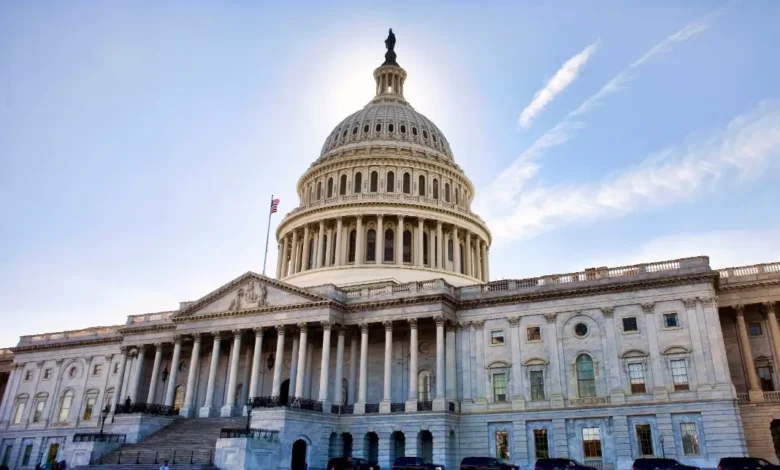
In the modern regulatory landscape, heightened oversight tests whether a company can give a consistent account of its decisions across the boardroom, public disclosures, global operations, and shifting political cycles. When a congressional committee arrives with a request for information, the arrival of a letter—often containing a dozen specific inquiries with a two-week deadline—serves as the opening move in a high-stakes chess match. While outside counsel may correctly note that a committee lacks the immediate power to compel action without a subpoena, such advice often misses the broader strategic reality: the inquiry is rarely just a legal matter; it is a reputational and operational one.
The fundamental challenge for any CEO is not merely to respond to a document request but to maintain a unified narrative. Questions inevitably follow: Does the board require an emergency briefing? How will investors, employees, and customers interpret the inquiry? Are there underlying disclosure issues that could impact market value? Is the press already sniffing out a story? Understanding these dynamics is essential, as the most successful firms recognize early that they are not simply fulfilling a discovery request; they are defending their corporate decision-making process.
The Anatomy of a Congressional Inquiry
Congressional investigations rarely materialize out of thin air. They typically follow a trajectory that begins long before a subpoena is issued. Often, staff members initiate contact with a "voluntary request" for information. This is a strategic choice: it allows the committee to gauge the company’s organizational maturity, candor, and seriousness. If a company responds with obfuscation or logistical chaos, the committee’s perception is set, and the likelihood of a subpoena—a move that signals a formal escalation—increases significantly.
The absence of immediate subpoena power does not equate to an absence of leverage. Even in the minority, members of Congress can leverage public forums, press releases, and inquiries directed at other regulators to keep a spotlight on a company. These investigations often outlast the specific political conditions that birthed them, turning a fleeting political grievance into a long-term compliance burden. Consequently, early engagement is not an act of capitulation, but a proactive effort to define the scope of the inquiry. By engaging with staff early, legal teams can often clarify the committee’s true objectives—whether they are seeking a headline, a factual finding, or a policy recommendation—and narrow the scope of the request accordingly.
The Challenge of Global Consistency
For multinational corporations, the difficulty of maintaining a coherent narrative is magnified. A decision that was perfectly legal and rational in a foreign jurisdiction—such as managing a supply chain or complying with local labor laws—can look vastly different when viewed through the lens of Washington’s current political priorities. In the United States, congressional investigators may reframe a standard commercial decision as an issue of national security, human rights, or consumer protection.
This divergence in perspective creates a "consistency trap." A company might have provided one explanation to foreign regulators and another to shareholders, with each appearing defensible in its own context. However, when these documents are laid side-by-side in a congressional hearing room, discrepancies can be weaponized as evidence of evasiveness or, worse, dishonesty.
Data from the past decade suggests that the intensity of such scrutiny is increasing. According to data from the Congressional Research Service, the number of oversight hearings and document requests has trended upward, particularly as Congress has become more active in investigating tech, energy, and financial sectors. Between 2018 and 2023, the volume of oversight activity directed at the private sector grew by an estimated 25%, driven by bipartisan interest in issues like data privacy, artificial intelligence, and ESG (Environmental, Social, and Governance) commitments.
Establishing an Enterprise-Wide Response
To survive this environment, companies must transition from a reactive legal posture to an enterprise-wide governance model. This involves integrating legal, government affairs, communications, and investor relations into a single, cohesive unit. When an inquiry hits, the CEO and general counsel must establish clear "decision rights." Who will handle the board briefings? Who will communicate with the press? Who is the ultimate authority on the factual record?
Effective governance requires that the board be kept informed, but not overwhelmed. Reporting to the board should focus on shifts in risk profiles: a broadening of the committee’s inquiry, evidence that contradicts the company’s existing public disclosures, or the threat of a public hearing. This allows the board to provide oversight without micromanaging the tactical response.
Crucially, the operating team must ensure that the "factual record" is immutable. If the government affairs department tells a committee staffer that the company is "fully cooperating," while the legal department is simultaneously asserting a privilege to withhold documents, the company creates a perception of bad faith. Consistency across these departments is the only way to avoid the trap of being labeled uncooperative.
The CEO as the Primary Witness
If the inquiry escalates to the point of testimony, the CEO becomes the company’s most visible asset—or its greatest liability. Unlike a deposition, a congressional hearing is a political stage. Members of Congress are often performing for a television audience, using five-minute rounds of questioning to secure soundbites.
A CEO who relies on "lawyerly" answers—such as excessive hedging or overly technical jargon—often appears evasive or out of touch to the public. Conversely, a witness who can explain the business rationale and the governance process in plain language, while acknowledging what they do not know, typically fares much better. Preparation is paramount; the most effective executives undergo rigorous "murder board" sessions where counsel simulates the most aggressive lines of questioning. History has shown that there is no penalty for a CEO saying, "I do not have the information in front of me, but I will follow up with the committee." There is, however, a significant penalty for guessing or providing inaccurate information that later requires a formal correction.
Implications and Long-Term Strategy
The implications of failing to manage a congressional inquiry effectively are substantial. Beyond the immediate legal fees and management distraction, a botched response can lead to permanent damage to a company’s brand, increased regulatory scrutiny from other federal agencies, and a drop in investor confidence.
Conversely, a firm that manages the process with discipline often finds that it can influence the outcome. By providing a clear, evidence-based account of its actions, a company can sometimes redirect a committee toward a more balanced legislative goal, rather than a punitive one.
The ultimate test for a corporation in the 21st century is not whether it can avoid scrutiny, but whether it can survive it. If a letter arrives on a Monday morning, a well-prepared organization should know by Wednesday exactly who belongs in the room, how to brief the board, and what the company’s core, consistent account of the facts is. This preparation does not assume the worst; rather, it provides the company with the necessary options to protect its reputation, its market position, and its future. In an era where every decision can become a matter of public record, the ability to explain one’s actions with clarity and composure is no longer just a legal strategy—it is a competitive necessity.