In the modern corporate ecosystem, executives and organizational leaders readily invest countless hours and financial resources into cultivating robust brand identities for their products and services. They understand that a polished corporate image is paramount for capturing market share, sustaining competitive advantages, and fostering a dedicated consumer base. Yet, a striking paradox persists at the highest levels of leadership: these same professionals frequently neglect, dismiss, or actively resist the concept of developing a personal brand.
For many traditional leaders, the very phrase "personal brand" triggers skepticism. It is often conflated with unearned self-promotion, superficial vanity, or the superficial tactics employed by digital social media influencers. This aversion, however, comes at a steep cost. According to recent executive coaching insights and organizational development studies, separating one’s professional identity from personal leadership visibility often limits both individual career trajectory and the broader influence a leader can exert within their organization and industry.
Addressing this critical blind spot requires a fundamental reframing of what personal branding actually means. Rather than focusing on superficial aesthetics or online follower counts, modern leadership experts argue that personal branding is fundamentally about authentic communication, strategic visibility, and aligning one’s core expertise with purposeful action.
The Leadership Visibility Gap
The modern workplace is increasingly decentralized, hybrid, and fast-paced. In environments where teams operate across disparate locations and digital communication platforms, traditional hierarchies are no longer sufficient for driving alignment or inspiration. Leaders must actively project clarity, competence, and vision to maintain trust.
When competent executives fail to cultivate their personal brand, they often encounter what researchers call the "expertise gap." This occurs when a professional possesses profound technical knowledge, strategic insight, and operational capability, but fails to translate those assets into organizational visibility. Consequently, their ideas remain siloed, their teams lack a unifying narrative, and their potential to influence strategic direction is severely curtailed.
Industry surveys consistently indicate that employees increasingly demand transparent, visible, and authentic leadership. Leaders who remain invisible behind corporate titles risk appearing detached or unapproachable. Building a professional identity rooted in substance helps bridge this divide, enabling leaders to communicate their values effectively and foster deeper connections with their teams.
Academic Rigor Meets Strategic Practice
To explore how leaders can successfully bridge the gap between internal expertise and external impact, a recent installment of the "Leadership Biz Cafe" podcast featured Vanessa Errecarte, an award-winning lecturer and marketing consultant. Errecarte is widely recognized for designing and teaching one of the few for-credit Master of Business Administration (MBA) courses dedicated entirely to personal branding at the University of California, Davis Graduate School of Management.
For more than two decades, Errecarte has operated at the intersection of marketing strategy and professional development, guiding thousands of organizations and individual professionals through the process of clarifying their unique value proposition. Her academic and consulting work centers on helping experts stand out in crowded markets not through gimmickry, but through meaningful impact.
The discussion on the podcast centered around the core themes of Errecarte’s book, Valuable and Visible: Redefining Personal Branding by Leading with Impact Over Image. The publication challenges the traditional stigma associated with personal branding by offering a pragmatic framework designed specifically for leaders who wish to scale their influence without compromising their authenticity.
Redefining Personal Branding: Impact Over Image
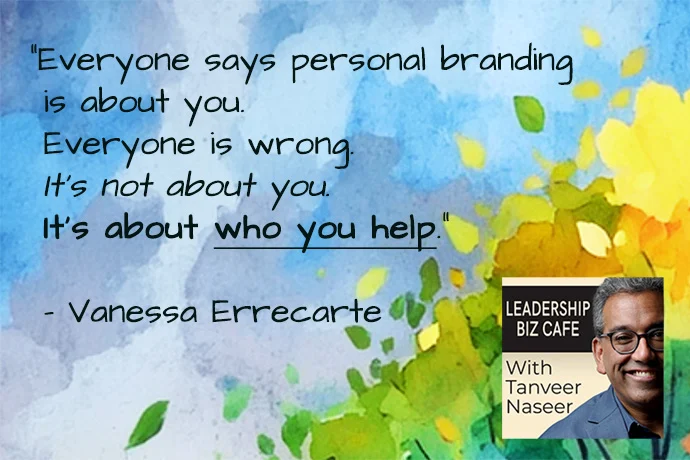
Errecarte’s core thesis dismantle the notion that personal branding is about creating a fabricated persona. Instead, she posits that a true personal brand is an authentic reflection of a leader’s purpose, values, and track record of delivering results.
In her academic research and professional engagements, Errecarte emphasizes that leadership visibility is not merely a tool for individual career advancement; it is a fiduciary responsibility for effective leaders. When a leader is visible and clear about their expertise, they make it easier for stakeholders, clients, and team members to understand where they add value. This clarity reduces ambiguity within teams, accelerates decision-making processes, and establishes a clear benchmark for organizational excellence.
Furthermore, the book explores how leaders can leverage their professional visibility to extend their impact beyond the immediate walls of their organization. In an interconnected global economy, thought leadership and industry engagement are vital for attracting top-tier talent, forging strategic partnerships, and staying ahead of macroeconomic disruptions.
Chronology and Evolution of Executive Identity
The conversation around executive visibility has evolved significantly over the past two decades. Understanding this trajectory provides essential context for why personal branding has transitioned from an optional luxury to a core leadership competency.
- The Pre-Digital Era (Late 20th Century): Leadership visibility was largely dictated by physical presence, corporate titles, and public relations departments. Executives communicated primarily through formal press releases, annual reports, and industry conferences. Personal branding was largely unintentional and reserved for high-profile chief executive officers.
- The Rise of Digital Networks (Early 2000s to 2010s): The advent of professional networking platforms like LinkedIn democratized access to public visibility. Professionals began curating digital resumes and sharing industry commentary. However, many traditional leaders viewed these platforms with suspicion, leaving executive communication largely in the hands of corporate marketing teams.
- The Remote and Hybrid Revolution (2020 to Present): The COVID-19 pandemic permanently altered workplace dynamics. With physical offices giving way to distributed teams, the necessity for leaders to project authenticity, empathy, and strategic clarity across digital channels became paramount. Personal branding evolved from a vanity metric into an essential mechanism for organizational cohesion and trust-building.
Broader Implications and Strategic Takeaways
The insights shared by Errecarte and echoed by contemporary leadership theorists carry profound implications for modern management. Organizations that encourage their leaders to develop authentic personal brands often experience measurable benefits in several key areas:
- Enhanced Employee Engagement: Teams led by visible, communicative, and purpose-driven leaders report higher levels of psychological safety, alignment, and morale. When employees understand what their leader stands for, they find it easier to connect their daily tasks to the broader organizational mission.
- Talent Acquisition and Retention: In competitive labor markets, top talent gravitates toward organizations led by recognized industry voices. Leaders who cultivate a strong, values-driven personal brand naturally act as a magnet for skilled professionals who share their vision.
- Crisis Resilience: Organizations with visible, trusted leadership teams are often better equipped to navigate public relations crises or market downturns. Stakeholders—including customers, investors, and regulatory bodies—are more likely to extend grace and trust to leaders whose character and expertise have been consistently and transparently demonstrated over time.
Conclusion
The evolution of leadership demands that executives look beyond traditional metrics of corporate success. While financial performance and operational efficiency remain foundational, the ability to articulate value, inspire trust, and project authentic expertise is equally critical.
As experts like Vanessa Errecarte demonstrate through their academic research and advisory work, developing a personal brand is not an exercise in self-aggrandizement. Rather, it is a strategic discipline that enables leaders to maximize their expertise, foster deeper connections with their teams, and create a lasting, positive impact on their organizations and industries. By moving past the outdated stigma of self-promotion, modern leaders can transform their visibility into their most effective instrument for meaningful change.