The Psychological and Financial Architecture of High-Stakes Venture Capital Investing in a Post-FIRE Environment

The landscape of personal finance for early retirees has undergone a seismic shift as the integration of artificial intelligence and the volatility of private equity markets intersect. For individuals who have achieved Financial Independence, Retire Early (FIRE) status, the challenge of maintaining capital growth while mitigating inflation has led to a controversial shift toward aggressive venture capital (VC) allocation. This phenomenon, characterized by frequent capital calls and the necessity for liquidity management, represents a departure from traditional, passive wealth preservation strategies.
The Mechanics of Capital Calls and Liquidity Constraints
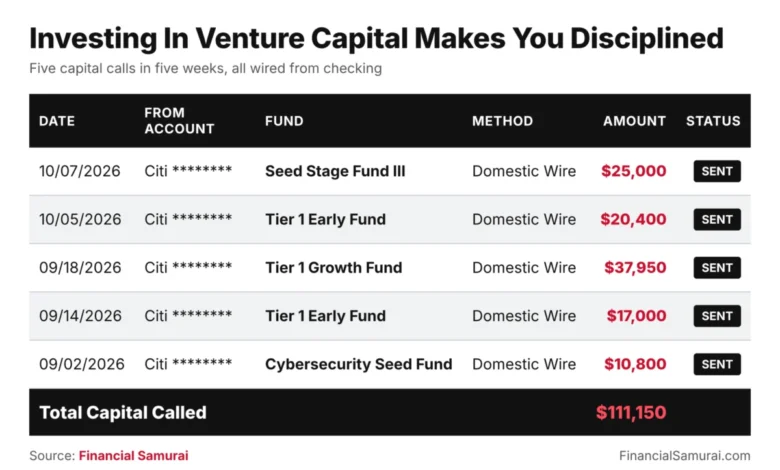
A capital call—a formal request from a venture capital firm to its limited partners (LPs) to contribute funds to a specific investment—is a standard operational mechanism in private equity. However, when multiple calls occur in rapid succession, they can strain the personal balance sheets of even high-net-worth individuals. Recent data indicates that within a five-week period, investors in top-tier venture funds faced a sudden, concentrated liquidity demand, with some portfolios experiencing capital outflows exceeding $110,000.
These calls are not merely transactional; they represent the maturation of investment cycles. When venture firms encounter promising opportunities or reach milestones in their portfolio company development, they trigger these legal obligations. For the retiree, this necessitates a precise balance between solvency—the ability to meet long-term obligations—and liquidity—the availability of cash for immediate needs. Financial experts distinguish these two, noting that while insolvency is a structural failure, a liquidity squeeze is a temporary, albeit stressful, condition that requires disciplined cash flow management.

Chronology of Asset Allocation Drift
Asset allocation is not a static state but a dynamic process susceptible to "drift." Over several years, even a portfolio designed with a conservative 60/40 equity-to-bond split can skew significantly due to market appreciation. For many retirees, the rise of the S&P 500 and the Nasdaq over the last decade has inadvertently increased their exposure to public equities, often beyond their intended risk tolerance.
The decision to rebalance by moving capital into venture funds is often a strategic choice to cap public equity exposure. By limiting private equity to approximately 20% of investable capital, investors attempt to ring-fence their risk. This strategy serves two purposes: it prevents the over-concentration of wealth in volatile public indices and provides a mechanism to deploy capital into innovation-heavy sectors—such as AI—that are perceived as both the greatest threat to and the largest opportunity for long-term income replacement.
The Role of Institutional Fiduciaries
A core argument for venture investing among independent investors is the transfer of control. Traditional retail trading is often plagued by emotional decision-making—panic selling during downturns or speculative buying during rallies. Conversely, capital committed to a venture fund is managed by general partners (GPs) whose professional mandates are to execute long-term investment strategies regardless of short-term market noise.
For the individual investor, this creates a "forced discipline" effect. When a capital call is triggered, the investor is compelled to provide liquidity, effectively purchasing assets during market corrections when the impulse might otherwise be to retreat to cash. Historically, some of the most significant wealth-building opportunities have occurred during recessionary periods, where valuations are depressed and innovation continues to progress. By outsourcing the timing of these investments to GPs, the retail investor benefits from the institutional capacity to remain active throughout economic cycles.

Strategic Implications of AI and Future-Proofing
The rapid advancement of artificial intelligence has introduced a new variable into retirement planning. As AI capabilities expand, the longevity of traditional supplemental income streams is under scrutiny. This has prompted a shift toward "defensive investing," where retirees seek to own the very technologies that are disrupting their former industries.
The implication is a shift in the definition of a "safety net." While traditional planning focused on cash reserves and bonds, current trends suggest a preference for equity in firms developing disruptive technologies. This represents a long-term, multi-decade bet on the trajectory of the global economy. For parents, this financial strategy is often framed as a generational transfer mechanism—a deliberate attempt to provide descendants with a competitive advantage in an evolving job market.
Psychological Dimensions of Risk Management
The psychological burden of high-stakes investing is frequently overlooked in financial literature. The act of "sacrifice"—delaying present consumption to fulfill a capital call—functions as a protective ritual. This behavior is rooted in the belief that the discomfort of short-term cash constraints is outweighed by the long-term potential of the investment.
This mindset is particularly prevalent among those who experienced the volatility of the 2008 Global Financial Crisis. The psychological scars of that era have led to a preference for "illiquid" assets like real estate and venture capital. Because these assets are not easily traded via mobile applications, they are protected from the investor’s own volatility-driven impulses. The lack of real-time price quotes for private assets allows the investor to focus on the long-term utility of the investment rather than daily fluctuations.
Economic Outlook and Market Dynamics
Economists and analysts observe that the current environment of venture capital is marked by a bifurcation. While the vast majority of venture funds fail to consistently outperform public indices like the S&P 500, top-tier firms demonstrate an ability to generate superior, alpha-driven returns. Consequently, the market for "access" has become increasingly competitive. Investors are prioritizing entry into these top-tier vintages, often accepting the liquidity risk associated with capital calls as a necessary barrier to entry.
However, the concentration of capital into a few high-performing funds also creates risks. Over-allocation to private markets, if not managed with a strict percentage cap, can leave an investor vulnerable during a systemic liquidity crunch. The consensus among financial advisors remains that private investments should complement, not replace, a diversified foundation of public equities and fixed-income securities.
Conclusion: The Two-Timeline Framework
Successful wealth management in the modern era requires thinking in two distinct timelines: the short-term need for liquidity and the long-term requirement for inflation-adjusted growth. For the retiree, this means maintaining a sufficient "cash bucket" to avoid the forced liquidation of long-term assets during a bear market, while simultaneously participating in the growth of the private market.
The rise of the "venture-active" retiree highlights a broader shift in individual finance: the transition from passive holding to active, institutional-style participation. While this approach carries inherent risks—specifically regarding liquidity and potential capital loss—it is increasingly viewed as a necessary strategy for those navigating the uncertainties of a technologically shifting landscape. As always, the efficacy of this strategy rests on the rigorous application of risk-management frameworks and the maintenance of a diversified, balanced portfolio that can withstand the inevitable cycles of the global economy.
Related posts: